Personal Style & Silhouette Finder
How to use: Select the description that best matches your body's natural proportions to unlock personalized styling advice.
Hourglass
Bust and hips balanced, narrow waist
Pear
Hips wider than shoulders and bust
Inverted Triangle
Shoulders wider than hips
Rectangle
Shoulders, waist, and hips similar width
Apple
Weight mostly carried in midsection
Styling for the Hourglass Figure
Your goal is to highlight your natural waistline without hiding your curves in boxy clothing.
✅ Recommended
- Wrap dresses (perfect for cinching the waist)
- High-waisted trousers
- Belts to accentuate the waist
❌ Avoid
- Oversized, boxy silhouettes
- Heavy pleats and ruffles on both top and bottom
Styling for the Pear Shape
Your goal is to add volume to the upper body to balance your broader hips.
✅ Recommended
- Boat necks and puff sleeves
- A-line skirts (skims over hips)
- Bright patterns or bold colors on top
❌ Avoid
- Pockets on the widest part of the hip
- Plain tees with dark, bulky bottoms
Styling for the Inverted Triangle
Your goal is to add volume to the lower body to balance your broader shoulders.
✅ Recommended
- Wide-leg trousers or flared jeans
- V-neck tops (creates a vertical line)
- A-line silhouettes on the bottom
❌ Avoid
- Boat necks or heavy shoulder pads
- Skinny jeans paired with tight tops
Styling for the Rectangle Shape
Your goal is to create the illusion of curves by breaking the straight line of your frame.
✅ Recommended
- Belts to cinch the waist
- Tops with ruffles or peplums
- Tucked-in blouses with high-waisted pants
❌ Avoid
- Shift dresses
- Straight-cut tunics
Styling for the Apple Shape
Your goal is to elongate the torso and highlight your legs.
✅ Recommended
- Empire waist tops (seam below bust)
- Slim-fit trousers or short skirts
- Open blazers to create vertical lines
❌ Avoid
- Massive, shapeless "tent" shirts
- Overly oversized clothing that hides the frame
Quick Guide to Identifying Your Shape
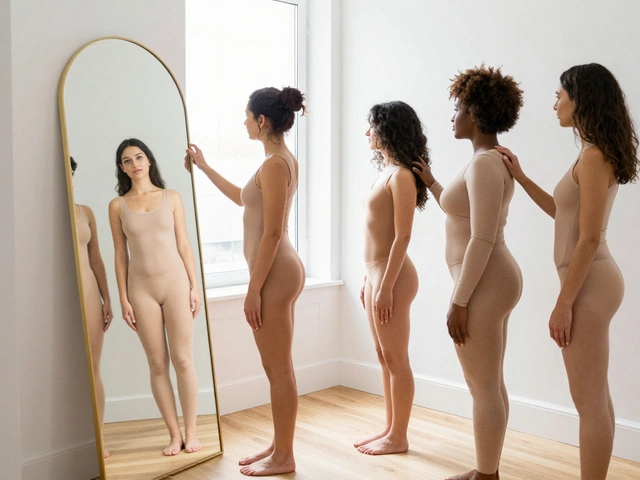
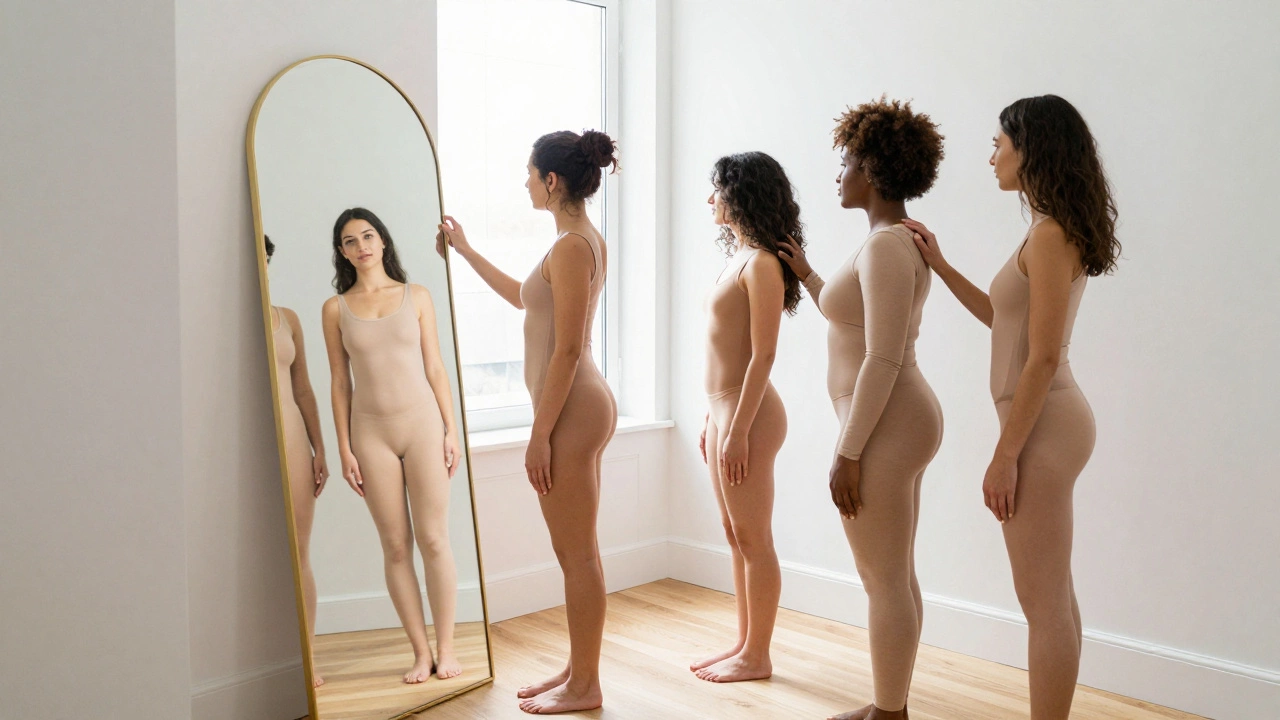
Before you can pick the right clothes, you need to know what you're working with. Forget the number on the scale; look at the lines of your body. Stand in front of a full-length mirror in tight-fitting clothes and look at where your widest points are. Do your shoulders dominate, or is it your hips? Does your waist dip in sharply, or is it more of a straight line?
| Shape | Defining Characteristic | Visual Goal |
|---|---|---|
| Hourglass | Bust and hips are balanced with a narrow waist | Highlight the waistline |
| Pear (Triangle) | Hips are wider than shoulders and bust | Add volume to the upper body |
| Inverted Triangle | Shoulders are wider than the hips | Add volume to the lower body |
| Rectangle | Shoulders, waist, and hips are similar widths | Create the illusion of curves |
| Apple (Round) | Weight is mostly carried in the midsection | Elongate the torso and highlight legs |
Dressing the Hourglass Figure
If you have an hourglass shape, your shoulders and hips are roughly the same width, and you have a clearly defined waist. The biggest mistake people with this shape make is wearing oversized, "boxy" clothes that hide the waist, making them look larger than they actually are. The most attractive look for you is one that follows your natural curves without squeezing them too tight.
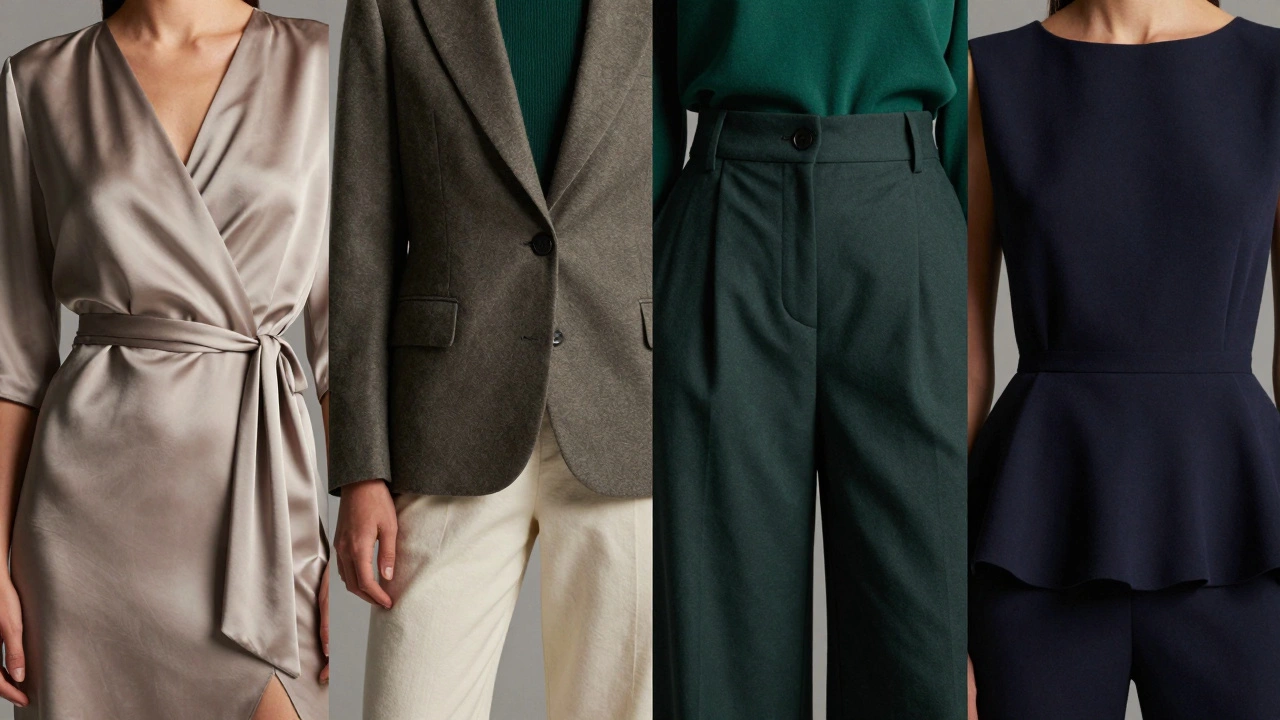
Try wrapping your waist with a belt or choosing high-waisted trousers that nip in. A Wrap Dress is a powerhouse piece here because it cinches the narrowest part of your torso while allowing the fabric to flow over the bust and hips. Avoid heavy pleats or oversized ruffles on both the top and bottom simultaneously, as this can make the silhouette look cluttered. Keep the lines clean and lean into the symmetry your body already has.
Balancing the Pear Shape
Pear shapes are common and often characterized by a smaller bust and broader hips. The goal here is to draw the eye upward to balance the lower half of the body. If you only wear dark colors on the bottom and plain tees on top, you're missing an opportunity to create a more balanced look.
To make your frame look more proportional, experiment with "statement" tops. Think boat necks, puff sleeves, or bright patterns on your upper half. A-line Skirts are a perfect choice because they skim over the hips without adding bulk. Avoid pockets that sit right on the widest part of your hip, as these add unnecessary volume. Instead, look for structured jackets that have slightly padded shoulders to widen your upper frame and match the width of your hips.
Structuring the Inverted Triangle
If your shoulders are the widest part of your body, you're likely an inverted triangle. This is a very athletic build, but it can sometimes feel "top-heavy." The trick is to add a bit of weight and volume to your lower half to create a more balanced, hourglass-like appearance.
Avoid skinny jeans paired with a tight top, as this emphasizes the shoulder width and makes the legs look disproportionately thin. Instead, opt for wide-leg trousers or flared jeans. These create a visual "anchor" at the bottom of your look. For tops, V-necks are your best friend. They create a vertical line that breaks up the width of the chest. Avoid boat necks or heavy shoulder pads, which only add more bulk where you already have plenty.
Adding Definition to the Rectangle Shape
Rectangle shapes have a very straight silhouette where the bust, waist, and hips are all similar in width. While this can make you look like a runway model, it can also feel like you lack "shape." The goal for a rectangle isn't to hide the straightness, but to create the illusion of curves where they don't naturally exist.
You can achieve this by "breaking" the straight line of your body. Use belts to cinch your waist, or choose tops with ruffles and peplums that flare out at the bottom. High-Waisted Pants combined with a tucked-in blouse create a fake waistline that mimics a curve. Avoid shift dresses or straight-cut tunics, as these reinforce the rectangular look. Instead, go for dresses that nip in at the waist and flare out, creating a classic feminine silhouette.
Flattering the Apple Shape
Apple shapes carry most of their weight in the midsection and typically have slender arms and legs. The most attractive way to dress this shape is to avoid the temptation to hide under massive, shapeless tents. While it feels safe to wear a giant oversized shirt, it actually makes you look wider.
Focus on creating a long, lean line. Empire waist tops-where the seam is just below the bust-are fantastic because they highlight the narrowest part of your ribs and skim over the stomach. Show off your legs! A short skirt or slim-fit trousers will highlight your best asset and take the focus away from the midsection. Structure is key; a well-fitted blazer left open creates two vertical lines down your front, which visually trims your torso by several inches.
The Role of Fabric and Texture
Beyond the cut, the fabric you choose changes how a shape is perceived. Heavy, stiff fabrics like thick denim or heavy wool add volume and structure. If you're trying to add curves to a rectangle shape, these are great. However, if you're a pear shape trying to minimize the hips, stick to fabrics with a fluid drape, like silk, rayon, or lightweight knits.
Texture also plays a role. Large prints and chunky knits draw the eye and add "weight" to a specific area. If you want to draw attention to your bust, a chunky knit sweater is a great choice. If you want to streamline your lower body, avoid bold prints on your trousers and stick to solid, darker tones. This simple contrast-light/textured on top and dark/smooth on bottom-is a universal trick for balancing a pear-shaped figure.
Mastering the Art of Proportions
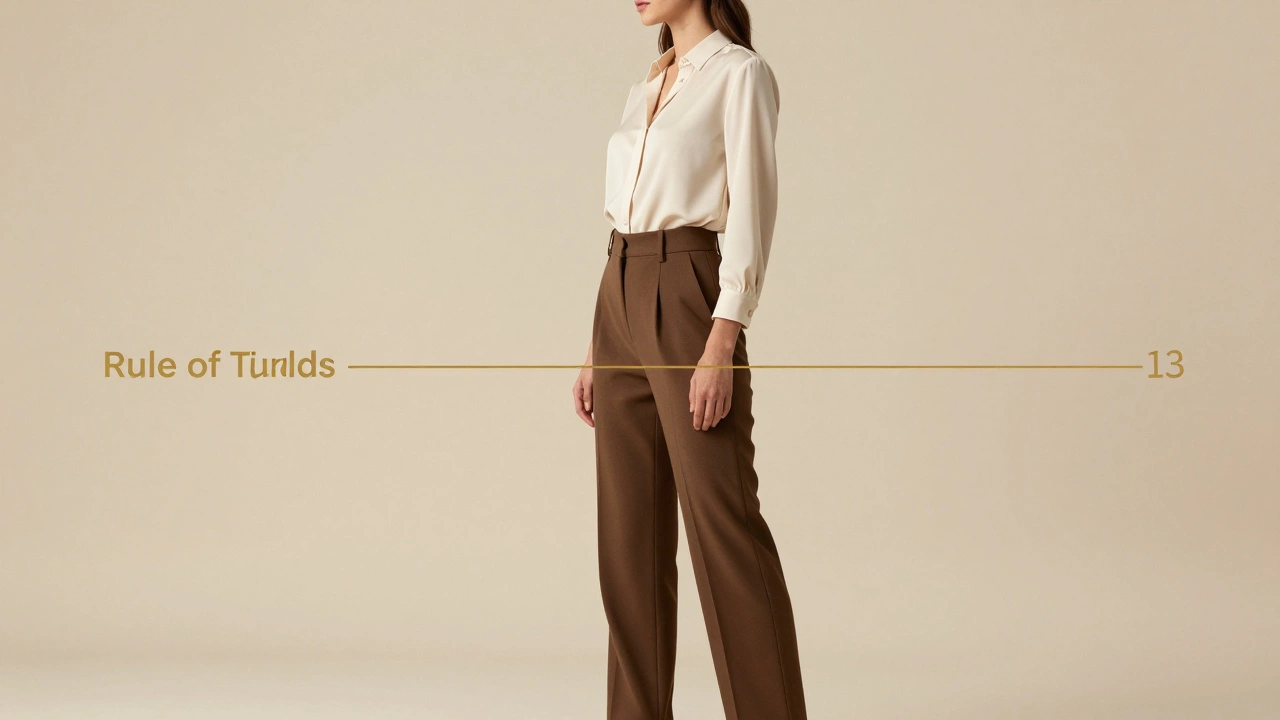
The ultimate secret to body shape dressing is the "Rule of Thirds." Your body should not be split exactly in half (50/50) by your clothing, as this often looks clunky and shortens your legs. Instead, aim for a 1/3 to 2/3 ratio. This means your top takes up one-third of the visual space and your bottoms take up two-thirds (usually achieved by tucking in your shirt or wearing high-waisted bottoms).
When you apply this rule, you instantly look taller and more put-together, regardless of your specific shape. Combine this with the right colors and a focus on fit, and you'll find that the "most attractive" style is simply the one that makes you feel confident. When you stop fighting your body and start working with its natural lines, the clothes start working for you.
Can my body shape change over time?
Yes, body shapes can evolve due to aging, weight fluctuations, or muscle gain. For example, someone might move from a rectangle to an hourglass shape through strength training or a pear to an apple shape as they age. The best approach is to re-evaluate your proportions every year or two to ensure your wardrobe still fits your current frame.
What if I feel like I'm a mix of two different shapes?
Most people are a hybrid. You might have the shoulders of an inverted triangle but the waist of an hourglass. In these cases, identify your most dominant feature and dress for that first, then use small tweaks to balance the other. If you're between a rectangle and a pear, focus on adding volume to your shoulders while using A-line cuts to skim your hips.
Do I have to wear dark colors to look slim?
Not at all. While dark colors are receding and can make an area look smaller, the cut of the garment is far more important. A tight, poorly fitting black dress can look less flattering than a well-structured white A-line dress. Focus on the silhouette and the fit first; color is just the finishing touch.
How do I find a tailor if my clothes don't fit my shape?
Off-the-rack clothing is made for a "standard" average, which rarely exists. Find a local tailor to adjust the waist of your trousers or shorten the sleeves of a blazer. A simple "nipping in" at the waist can turn a boxy dress into an hourglass-enhancing piece for a very small cost.
Are there specific shoes that help balance body shapes?
Absolutely. For pear shapes, a shoe with a slightly chunkier heel can balance the width of the hips. For apple shapes, a pointed-toe shoe helps elongate the leg line. The goal is to avoid shoes that are too dainty if the rest of your look is voluminous, or too bulky if you're trying to create a lean, streamlined silhouette.