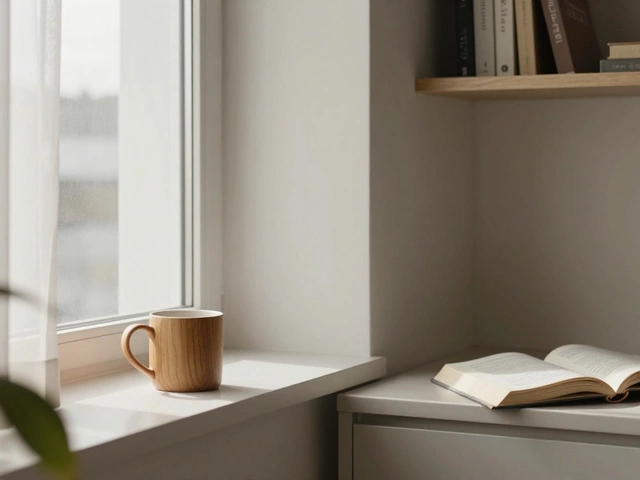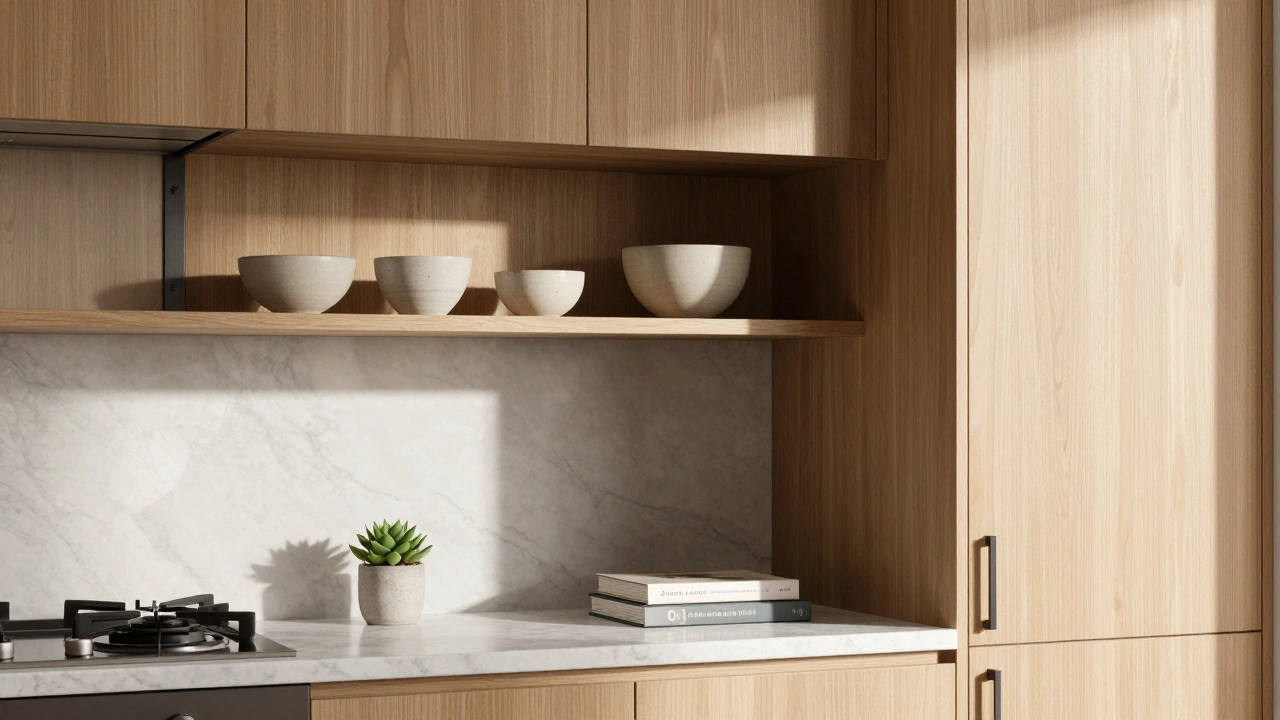
Open shelves were everywhere a few years ago - in kitchens, bathrooms, living rooms. You couldn’t scroll through Instagram without seeing a perfectly arranged display of ceramic bowls, stacked books, and a single potted plant. But now, in 2024, things have shifted. Are open shelves still in style? The answer isn’t a simple yes or no. It’s more like: open shelves are still popular, but they’re being used differently - and not always where you’d expect.
Why open shelves fell out of favor
Let’s be honest: open shelves are high-maintenance. Dust collects fast. Every smudge on a glass mug shows up under bright kitchen lights. If you’ve got kids, pets, or just a busy life, the idea of constantly cleaning and rearranging becomes exhausting. That’s why many homeowners switched back to closed cabinets around 2021. They wanted less visual clutter and more practical storage.
A 2023 survey by the National Kitchen and Bath Association found that 68% of new kitchen builds in the U.S. included at least one full set of closed cabinets, up from 52% in 2019. People weren’t abandoning style - they were choosing functionality. Open shelves started to feel less like a design choice and more like a chore.
But they’re making a comeback - smartly
Here’s the twist: open shelves aren’t gone. They’re evolving. In 2024, they’re not the default. They’re intentional. You’ll see them in places where aesthetics matter more than storage: in powder rooms, dining nooks, home offices, and living room accent walls.
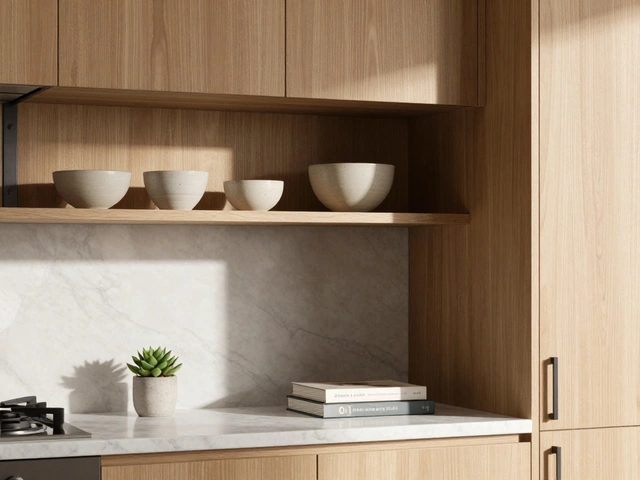
Take the modern kitchen. Instead of replacing all cabinets with open shelves, designers are using them as a contrast. One wall of open shelving alongside solid cabinetry. A narrow section above the stove for display items. That way, you get the visual warmth of exposed storage without the daily upkeep of a full open system.
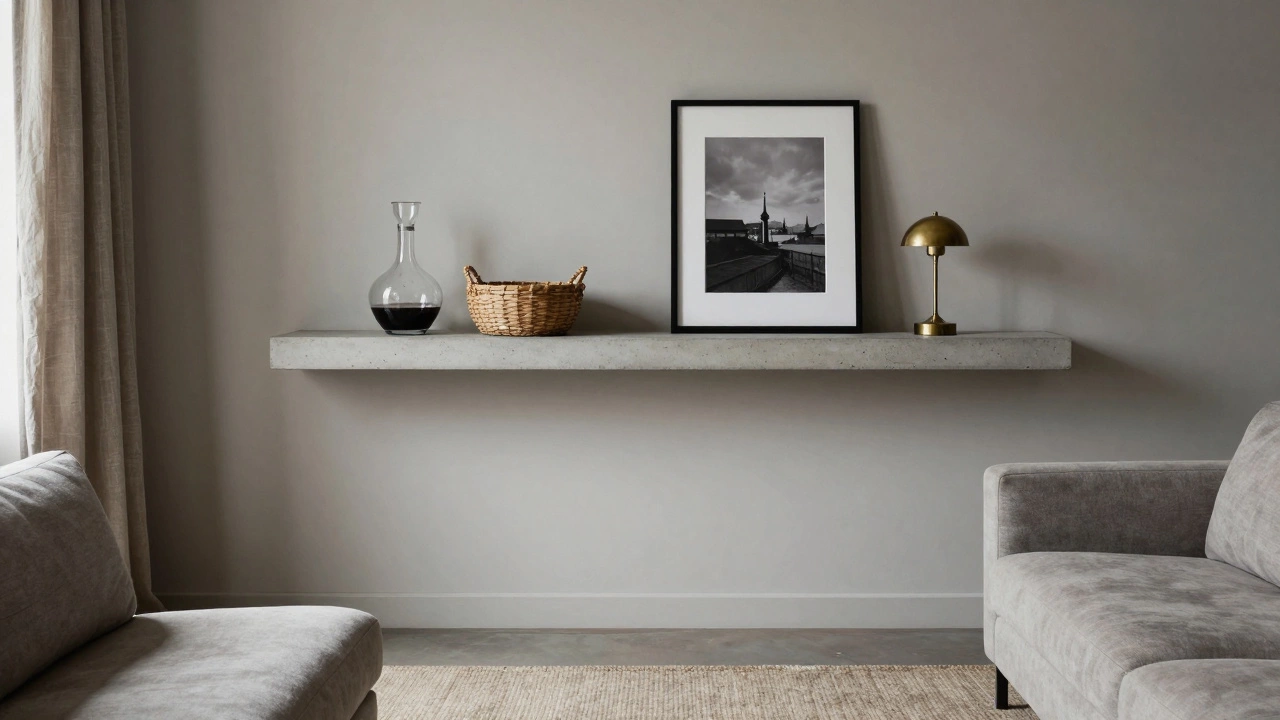
And it’s not just about looks. Materials have changed. Instead of cheap pine or painted white wood, you’re seeing natural oak, blackened steel, or even concrete shelving. These materials age well. They don’t show dust the same way. They feel more like architecture than furniture.
What’s on the shelves now?
The items you put on open shelves say a lot about your style - and your lifestyle. In 2024, the old rules are out. No more perfectly aligned mugs or matching dish sets. The trend now is curated asymmetry.
Think: one ceramic vase, two hand-thrown bowls, a stack of cookbooks with their spines facing out, and a small plant with textured leaves. No plastic storage bins. No labeled jars. No clutter. The goal isn’t perfection - it’s personality.
People are also mixing textures. A woven basket next to a matte black metal tray. A vintage glass decanter beside a stack of linen napkins. The more varied the materials, the more intentional the look feels.
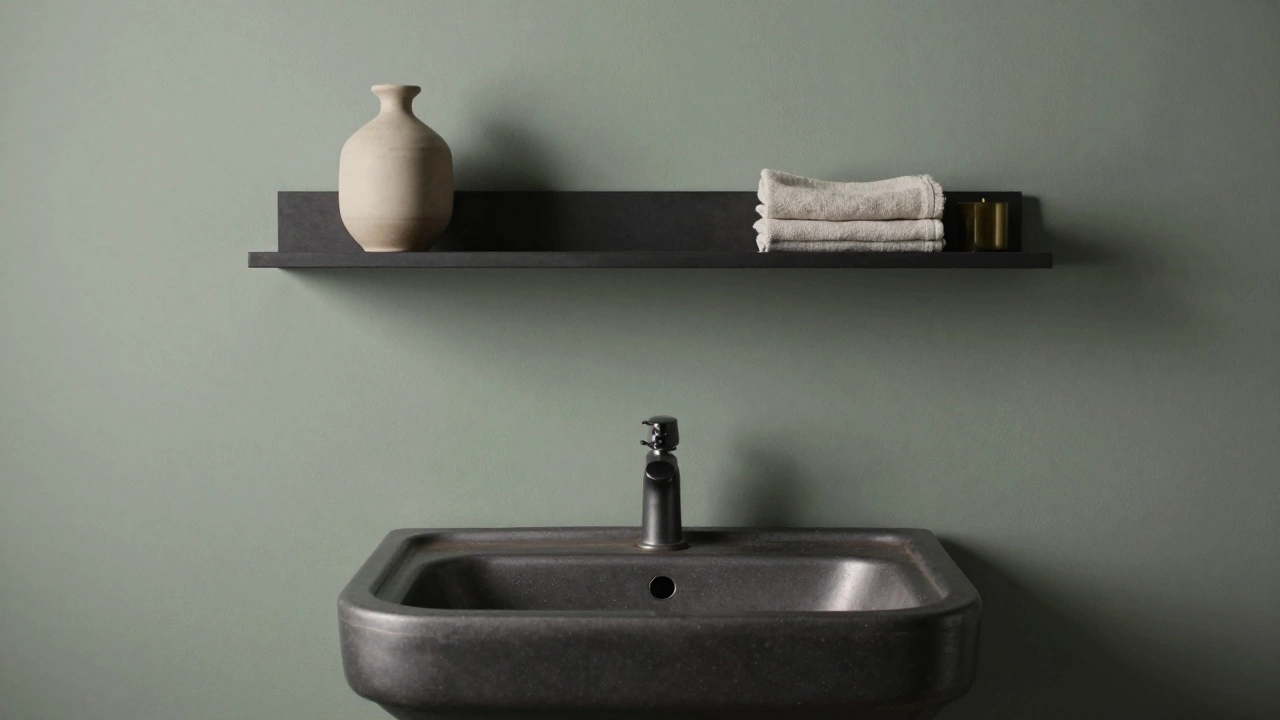
And color? Gone are the days of all-white. Dark shelves - charcoal, navy, or even deep green - are trending. They create depth. They make the items on them pop. A white shelf with white dishes? That’s a recipe for visual noise. A dark shelf with cream ceramics? That’s a statement.
Where open shelves work best in 2024
Not every space is right for open shelving. Here’s where they still shine:
- Small bathrooms: A single shelf above the sink holds towels, candles, and a small plant. No cabinet doors to open - just grab what you need.
- Home offices: Display books, a vintage typewriter, or framed prints. It turns storage into inspiration.
- Dining areas: A narrow shelf along the wall above a sideboard holds glassware, serving trays, or a few decorative objects. It adds height without blocking light.
- Living room accent walls: A floating shelf above the sofa with a few art pieces and a lamp creates a gallery-like feel without installing a full wall unit.
What doesn’t work? Full open shelving in a busy kitchen. If you cook daily, you need hidden storage for pots, pans, and bulk items. Open shelves are for display, not daily use.
The real reason open shelves are back
It’s not nostalgia. It’s not TikTok trends. It’s because people are tired of everything being hidden. We want to see what we love. We want our homes to reflect who we are - not just what we own.
Open shelves in 2024 aren’t about being trendy. They’re about being personal. They’re about showing off handmade pottery, travel souvenirs, or books you’ve actually read. They’re about creating spaces that feel lived-in, not staged.
The key? Less is more. One well-chosen shelf, with three or four meaningful items, does more than five shelves crammed with stuff. Quality over quantity. Intention over imitation.
What to avoid
Even if you love open shelves, avoid these common mistakes in 2024:
- Using them in high-traffic areas where dust and grease build up (like above a stove without a hood).
- Matching everything - it looks fake. Embrace imperfection.
- Putting functional items on display - mixing coffee mugs with decorative plates looks messy, not stylish.
- Installing them too high or too low. The sweet spot? Eye level or just below.
Final verdict
Are open shelves still in style in 2024? Yes - but only if you treat them like art, not storage. They’re not for everyone. If you hate dusting, skip them. If you love curating, they’re a gift.
The best open shelves don’t shout. They whisper. They invite you to pause, look closer, and remember why you kept that one mug from your trip to Portugal. That’s not a trend. That’s a home.
Are open shelves hard to clean?
Yes, they require regular dusting - about once a week if you’re in a dusty area or have pets. But modern designs make it easier: shallow shelves with rounded edges don’t trap dust like deep, boxy ones. Wiping them down with a microfiber cloth and a bit of wood cleaner (for wood shelves) or damp cloth (for metal or concrete) takes less than five minutes. The key is consistency - don’t let dust build up, or it becomes harder to remove.
Do open shelves make a room look smaller?
No - if done right. Open shelves actually create a sense of airiness because they don’t block light or visual flow like solid cabinets. But if you overcrowd them with too many items, they can feel cluttered, which makes a space feel smaller. Stick to three to five items per shelf. Use vertical space wisely: taller items in the back, shorter ones in front. This keeps the eye moving naturally and maintains an open feel.
Can I mix open shelves with closed cabinets?
Absolutely - and it’s the most popular approach in 2024. Many homeowners use open shelves for display areas (like above the sink or on one wall) and keep closed cabinets for daily storage. This balance gives you the beauty of exposed items without the daily hassle of organizing everything. It’s also more cost-effective than going fully open.
What materials are trending for open shelves in 2024?
Natural wood (especially oak and walnut), blackened steel, and textured concrete are leading the trend. These materials have a raw, grounded feel that contrasts nicely with soft textiles and ceramics. Avoid painted white or cheap MDF - they look dated. Solid wood or metal shelves also last longer and handle wear better. Look for shelves with visible grain or industrial finishes - they add character without needing decoration.
Are open shelves good for small apartments?
Yes - if used strategically. In small spaces, open shelves can replace bulky bookshelves or storage units. A single floating shelf above a desk doubles as both storage and decor. In a studio apartment, use them to define zones - like a shelf between the sleeping area and living space. Keep items minimal and purposeful: one lamp, two books, a small plant. This keeps the space feeling open and uncluttered.