
ACV Calorie Reduction Estimator
Based on clinical studies, ACV may help reduce calorie intake by about 200 calories per meal when taken before eating. This tool estimates your potential daily reduction based on usage.
Remember: ACV isn't a weight loss solution on its own. It works best as part of a healthy diet and exercise plan.
If you’ve scrolled through social media lately, you’ve probably seen someone chugging a shot of apple cider vinegar before breakfast. The claims? Burn fat, curb cravings, and drop pounds without changing a thing about your diet. It sounds too good to be true-and for the most part, it is. But before you write it off as another fad, let’s look at what actually happens when you drink apple cider vinegar for weight loss.
What is apple cider vinegar, really?
Apple cider vinegar (ACV) is made by crushing apples, squeezing out the juice, and then letting it ferment. First, yeast turns the sugar into alcohol. Then, bacteria turn that alcohol into acetic acid-the main active ingredient. That’s what gives it its sharp smell and sour taste. A typical tablespoon of ACV has less than 3 calories and contains no sugar, carbs, or fat. It’s not a miracle, but it’s not empty junk either.
Some brands are filtered and pasteurized. Others are raw and cloudy, with something called the "mother"-a mix of proteins, enzymes, and friendly bacteria. That cloudy stuff doesn’t make it more effective for weight loss, but it does mean it’s less processed. If you’re looking for something natural, go for the unfiltered kind. But don’t expect magic.
Does apple cider vinegar help you lose weight?
The short answer: maybe, but not the way you think.
A 2009 study published in Bioscience, Biotechnology, and Biochemistry gave 144 obese Japanese adults either one or two tablespoons of ACV daily, or a placebo, over 12 weeks. Those who drank two tablespoons lost an average of 1.9 kilograms (about 4.2 pounds). Those who drank one tablespoon lost about 1.2 kilograms (2.6 pounds). The placebo group lost almost nothing. Sounds promising, right?
But here’s the catch: none of them changed their diet or exercise habits. They just added vinegar. That means the weight loss likely came from reduced appetite and slightly lower calorie intake-not fat burning. In fact, later studies showed that ACV might slow stomach emptying, making you feel full longer. That’s useful if you’re prone to overeating, but it won’t work if you’re still eating junk food.
Another small 2018 study in Journal of Functional Foods found that people who took ACV before meals ate about 200 fewer calories that day. Not because they were starving, but because they felt satisfied sooner. Again, no magic fat-burning. Just better portion control.
How does it actually work?
Acetic acid is the star here. It does three things that might help with weight management:
- Slows digestion: It delays how fast food leaves your stomach, so you don’t get hungry again right away.
- Reduces blood sugar spikes: After eating carbs, ACV can help lower insulin spikes. High insulin = more fat storage. Lower insulin = less fat stored.
- May reduce fat accumulation: Animal studies show acetic acid can turn off genes linked to belly fat. But human trials haven’t confirmed this yet.
None of this means ACV melts fat. It doesn’t boost metabolism. It doesn’t trigger fat-burning hormones. What it does is help you eat less and avoid crashes that lead to snack attacks.

How to use it (and how not to)
If you want to try it, do it right.
Start with one tablespoon diluted in a glass of water-about 8 ounces. Drink it before meals, preferably breakfast or lunch. You can add a teaspoon of honey if the taste is too sharp. Never drink it straight. The acid can erode tooth enamel and irritate your throat. Use a straw if you can.
Some people swear by taking it first thing in the morning. That’s fine, but don’t skip brushing your teeth afterward. Wait at least 30 minutes to brush, or rinse with plain water first. Your teeth will thank you.
Don’t expect results in a week. In the studies, changes took 8 to 12 weeks. And if you’re drinking ACV but still eating pizza, ice cream, and sugary coffee every day? You’re not going to lose weight. It’s not a substitute for better food choices.
Who should avoid it?
Not everyone should try apple cider vinegar.
- If you have acid reflux or GERD, it might make things worse.
- If you’re on diabetes medication, ACV can lower blood sugar too much. Talk to your doctor before starting.
- If you have kidney disease, your body may not handle the extra acid well.
- Long-term use has been linked to low potassium levels and bone loss in rare cases.
Also, don’t rely on it if you’re pregnant, breastfeeding, or under 18. There’s not enough safety data.
What actually works for weight loss?
ACV might help a little. But if you’re serious about losing weight, you need to focus on what matters:
- Eat more protein: It keeps you full longer than carbs or fat.
- Move more: Even walking 30 minutes a day burns 150-200 calories.
- Sleep well: Poor sleep increases hunger hormones and cravings.
- Drink water: Sometimes thirst feels like hunger. Try a glass before snacking.
- Reduce ultra-processed foods: Chips, cookies, sugary drinks-they’re designed to make you eat more.
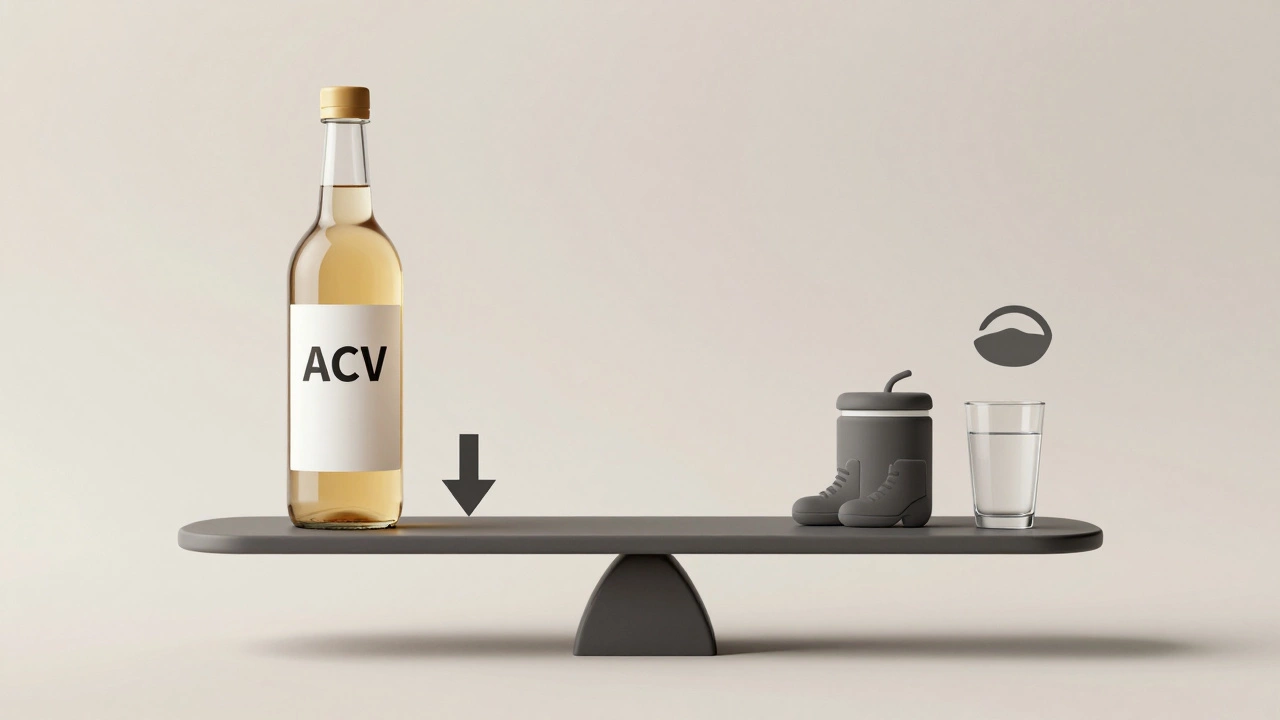
Apple cider vinegar doesn’t replace these. It might support them. Think of it like adding a sprinkle of salt to food-not the whole meal.
The bottom line
Apple cider vinegar isn’t a weight loss cure. But if you’re already eating well and moving regularly, a daily dose might give you a small edge. It’s not about the vinegar. It’s about using it as a tool to help you eat less, snack less, and feel more in control.
Try it for six weeks. Keep a food journal. Notice if you’re eating fewer calories without feeling hungry. If it helps, keep going. If you don’t notice a difference? Stop. There are plenty of other ways to lose weight that don’t involve sour liquid.
And remember: no supplement, no matter how natural, can fix a bad diet. Real weight loss comes from habits-not bottles.
Can apple cider vinegar burn belly fat specifically?
No. There’s no such thing as spot reduction. ACV doesn’t target belly fat any better than it does fat elsewhere. Any reduction in waist size from ACV use is likely due to overall weight loss from eating fewer calories, not because it selectively breaks down abdominal fat.
How long does it take to see results with apple cider vinegar?
In clinical studies, people started seeing small changes in weight and waist size after about 8 weeks. Most saw noticeable results by week 12. That’s because it works by helping you eat less, not by speeding up metabolism. Quick fixes don’t exist here.
Is it better to take ACV in the morning or before meals?
Before meals is better. That’s when it helps slow digestion and reduce blood sugar spikes after eating. Taking it in the morning on an empty stomach might help curb hunger later, but it won’t have the same effect on how your body processes food. If you’re eating breakfast, take it right before.
Can I drink apple cider vinegar every day?
Yes, if you dilute it and don’t overdo it. One to two tablespoons a day, mixed in water, is generally safe for most people. But if you start feeling stomach pain, heartburn, or notice your teeth becoming sensitive, stop. Long-term daily use without breaks can harm tooth enamel or lower potassium levels.
Does apple cider vinegar work better with a keto diet?
There’s no strong evidence it works better on keto. Some people say it helps with cravings, but that’s likely because the keto diet itself reduces hunger. ACV doesn’t enhance ketosis. If you’re already on keto, it might help you stick to your plan by reducing appetite-but it won’t make the diet more effective.