Emotional Healing Pathway Builder
Step 1: How are you feeling right now?
Select the symptoms that best describe your current state. This helps us tailor your healing path.
Step 2: What do you need most right now?
Healing requires different tools at different times. Select your primary goal.
Step 3: How much time can you commit daily?
Consistency matters more than intensity. Be realistic about your schedule.
5-10 Mins
Micro-habits15-30 Mins
Standard routine30+ Mins
Deep workYour Personalized Healing Pathway
Based on your inputs, here is a practical plan for you.
Emotional pain feels physical. It sits in your chest, tightens your stomach, and drains your energy faster than a bad night’s sleep. You might be asking yourself how to heal emotionally because you feel stuck in a loop of sadness, anxiety, or anger that just won’t break. The good news is that emotional healing is not about erasing the past; it is about building a new relationship with your experiences so they no longer control your present.
You do not need a magic pill or a perfect life to start feeling better. You need practical tools, consistent habits, and a shift in perspective. Healing is a process, not an event. It requires patience, but it is entirely within your reach if you approach it systematically.
Understanding the Mechanics of Emotional Pain
Before you can fix what is broken, you have to understand why it hurts. Emotional pain triggers the same neural pathways as physical pain. When you experience rejection, loss, or betrayal, your brain releases stress hormones like cortisol and adrenaline. These chemicals prepare you for "fight or flight," but modern problems rarely involve tigers chasing us. Instead, we sit at our desks or lie in bed, ruminating on the past while our bodies stay in high-alert mode.
This chronic activation leads to emotional dysregulation, where small triggers cause disproportionate reactions. You might snap at a partner over a dirty dish because your nervous system is already overloaded from unresolved grief. Recognizing this biological response is crucial. It means your pain is valid, but it also means it is manageable through physiological and psychological interventions.
| Symptom Category | Physical Signs | Emotional Signs |
|---|---|---|
| Hypervigilance | Racing heart, shallow breathing | Anxiety, irritability, fear |
| Shutdown/Freeze | Fatigue, numbness, heavy limbs | Apathy, depression, dissociation |
| Chronic Stress | Headaches, muscle tension | Mood swings, brain fog |
The Foundation: Safety and Stabilization
You cannot heal trauma or deep emotional wounds if you feel unsafe. The first step in self-healing is creating a sense of safety in your body and environment. This is often overlooked because people jump straight into analyzing their childhood or talking through their feelings. But without a regulated nervous system, those conversations can re-traumatize you rather than help you.
Start with grounding techniques. These are simple actions that bring your awareness back to the present moment. Try the "5-4-3-2-1" method: identify five things you see, four you can touch, three you hear, two you smell, and one you taste. This forces your brain to switch from abstract worrying to concrete sensory processing. It lowers cortisol levels almost immediately.
Create a safe space in your home. It does not need to be a meditation room. It can be a corner with a comfortable chair, soft lighting, and no screens. Make this place sacred. Only go there when you need to calm down or reflect. Over time, your brain will associate this space with relief, making it easier to access calm states.
Processing Emotions Without Judgment
Many people try to suppress their emotions because they view them as weaknesses. This is a mistake. Emotions are data. Anger tells you a boundary has been crossed. Sadness signals a loss that needs mourning. Fear indicates a threat that needs attention. If you ignore these signals, they don’t disappear; they accumulate and manifest as anxiety or physical illness.
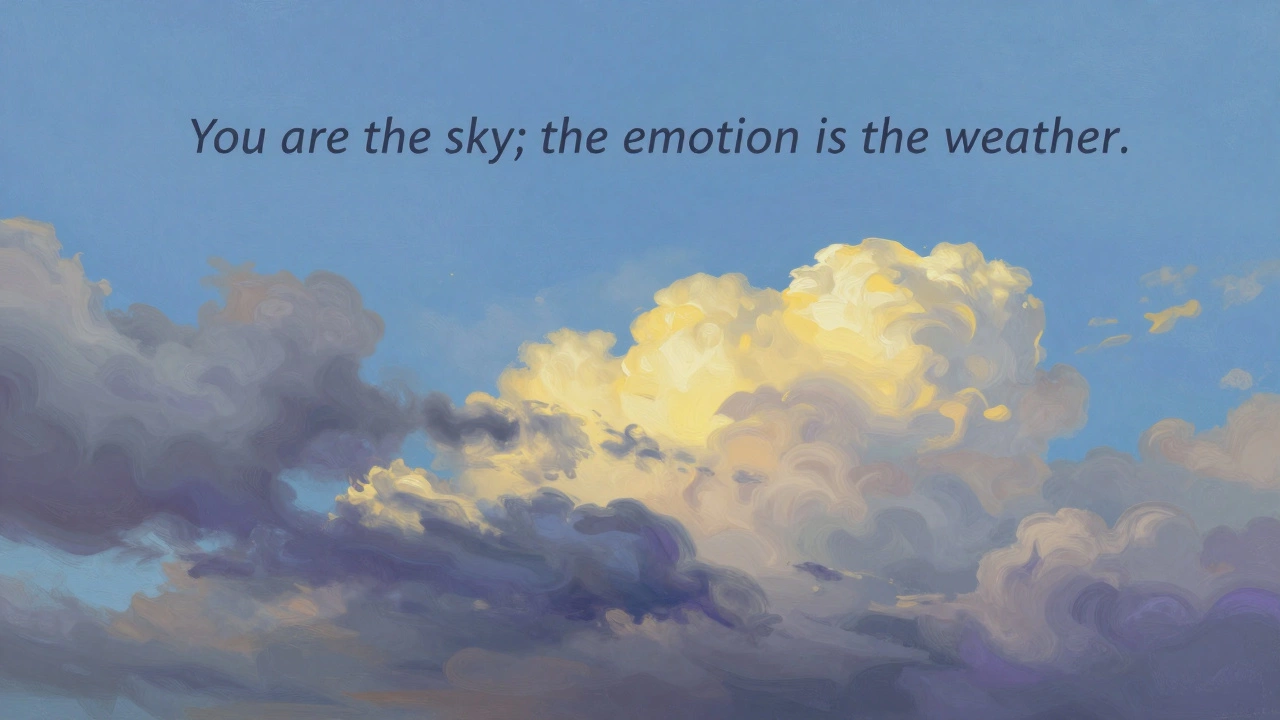
To process emotions effectively, practice mindful observation. Instead of saying "I am angry," say "I am experiencing anger." This subtle shift creates distance between you and the emotion. You are the sky; the emotion is the weather. The storm passes, but the sky remains. Journaling is a powerful tool here. Write down exactly what you feel without editing or judging. Let the words flow. Often, just naming the emotion reduces its intensity by up to 50%.
Avoid the trap of rumination. Rumination is repetitive thinking about the causes and consequences of distress without finding solutions. Mindfulness is different. It involves observing thoughts without getting caught in them. If you find yourself looping, gently redirect your focus to your breath or your surroundings. This builds emotional resilience over time.
Building Healthy Coping Mechanisms
When emotions run high, we often reach for unhealthy coping mechanisms like alcohol, overeating, or doom-scrolling social media. These provide temporary relief but worsen the underlying issue. To heal, you need to replace these habits with constructive alternatives.
Physical movement is one of the most effective ways to release stored emotional energy. Exercise boosts endorphins and serotonin, natural mood lifters. You don’t need to run a marathon. A twenty-minute walk outside, especially in nature, can significantly reduce stress. Yoga and tai chi are particularly beneficial because they combine movement with breathwork, directly calming the nervous system.
Creative expression is another outlet. Painting, writing, playing music, or even cooking allows you to externalize your inner world. It gives form to formless feelings, making them easier to understand and integrate. You don’t have to be an artist. The act of creation itself is therapeutic.
- Movement: Walk, dance, stretch, or lift weights to release tension.
- Creativity: Draw, write, sing, or craft to express unspoken feelings.
- Nature: Spend time outdoors to reset your circadian rhythm and lower stress.
- Connection: Talk to trusted friends or join support groups.
The Role of Connection and Boundaries
Humans are social creatures. Isolation exacerbates emotional pain. However, not all connections are healthy. Toxic relationships drain your energy and reinforce negative beliefs about yourself. Part of healing involves setting firm boundaries.
Learn to say "no" without guilt. Protect your energy like it is a limited resource-because it is. Surround yourself with people who validate your experiences and encourage your growth. If you lack such people, seek out community groups, therapy circles, or online forums focused on mental wellbeing. Shared vulnerability fosters connection and reduces shame.
Therapy is a gold standard for emotional healing. Modalities like Cognitive Behavioral Therapy (CBT) help you identify and change distorted thought patterns. EMDR (Eye Movement Desensitization and Reprocessing) is highly effective for trauma. Somatic Experiencing focuses on releasing trauma stored in the body. Finding the right therapist is key. Look for someone who makes you feel heard and respected.

Self-Compassion: The Antidote to Shame
Shame is the belief that you are fundamentally flawed. It whispers that you deserve your pain. Self-compassion challenges this narrative. It involves treating yourself with the same kindness you would offer a friend in distress.
Practice self-compassion by acknowledging your suffering. Say to yourself, "This is hard, and it’s okay that I’m struggling." Research shows that self-compassion increases resilience and reduces anxiety more effectively than self-esteem. It doesn’t mean letting yourself off the hook; it means holding yourself accountable with love rather than criticism.
Write a letter to yourself from the perspective of a loving friend. What would they say? How would they comfort you? Read it when you feel low. Over time, you will internalize this compassionate voice, replacing your inner critic with an inner supporter.
Patient Persistence: The Long Game
Healing is not linear. You will have good days and bad days. Setbacks are part of the process, not signs of failure. Be patient with yourself. Celebrate small victories. Did you take a deep breath instead of yelling? Did you go for a walk instead of drinking? These are wins.
Consistency matters more than intensity. Doing ten minutes of mindfulness daily is better than an hour once a month. Build tiny habits that compound over time. Your brain rewires itself through repetition. Every time you choose a healthy response, you strengthen new neural pathways. Eventually, the old patterns fade.
Remember, you are not broken. You are human. You have survived 100% of your worst days so far. With the right tools and mindset, you can heal yourself emotionally and build a life filled with peace, joy, and purpose.
How long does emotional healing take?
There is no fixed timeline for emotional healing. It varies based on the severity of the trauma, individual resilience, and support systems. For some, significant improvement happens in weeks; for others, it takes years. Focus on progress, not perfection. Small, consistent steps lead to lasting change.
Can I heal myself without therapy?
Yes, many people heal using self-help strategies like journaling, exercise, and mindfulness. However, therapy provides structured guidance and professional support, which can accelerate healing, especially for complex trauma. Combining self-care with therapy often yields the best results.
What are the best grounding techniques for anxiety?
Effective grounding techniques include the 5-4-3-2-1 sensory method, deep diaphragmatic breathing, holding ice cubes, or focusing on a single object in detail. These practices interrupt panic loops by engaging your senses and bringing you back to the present moment.
How do I stop ruminating on the past?
To stop rumination, acknowledge the thought without judgment, then gently redirect your focus. Use mindfulness exercises, engage in physical activity, or set aside specific "worry time" to contain intrusive thoughts. Over time, you train your brain to let go of repetitive cycles.
Is self-compassion different from self-pity?
Yes. Self-pity focuses on victimhood and hopelessness, whereas self-compassion acknowledges pain with kindness and encourages growth. Self-compassion empowers you to take responsibility for your healing, while self-pity keeps you stuck in despair.