Mental Wellness Habit Tracker
Track your small daily actions from the article. Each habit earns you points toward greater wellbeing. Science shows consistent small steps create meaningful change.
Deep Breathing
Practice 4-2-6 breathing for 3 minutes
Harvard study shows 5 minutes daily reduces cortisol by 20%
Mindful Movement
20 minutes of intentional movement
2023 Auckland study shows 34% reduction in rumination
Emotional Journaling
Write freely for 15 minutes
15 minutes daily improves sleep and mood
Meaningful Connection
One real conversation with someone
Real conversations improve emotional resilience by 41%
Intentional Rest
No screens 60 minutes before bed
60 minutes of screen-free time improves sleep quality by 30%
Letting Go of "Should"
Notice and release "should" thoughts
Breaking "should" patterns reduces self-criticism
Your Progress
Each habit completed today contributes to your wellbeing journey. The more you practice, the deeper your healing becomes.
Healing your mind isn’t about fixing something broken. It’s about returning to yourself - the version that breathes easy, sleeps well, and doesn’t feel like they’re running on empty. If you’ve been feeling drained, stuck, or just… off, you’re not alone. Mental wellbeing isn’t a luxury. It’s as essential as food and water. And the good news? You don’t need a therapist, a retreat, or a million-dollar app to start. Real healing begins with small, consistent actions - ones that fit into your life, not the other way around.
Start with your breath
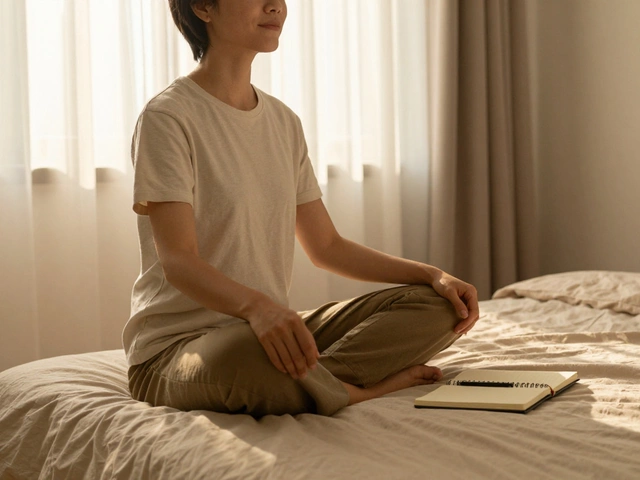
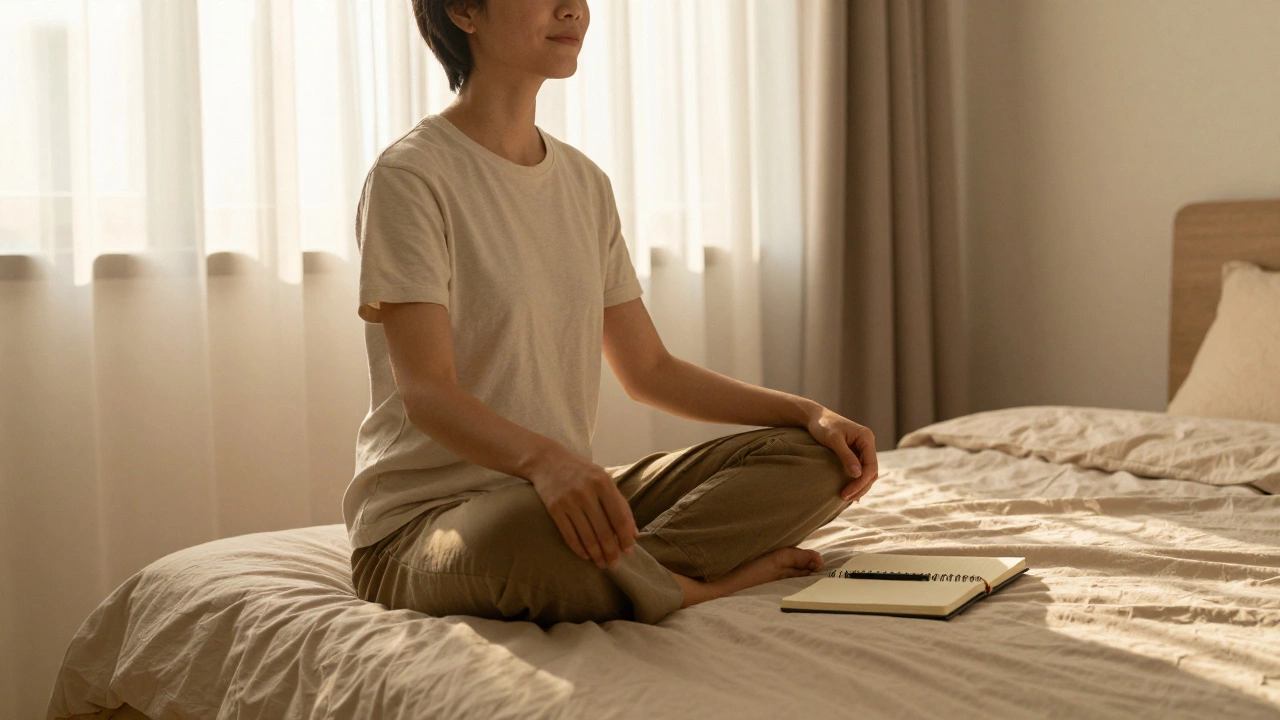
When your mind feels tangled, your breath is the one thing you can always return to. It’s free, always available, and scientifically proven to calm your nervous system. Try this: sit down, close your eyes, and take four slow breaths in through your nose - counting to four. Hold for two. Then breathe out through your mouth for six. Do this three times. That’s it. No special posture. No chanting. Just breath.
Why does this work? Deep, slow breathing triggers your parasympathetic nervous system - the part that says, "You’re safe now." Studies from Harvard Medical School show that just five minutes of controlled breathing daily lowers cortisol levels and reduces anxiety. You don’t need to meditate for an hour. Start with three breaths when you wake up. Or before you check your phone. That’s your first step.
Movement isn’t about fitness - it’s about feeling
You don’t have to run a marathon or do yoga on a mat to move your body in a way that heals your mind. Walk. Stretch. Dance in your kitchen. Rock back and forth while you wash dishes. Movement releases endorphins, yes, but more importantly, it reconnects you with your body.
When you’re overwhelmed, your mind gets stuck in loops. Your body? It’s been holding the tension. A 2023 study from the University of Auckland found that people who moved their bodies for just 20 minutes a day - regardless of intensity - reported a 34% drop in rumination (that endless loop of negative thoughts). Try walking without headphones for five minutes. Notice the wind. The sound of your footsteps. The way your arms swing. You’re not exercising. You’re coming back to yourself.
Write what you can’t say out loud
Journaling isn’t about writing beautifully. It’s about writing honestly. Grab a notebook. Any notebook. Open it. And write the first thing that comes to mind - even if it’s "I don’t know what to write." Keep going. Don’t edit. Don’t judge.
This isn’t therapy. It’s a release valve. A 2021 study from the University of Texas found that people who wrote about their deepest emotions for 15 minutes a day, three times a week, showed measurable improvements in sleep, mood, and even immune function. You’re not writing for anyone else. You’re writing to untangle what’s stuck inside. Try this: "Today, I felt..." and let it spill out. Do it for three days. See what changes.

Connect - not scroll
Social media doesn’t heal. Real connection does. One text. One call. One coffee. That’s all it takes. Loneliness isn’t about being alone - it’s about feeling unseen. And it’s as harmful to your health as smoking.
A 2025 study from Massey University tracked 1,200 New Zealanders over six months. Those who had one meaningful conversation per day - not a comment on Instagram, not a group chat, but a real, focused talk - reported a 41% improvement in emotional resilience. Call your sister. Text your old friend. Ask someone: "How are you, really?" Then listen. No advice. No fixes. Just presence. That’s the healing.
Rest isn’t laziness - it’s repair
Healing your mind requires space. Not more to-do lists. Not another productivity hack. Just rest. Real rest. That means turning off screens an hour before bed. Not because you "should," but because your brain needs to shift out of fight-or-flight mode.
Most people think sleep is just about hours. It’s not. It’s about quality. A 2024 sleep study from the Wellington Sleep Lab found that people who stopped scrolling 60 minutes before bed fell asleep 22 minutes faster and had 30% more deep sleep. Try this: set a wind-down alarm. When it goes off, dim the lights, sip warm water, and read something printed - a book, a magazine, even a letter. Let your mind slow down. You’re not wasting time. You’re rebuilding.

Let go of "should"
"I should be further along." "I should be stronger." "I should be over it by now." These thoughts aren’t helpful. They’re heavy. And they’re lies your mind tells you when it’s tired.
Healing doesn’t follow a timeline. Grief, stress, burnout - they don’t care about your calendar. The goal isn’t to fix everything. It’s to stop fighting yourself. Ask: "What do I need right now?" Not what you think you "should" need. Maybe it’s silence. Maybe it’s tears. Maybe it’s pizza on the couch. Honor that. You’re not broken. You’re adapting.
Small habits, big changes
You don’t need to overhaul your life. You just need to show up for yourself - daily, quietly, without drama. Pick one thing from above. One. Do it for seven days. Not because it’s perfect. But because you showed up. That’s the foundation.
Healing your mind isn’t a destination. It’s a daily practice. Like brushing your teeth. Only this time, you’re brushing away the noise. The fear. The exhaustion. And slowly, you’ll remember: you’re not just surviving. You’re becoming.