80/20 Decluttering Calculator
Enter the approximate number of items in a specific room or category (e.g., clothes in closet, utensils in kitchen) to see your vital 20%.
You know that feeling. You spend a whole weekend cleaning, folding every towel perfectly, and labeling every jar in the pantry. Then, two weeks later, your house looks exactly as messy as it did before. Why does this happen? Most of us try to treat every item in our homes with equal importance. We assume that keeping one old receipt from 2019 is just as vital as keeping our daily coffee mug. It isn’t.
The solution lies in a concept borrowed from economics: the 80/20 rule, also known as the Pareto Principle. In short, it suggests that roughly 80% of your results come from 20% of your efforts. When applied to decluttering, it means you likely use only 20% of your stuff 80% of the time. The other 80% of your possessions are sitting there, gathering dust, and making your life harder. Understanding this shift in perspective changes everything about how you organize your space.
Understanding the Core Concept
Vilfredo Pareto, an Italian economist, first noticed this pattern in the late 19th century when he observed that 80% of the land in Italy was owned by 20% of the population. Later, quality control expert Joseph Juran applied it to business defects. Today, we apply it to our closets. The logic is simple but powerful: not all items are created equal. Some things bring joy, utility, or necessity on a daily basis. Others are 'maybe' items-things you keep because they cost money, have sentimental value, or might be useful 'someday.'
In a typical household, you probably wear 20% of your clothes 80% of the time. You cook with 20% of your kitchen gadgets 80% of the time. The rest is clutter. By identifying that critical 20%, you can streamline your environment so that what remains is actually useful. This isn't about throwing away everything you own; it's about being ruthless with the items that don't serve you right now.
How to Identify Your Vital 20%
Finding your essential 20% requires a bit of detective work. You need to look at your habits, not just your inventory. Start by walking through your home and asking yourself specific questions about usage frequency. If you haven't touched an item in the last six months, it’s likely part of the useless 80%. Here is how to spot the difference across different rooms:
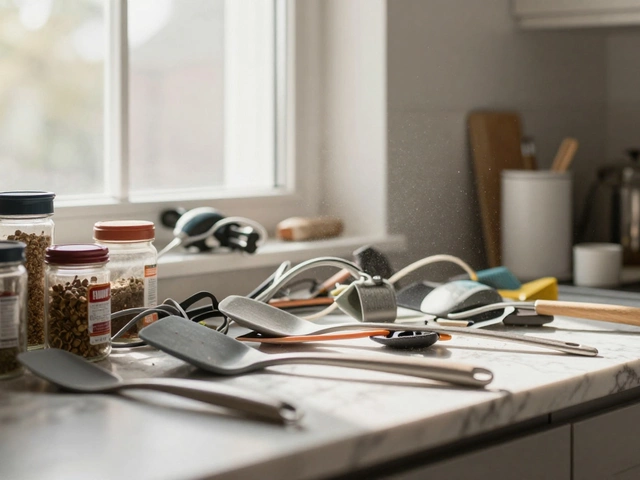
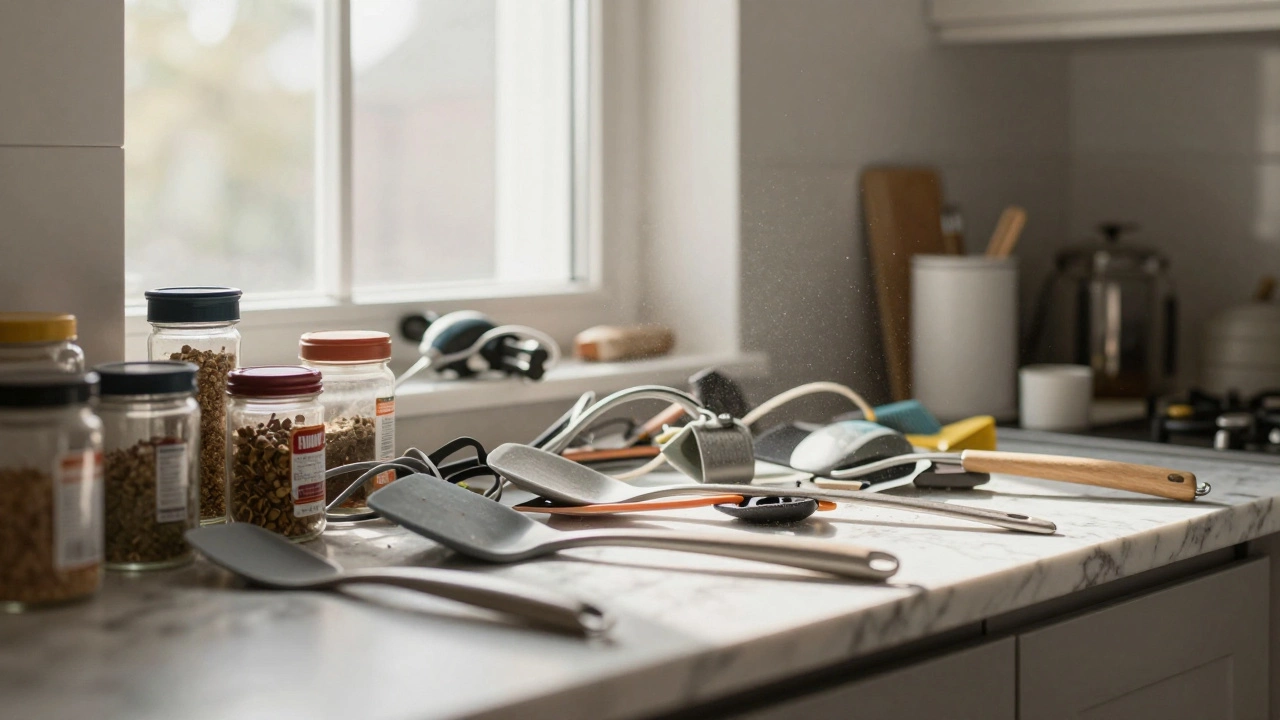
- Kitchen: Look at your utensils. Do you really use those three different types of spatulas, or do you reach for the same silicone one every night? Keep the favorite. Donate the rest. Check your spices. If the bottle is older than six months, it has lost its potency and flavor. That is waste space.
- Closet: Turn your hangers backward. Wear your clothes normally, then turn the hanger forward. After a season, any hanger still facing backward belongs to the 80% you don't need. This visual trick removes the guesswork from clothing decisions.
- Bathroom: Open your medicine cabinet. Count the expired medications and the half-used lotions you forgot existed. These are prime candidates for removal. Keep the toothbrush, the daily moisturizer, and the painkillers. The rest goes.
This process feels uncomfortable at first because we are conditioned to think that 'more' equals 'better.' But in reality, having fewer options reduces decision fatigue. When you walk into a closet with only the clothes you love and fit, getting dressed takes seconds, not minutes.

Step-by-Step Implementation Strategy
Don't try to tackle the whole house at once. That leads to burnout. Instead, pick one small area, like a single drawer or a shelf, and apply the 80/20 filter. Here is a practical workflow to get started:
- Empty the Space: Take everything out of the target area. Place it on a bed or table. Seeing the volume of stuff often shocks people into realizing how much they actually own.
- Sort into Piles: Create three piles: Keep (the 20%), Donate/Sell (the 80% that others might want), and Trash (broken or unusable items).
- Apply the 'One Year' Test: For items in the 'Keep' pile, ask: "Have I used this in the past year?" If the answer is no, move it to the Donate pile. Exceptions exist for seasonal items like winter coats, but even then, if you haven't worn it in two winters, let it go.
- Organize the Keepers: Now that you have identified your vital few, give them a proper home. Store frequently used items at eye level and within easy reach. Put less frequent items higher up or deeper in cabinets.
- Dispose Immediately: Do not put the donation box in the garage for 'later.' Put it in your car and drop it off today. If you leave it in the house, it will eventually migrate back onto a shelf.
This method works because it forces you to make binary decisions. An item either serves a current purpose, or it doesn't. There is no middle ground for 'just in case.'
Common Pitfalls to Avoid
Even with a clear system, emotional barriers can derail your progress. One common mistake is confusing sentimentality with utility. You might keep a gift from a relative because you feel guilty discarding it. However, the memory lives in your mind, not in the object. Taking a photo of the item allows you to keep the memory without keeping the physical clutter.
Another trap is the 'Someday' project. You keep that broken lamp because you plan to fix it next month. Or you keep fabric scraps for a sewing project you haven't started in five years. Be honest with yourself. If you haven't done it yet, you probably won't. Letting go of these projects frees up mental energy for things you actually enjoy doing now.
Finally, avoid buying new organizers before you declutter. Buying cute bins and labels gives you a false sense of accomplishment. It organizes clutter, which is still clutter. Apply the 80/20 rule first. Only buy storage solutions for the 20% of items you decided to keep.
| Aspect | Traditional Method | 80/20 Method |
|---|---|---|
| Focus | Every single item | High-use items only |
| Time Required | Hours per room | Minutes per zone |
| Decision Fatigue | High (too many choices) | Low (clear criteria) |
| Maintenance | Difficult to sustain | Easy to maintain |
| Outcome | Organized clutter | Functional simplicity |
Maintaining the Balance Long-Term
Decluttering is not a one-time event; it is a habit. To keep your home aligned with the 80/20 rule, implement a 'one-in, one-out' policy. If you buy a new pair of shoes, donate an old pair. If you acquire a new kitchen gadget, get rid of the one you rarely use. This prevents the 80% from creeping back up to 100%.
Schedule a quick 15-minute reset every Sunday. Walk through your main living areas and return items to their designated spots. If you find something that doesn't belong, ask if it’s part of your 20%. If not, remove it immediately. This weekly maintenance prevents the buildup of chaos and keeps your environment calm and functional.
Remember, the goal isn't an empty house. It’s a house where every object has a purpose and a place. By focusing on the vital few, you create space for what truly matters in your life, whether that’s family time, hobbies, or simply peace of mind.
Is the 80/20 rule the same as minimalism?
Not exactly. Minimalism often aims to own very little, regardless of utility. The 80/20 rule is more pragmatic. It focuses on efficiency. You keep the 20% of items you use most, even if that number is high for some categories. It’s about optimizing your space for your actual lifestyle, not adhering to a strict aesthetic of emptiness.
What should I do with sentimental items?
Sentimental items are tricky because their value is emotional, not functional. Apply the 80/20 rule here too. Keep the top 20% of memories that truly resonate with you. For the rest, consider taking photos or digitizing them. You can store these digital files safely without taking up physical shelf space. If an item brings you guilt rather than joy, it’s time to let it go.
How do I handle shared spaces with family members?
Communication is key. Explain the benefits of the 80/20 rule, such as easier cleaning and less stress. Start with common areas like the kitchen or living room. Agree on a system together. For personal items, respect each person’s boundaries but encourage everyone to apply the principle to their own zones. Leading by example often inspires others to follow suit.
Can I use the 80/20 rule for digital clutter?
Absolutely. Digital hoarding is real. Look at your phone apps. How many do you open daily? Delete the rest. Check your email inbox. Unsubscribe from newsletters you never read. Archive old files you don’t need immediate access to. Applying the 80/20 rule digitally frees up storage space and reduces notification distractions, improving your focus and productivity.
What if I can't decide whether to keep an item?
If you hesitate, it’s usually a sign that the item isn’t essential. Use the 'box method.' Put uncertain items in a box, date it, and hide it away. If you don’t open the box or need anything from it within six months, donate the entire box unopened. This removes the pressure of making an instant decision while ensuring you don’t keep useless items indefinitely.