Meditation Posture Comfort Calculator
Find Your Ideal Meditation Posture
Answer a few questions to determine if your current posture might cause discomfort during meditation.
Your Results
Recommendations
Have you ever sat down to meditate and immediately felt like your legs were betraying you? That sharp pinch, the tingling, the urge to shift-why do so many people cross their legs when they meditate? It’s not because it’s the only way. It’s not because ancient traditions demanded it. It’s because, for most people, it just works.
It’s About Stability, Not Tradition
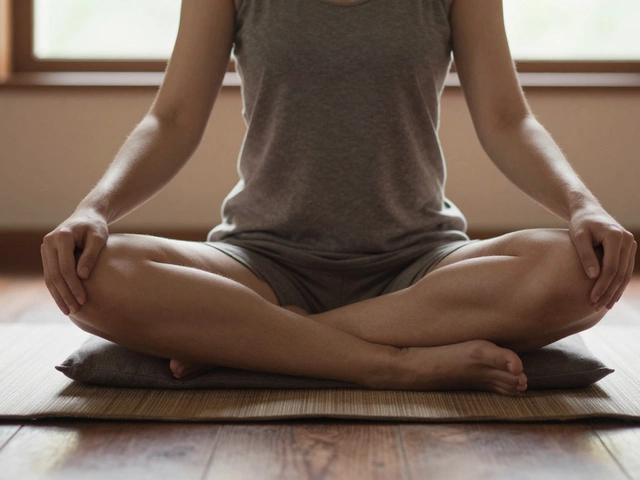
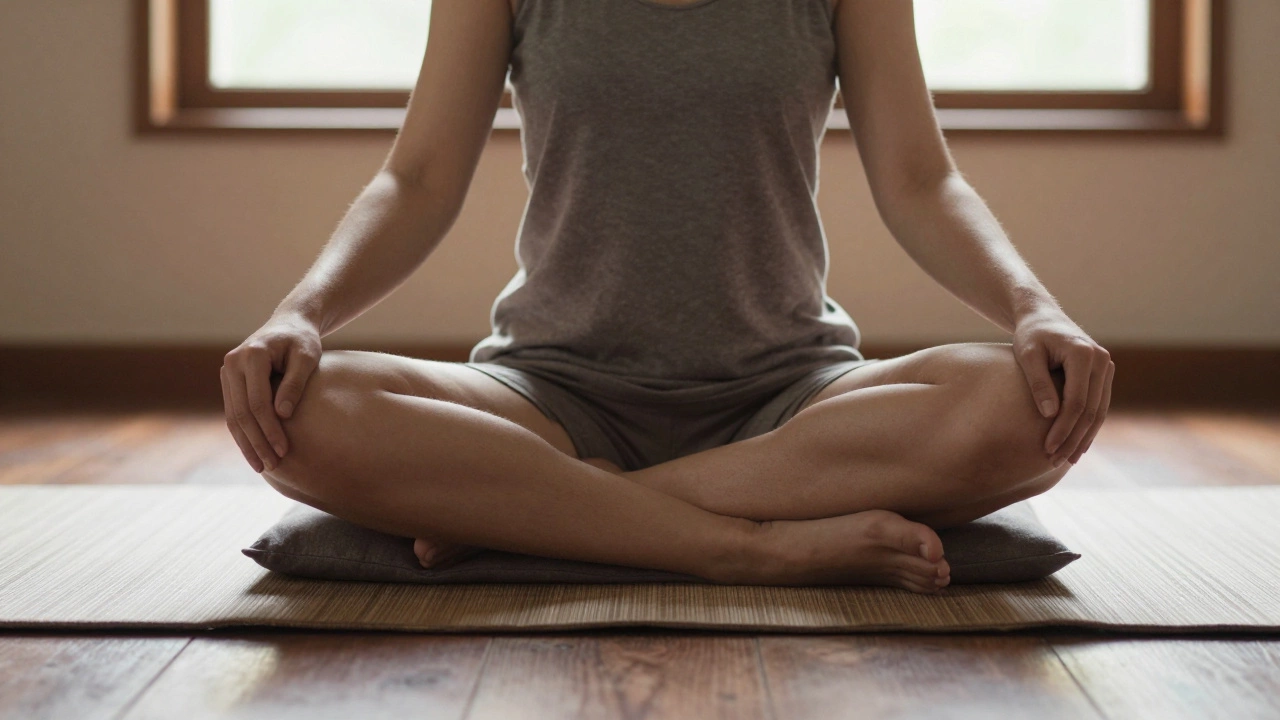
People often assume crossing your legs is a spiritual rule handed down from monks in Himalayan caves. But the truth is simpler: crossed legs create a stable base. When you sit with your legs crossed-whether in lotus, half-lotus, or just ankles crossed-you naturally lower your center of gravity. Your pelvis tilts forward slightly, your spine finds its natural curve, and your body stops fighting to stay upright.Try sitting in a chair with your feet flat on the floor. Now try crossing your ankles. Notice how your pelvis shifts? That’s the same effect. Your spine doesn’t have to work as hard to stay straight. Your shoulders relax. Your breath deepens. That’s why even modern mindfulness teachers, like Jon Kabat-Zinn, recommend seated postures that allow the body to settle without strain.
It’s not about looking like a yogi. It’s about letting your body stop being a distraction.
Why Not Just Sit in a Chair?
You’ve probably heard that you can meditate anywhere-even on a bus or while waiting in line. And that’s true. But when you’re setting aside time for focused practice, comfort matters. A chair works fine, especially if you’re dealing with knee pain, sciatica, or pregnancy. But here’s the catch: chairs encourage slouching.Your spine naturally wants to curve backward when you’re supported. That’s fine for watching TV. Not so fine for meditation. Slouching compresses your diaphragm. It restricts your breath. It pulls your head forward, tightening your neck. Within minutes, your mind starts wandering-not because you’re bad at meditation, but because your body is screaming for adjustment.
Sitting on the floor with legs crossed removes that back support. It forces you to engage your core. It encourages upright posture without rigidity. You’re not holding yourself up-you’re letting your skeleton do the work. That’s why you’ll see most meditation centers, from Zen monasteries to urban mindfulness studios, offering cushions and mats, not chairs.
What If Your Legs Go Numb?
This is the number one complaint. You sit cross-legged. Five minutes in, your foot feels like it’s been hit with a taser. You panic. Is this normal? Should you stop?Yes, it’s normal. And no, you don’t have to suffer through it.
Numbness happens because pressure on the peroneal nerve behind your knee cuts off blood flow and nerve signals. It’s not dangerous-unless you’re sitting like that for hours every day. But it’s distracting. And distraction is the enemy of meditation.
The fix isn’t to force yourself into deeper poses. It’s to adjust. Try sitting on a cushion. Elevating your hips just a few inches takes pressure off your knees and ankles. Use a folded blanket under your knees if they’re tight. Or try the Burmese position-both feet flat on the floor, knees bent and relaxed. It’s not glamorous, but it’s effective.
Some people never cross their legs. And that’s okay. The goal isn’t the pose. It’s presence.
Other Ways to Sit (That Still Work)
There’s no single right way to sit for meditation. The tradition of crossed legs comes from cultures where floor seating was common. But bodies change. Modern life means more desk-bound hips, tighter hamstrings, and weaker core muscles.Here are three alternatives that keep your spine aligned without the leg strain:
- Sitting on a chair: Keep feet flat, spine tall, hands resting on thighs. No leaning back. Add a small pillow behind your lower back if needed.
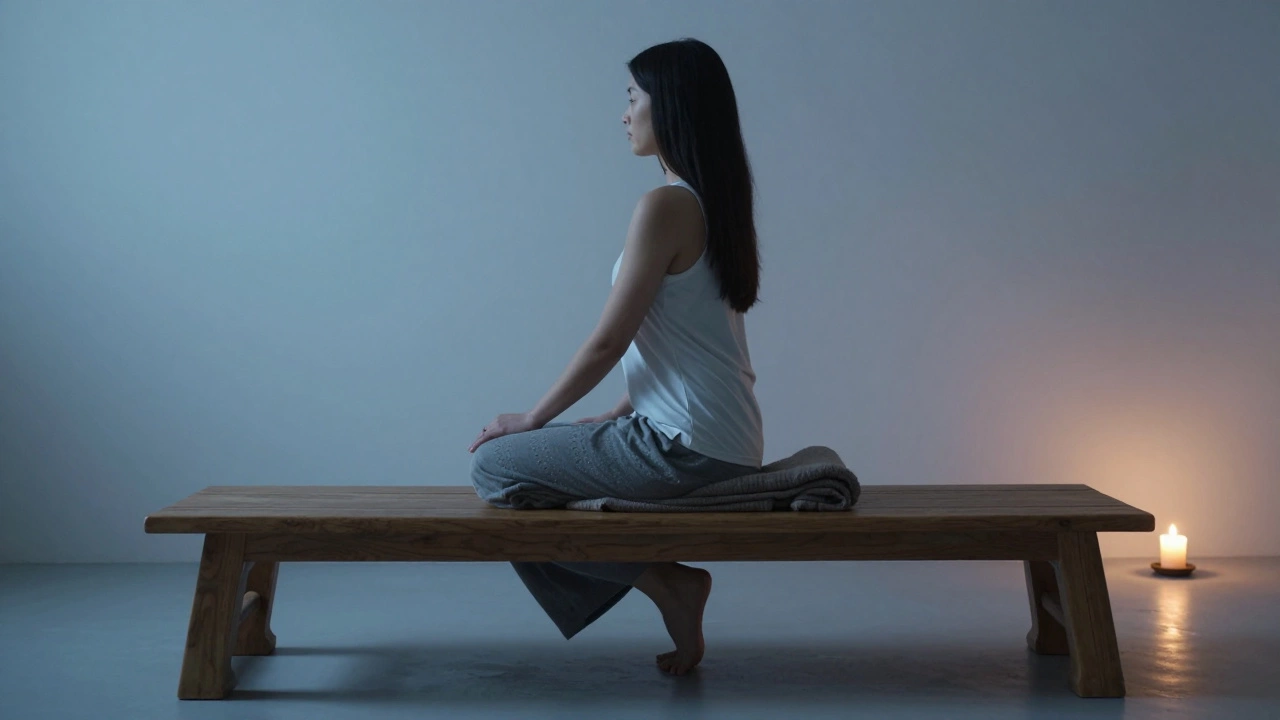
- Kneeling on a bench: A zafu or meditation bench lets your hips tilt forward naturally. Your shins rest on the floor, knees apart. Great for tight hips.
- Standing: Feet hip-width apart, knees soft, arms relaxed. It’s harder to fall asleep standing, and it builds awareness of body weight and balance.
One study from the University of Wisconsin-Madison tracked brain activity in long-term meditators using different postures. They found no difference in focus or calm between those who sat cross-legged and those who sat in chairs-so long as their spines were aligned. The posture doesn’t create mindfulness. It just removes barriers to it.
Why Crossed Legs Feel So Right
There’s something deeply human about folding into yourself. When you cross your legs, you’re making space. You’re creating a boundary between your inner world and the outside. It’s a physical signal: I’m not going anywhere. I’m not doing anything else.Think about how you sit when you’re deep in thought-crossed legs, hands clasped, eyes down. That’s not a pose you learned. It’s a posture your body naturally takes when you’re turning inward.
That’s why even people who’ve never meditated before often cross their legs instinctively when they close their eyes and breathe slowly. It’s not about religion or culture. It’s about biology. Your body knows how to settle.
What Really Matters
The most common mistake people make when they start meditating is thinking they need to get the posture perfect. They spend more time adjusting than they do breathing. They feel like a failure because their knees don’t touch the floor. They compare themselves to someone on Instagram with legs behind their head.Here’s the truth: your posture doesn’t make you a better meditator. Your consistency does.
Five minutes a day, sitting however you can, is better than 30 minutes once a week while struggling with pain. If crossing your legs hurts, don’t do it. Sit in a chair. Lie down. Stand. Use a wall for support. The goal isn’t to master the pose. It’s to master the moment.
Try this: next time you sit to meditate, don’t worry about your legs. Just notice how your breath moves through your body. Feel the weight of your hands. Listen to the silence between your thoughts. That’s the real meditation. The crossed legs? They’re just a helper.
When to Let Go of the Pose
There’s a moment in meditation practice when you stop thinking about your body. That’s when you know you’ve found the right posture-not because it’s perfect, but because you’ve forgotten it exists.That’s the goal. Not the lotus. Not the stillness. Not even the quiet mind. Just the quiet presence.
If you’re sitting cross-legged and your legs fall asleep? Adjust. If you’re in a chair and you feel your back slump? Sit up. If you’re lying down and you drift off? That’s okay too. Meditation isn’t about perfection. It’s about returning.
Every time you notice your leg is numb and you gently shift, you’re practicing mindfulness. Every time you catch yourself thinking, Is this right? and then let it go-you’re meditating.
So cross your legs if it helps. Don’t if it doesn’t. The only rule is this: show up. The rest takes care of itself.