There’s no magic pill for a better life. But there are books that do something even rarer-they shift how you think, feel, and act. Not because they promise quick fixes, but because they make you see things differently. The right book doesn’t just give you advice. It rewires your habits, challenges your beliefs, and sticks with you long after you turn the last page.
Why most self-help books fail
There are thousands of self-help books. Most of them feel the same: motivational quotes, vague steps, and empty enthusiasm. They sound good on the surface, but they don’t stick. Why? Because they don’t ask you to change your identity. They ask you to change your behavior, without touching the deeper story you tell yourself about who you are.
For example, reading a book that says “do 5 minutes of meditation daily” won’t help if you believe you’re the kind of person who can’t sit still. That belief is stronger than the suggestion. The best life-changing books don’t just tell you what to do. They help you become the kind of person who does it naturally.
The book that changed how millions think: Atomic Habits by James Clear
If you’ve ever struggled to stick to a habit-whether it’s waking up early, exercising, or reading more-you need to read Atomic Habits. It’s not about willpower. It’s about systems.
Clear shows that tiny changes, repeated over time, lead to massive results. He calls this the 1% rule: getting 1% better every day adds up to 37 times improvement in a year. That’s not theory. It’s backed by data from athletes, musicians, and business leaders who didn’t suddenly become great. They just improved a little, every single day.
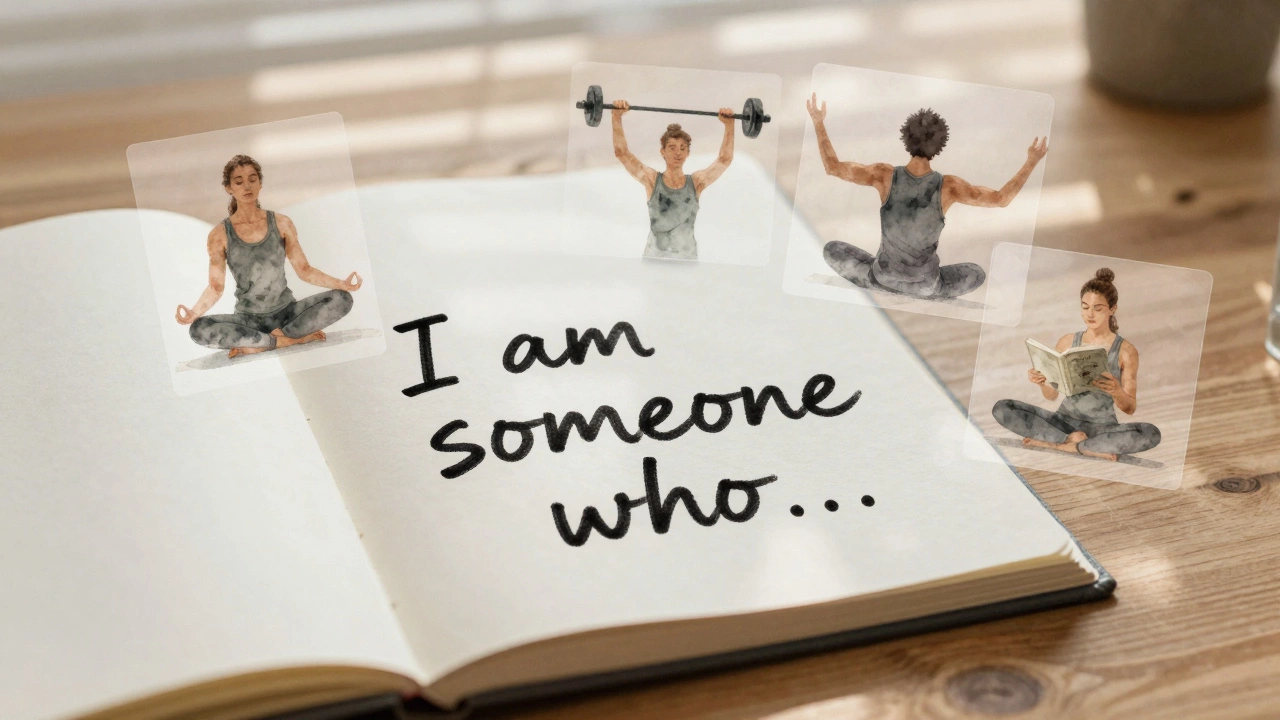
One of the most powerful ideas in the book is identity-based habits. Instead of saying, “I want to lose weight,” you say, “I’m someone who eats healthy.” The behavior follows the identity. This is why people who read this book don’t just start going to the gym-they start seeing themselves as fit people.
Atomic Habits works because it’s practical. It gives you four laws: make it obvious, attractive, easy, and satisfying. You don’t need motivation. You need a system. And that system is simple enough to start today.
The book that redefines success: The 7 Habits of Highly Effective People by Stephen R. Covey
First published in 1989, this book still sits on the shelves of CEOs, teachers, and parents. Why? Because it doesn’t talk about productivity hacks. It talks about character.
Covey’s framework is built on seven habits, grouped into three stages: dependence, independence, and interdependence. The first three habits-Be Proactive, Begin with the End in Mind, and Put First Things First-are about taking control of your life. The next three-Think Win-Win, Seek First to Understand, Then to Be Understood, and Synergize-are about how you relate to others.
The seventh habit, Sharpen the Saw, is about renewal: physical, mental, emotional, and spiritual. It’s not a checklist. It’s a lifelong practice.
What makes this book different is its focus on principles over techniques. Most books tell you how to get more done. This one asks: What do you want your life to stand for? It doesn’t give you a shortcut. It gives you a compass.
The book that heals inner wounds: The Four Agreements by Don Miguel Ruiz
This book is short. Only 138 pages. But it cuts deeper than most therapy sessions.
Ruiz, a Mexican spiritual teacher, draws from ancient Toltec wisdom to lay out four simple agreements you can make with yourself:
- Be impeccable with your word
- Don’t take anything personally
- Don’t make assumptions
- Always do your best
That’s it. No complicated philosophy. No jargon. Just clear, brutal truths.
Most of our suffering comes from how we talk to ourselves and how we interpret others’ actions. We assume people are mad at us. We take silence as rejection. We repeat negative stories from childhood like they’re facts. The Four Agreements breaks that cycle.
One reader told me she stopped arguing with her partner after reading this. Not because she changed him. But because she stopped taking his moods personally. That’s the power of this book. It doesn’t fix your relationships. It fixes how you show up in them.
The book that rewires your mindset: Mindset: The New Psychology of Success by Carol S. Dweck
Psychologist Carol Dweck spent 30 years studying how people respond to failure. Her discovery? It’s not about talent. It’s about belief.
Dweck identified two mindsets: fixed and growth. People with a fixed mindset believe intelligence and talent are set in stone. They avoid challenges because failure means they’re not smart. People with a growth mindset believe abilities can be developed. They see effort as the path to mastery.
She tested this in classrooms. Kids praised for being smart (fixed mindset) gave up when problems got hard. Kids praised for trying (growth mindset) kept going. The difference wasn’t ability. It was belief.
This book changed how I parent, teach, and lead. It’s not about being positive. It’s about being accurate. When you believe you can grow, you stop fearing mistakes. You start learning from them.
It’s the reason why people who read this book start saying, “I haven’t figured it out yet,” instead of “I can’t do this.”
The book that makes you question everything: Man’s Search for Meaning by Viktor E. Frankl
Frankl was a psychiatrist who survived four Nazi concentration camps. He lost his parents, his wife, his entire world. When he got out, he didn’t write a memoir about suffering. He wrote about meaning.
In the book, he describes how people who found a reason to live-even in the worst conditions-survived. Not because they were stronger. But because they had purpose.
He calls this logotherapy: the idea that the primary human drive is not pleasure (Freud) or power (Adler), but meaning. He writes: “Those who have a ‘why’ to live can bear almost any ‘how.’”
This book doesn’t tell you how to be happy. It asks: What gives your life meaning? Is it your family? Your work? Your creativity? Your contribution?
Read this when you’re lost. Read it when you feel empty. Read it when you think nothing matters. It won’t give you answers. But it will help you ask the right questions.

How to choose the right book for you
Not every book works for every person. The best life-changing book is the one you’re ready to read.
Ask yourself:
- What’s the one area of my life I keep struggling with?
- What kind of pain am I avoiding?
- Do I need more structure? More meaning? More self-compassion?
If you’re stuck in bad habits, start with Atomic Habits. If you’re lost in relationships, try The Four Agreements. If you’re doubting your worth, read Mindset. If you’re searching for purpose, begin with Man’s Search for Meaning.
Don’t read to collect books. Read to change your life.
What happens after you finish
Reading is just the first step. The real change happens when you apply one idea. Not ten. Not a hundred. One.
Take one habit from Atomic Habits. Try one agreement from The Four Agreements. Reflect on one question from Man’s Search for Meaning.
Write it down. Try it for seven days. Notice what shifts.
You don’t need to read all these books. You just need to let one of them change you.
What to do next
Start today. Pick one book. Borrow it from the library. Buy it used. Read the first chapter before bed. Don’t wait for the perfect time. There isn’t one.
Life doesn’t change because you read a book. It changes because you acted on what it showed you.
What’s the #1 most recommended life-changing book?
There’s no single #1 book that works for everyone. But Atomic Habits by James Clear is the most widely recommended because it’s practical, science-backed, and easy to apply. It doesn’t promise miracles-it shows you how tiny changes create lasting results.
Can a book really change your life?
Yes-but only if you act on it. Books don’t change lives. People do. A book is a mirror. It shows you something about yourself. The change happens when you choose to respond differently after seeing it.
Should I read self-help books in order?
No. Read what you need now, not what someone else says you should read. Trying to read every book in order often leads to overwhelm. Focus on one book. Apply one idea. Then move to the next.
Are old self-help books still relevant?
Absolutely. Books like The 7 Habits of Highly Effective People and Man’s Search for Meaning are decades old, but their ideas are timeless. Human nature hasn’t changed. What changes is how we distract ourselves from the truth. These books cut through the noise.
I tried reading self-help books before and nothing stuck. Why?
You probably read to feel better, not to change. Most people skim books for quick inspiration. Real change comes from slowing down. Pick one idea. Write it on your mirror. Try it for a week. That’s how books stick.