Self-Help Book Reality Check
This tool helps you assess whether self-help book advice might actually work for your unique situation. Based on the article "What Is the Disadvantage of Self-Help Books?".
Your Reality Assessment
Enter your information to see if self-help advice is realistic for your situation.
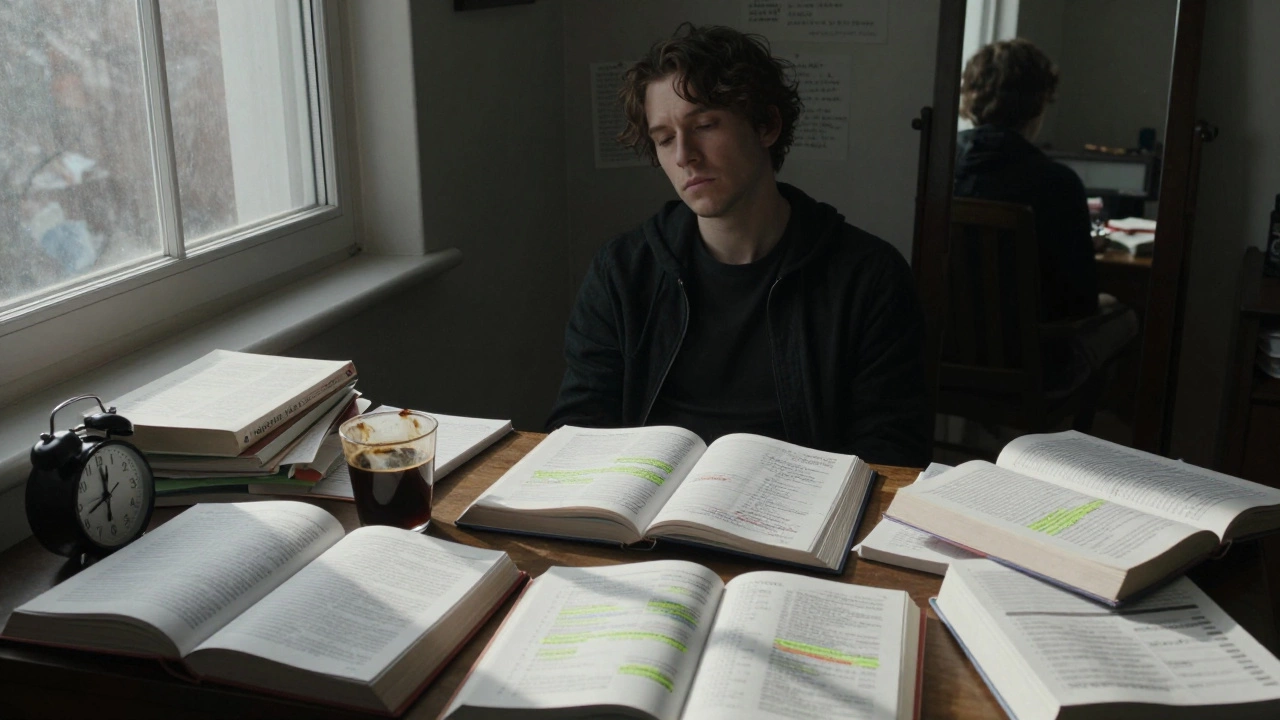
Self-help books promise transformation. They tell you to wake up earlier, think positively, crush your goals, and finally become the person you’ve always wanted to be. Millions buy them every year. But for every person who says a book changed their life, there’s another who spent months reading, took notes, tried the exercises-and still feels stuck.
They oversimplify complex problems
Life isn’t a checklist. Grief, anxiety, financial stress, toxic relationships-these don’t fix themselves with a daily gratitude journal or five affirmations in the mirror. Self-help books often reduce deep, systemic issues to quick fixes. Self-help books sell the idea that if you just think differently, your circumstances will change. But what if your job pays $18 an hour and you’re working two shifts? What if your depression isn’t caused by negative thinking, but by years of trauma and no access to therapy?
Books like The Secret or Atomic Habits offer useful tools, but they strip away context. They don’t mention how privilege, race, class, or mental illness affect your ability to follow their advice. The result? People blame themselves when the methods don’t work. Not because they didn’t try hard enough-but because the solution was never meant for their reality.
They create a cycle of failure and guilt
Ever bought a self-help book, read the first chapter, felt inspired, then stopped halfway through? You’re not lazy. You’re human. But self-help culture makes you feel like you failed.
These books often frame progress as binary: you’re either transforming or you’re broken. There’s no middle ground. No room for bad days, setbacks, or slow progress. You miss a morning meditation? You’re not disciplined. You didn’t manifest your dream home? You didn’t believe hard enough.
This isn’t motivation-it’s emotional manipulation. It turns self-improvement into a moral obligation. And when you don’t meet impossible standards, the only thing left to blame is you. That guilt keeps people coming back for more books, more courses, more products. The industry thrives on your insecurity.
They replace real support with solo fixes
Humans aren’t meant to heal alone. Therapy, community, honest conversations with friends, even just being heard-these are the real tools that change lives. But self-help books sell the fantasy that you can fix everything by yourself, in silence, with a pen and a notebook.
When someone is struggling with addiction, depression, or burnout, reading a book won’t replace a therapist, a support group, or a trusted friend who shows up with soup and doesn’t offer advice. Yet, many people use self-help books as a substitute for professional help because therapy feels expensive, intimidating, or stigmatized.
The problem isn’t the book. It’s the message: you should be able to fix yourself without asking for help. That’s not empowerment. It’s isolation dressed up as independence.

They’re written by people who didn’t live your life
Most self-help authors aren’t therapists, social workers, or trauma specialists. They’re former salespeople, life coaches, or influencers who had one breakthrough and turned it into a formula. Their stories are compelling-but they’re anecdotes, not evidence.
Take a book like The 5 AM Club. It claims that waking up at 5 a.m. will unlock your potential. But what if you’re a single parent working nights? What if you have chronic pain that makes sleep unpredictable? What if your body’s natural rhythm is 11 p.m. to 7 a.m.? The book doesn’t care. It assumes everyone has the same privileges: no dependents, no health issues, no financial stress.
These books rarely acknowledge that their advice only works if you already have safety nets: stable housing, healthcare, flexible work, emotional support. If you don’t, the advice doesn’t just fail-it can make things worse.
They encourage performance over progress
Self-help books are obsessed with outcomes: productivity, wealth, confidence, charisma. They rarely talk about peace, rest, acceptance, or letting go. The goal isn’t to feel better-it’s to become better. And “better” is always defined by someone else’s standard.
Think about how many books promise you’ll be “unshakable,” “unstoppable,” or “fearless.” But what if being vulnerable is part of your strength? What if slowing down is the most radical thing you can do? What if your worth isn’t tied to your output?
Self-help culture rewards hustle. It pathologizes rest. It tells you that if you’re not growing, you’re falling behind. That pressure doesn’t lead to healing-it leads to burnout.

They’re often outdated or culturally narrow
Many popular self-help books were written decades ago and still sell today. Their examples, language, and assumptions reflect the world of the 1990s or early 2000s. They talk about landlines, fax machines, and corporate ladders that barely exist anymore.
They also assume a Western, individualistic worldview. Concepts like “finding your purpose” or “manifesting your dreams” don’t translate well across cultures. In many communities, identity is tied to family, duty, or collective well-being-not individual achievement. A book that tells you to “be yourself” might feel alienating if your culture values harmony over self-expression.
And yet, these books are marketed as universal truths. They ignore how culture, history, and economics shape what “success” even means.
They don’t teach you how to think-they tell you what to think
Real growth comes from questioning. From curiosity. From sitting with discomfort and asking: Why do I believe this? Where did this idea come from? Is this even true for me?
Self-help books rarely invite that kind of reflection. Instead, they hand you a script: “Say this. Do this. Think this.” They replace critical thinking with conformity. You’re not learning to navigate your own mind-you’re learning to follow someone else’s map.
That’s why so many people read ten books and still feel confused. They’re not learning how to understand themselves. They’re collecting tools they don’t know how to use.
What’s a better alternative?
You don’t need to stop reading entirely. But shift your approach.
- Read for insight, not instruction. Ask: Does this resonate? Does this feel true for me?
- Pair books with real support. Talk to a therapist, join a community group, or find a mentor.
- Ignore the rigid timelines. Progress isn’t linear. Healing isn’t a race.
- Choose books written by people who acknowledge complexity-like The Body Keeps the Score or Daring Greatly. They don’t promise quick fixes. They invite you to sit with your pain.
- Let go of the idea that you need to fix yourself. Sometimes, you just need to be seen.
The real power of self-help isn’t in the book. It’s in what you do after you close it. Not the next habit you adopt. But the next conversation you have-with yourself, or with someone who truly listens.