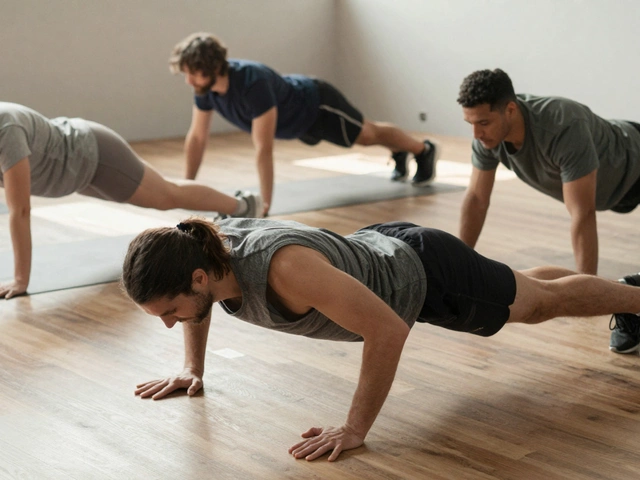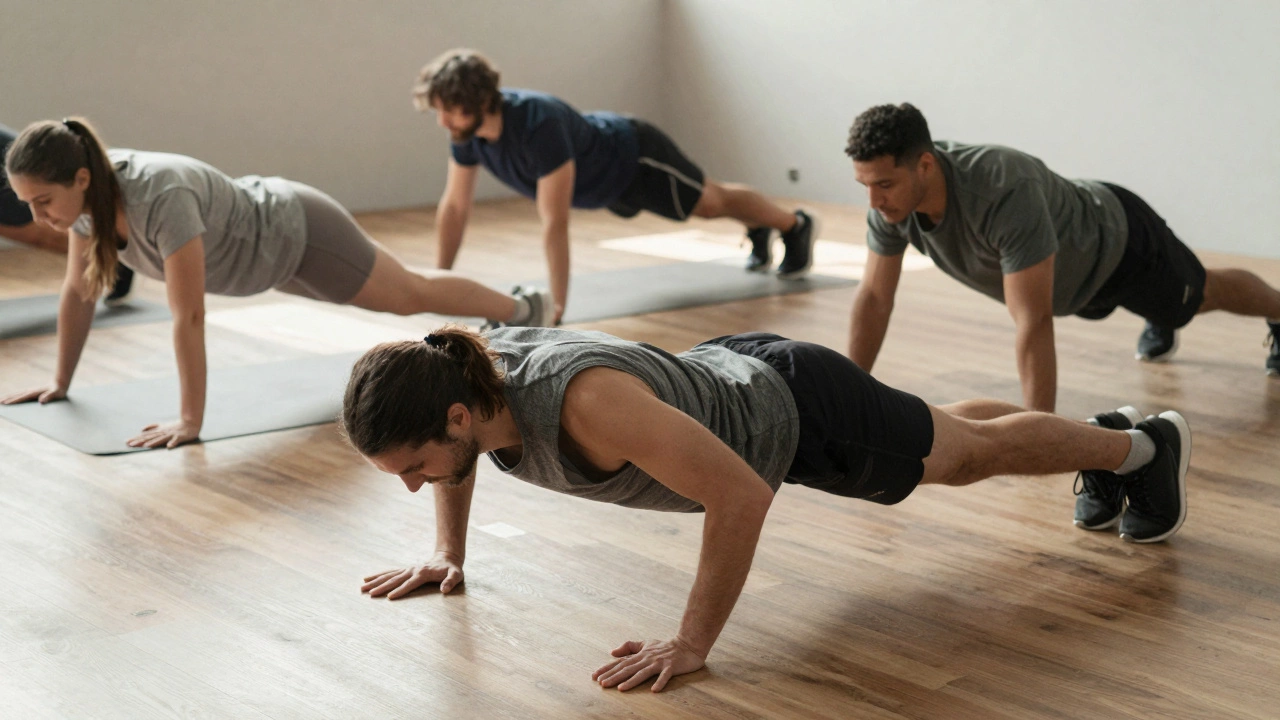
How many push-ups in a row can you do? If you’ve ever looked at someone doing a set of 50 and wondered if that’s normal-or if 10 is enough-you’re not alone. Push-ups are one of the most accessible exercises out there. You don’t need equipment, a gym membership, or even a mat. Just floor, body, and willpower. But when it comes to numbers, there’s no single answer that fits everyone. The truth? It depends on your age, gender, fitness level, and goals. Let’s cut through the noise and give you real numbers that actually mean something.
What’s Considered a Good Push-Up Count?
A good number of push-ups isn’t about impressing others. It’s about building functional strength that carries into daily life. Can you carry groceries? Climb stairs without gasping? Lift your kid off the ground? Push-ups measure upper body endurance and core stability-two things that fade fast if you don’t use them.
Based on data from the American College of Sports Medicine and fitness studies tracking thousands of adults, here’s what most people in good health can expect:
- Men aged 20-29: 30-40 push-ups in one set is considered average. Above 40 is above average.
- Women aged 20-29: 15-25 push-ups is average. Over 25 is strong.
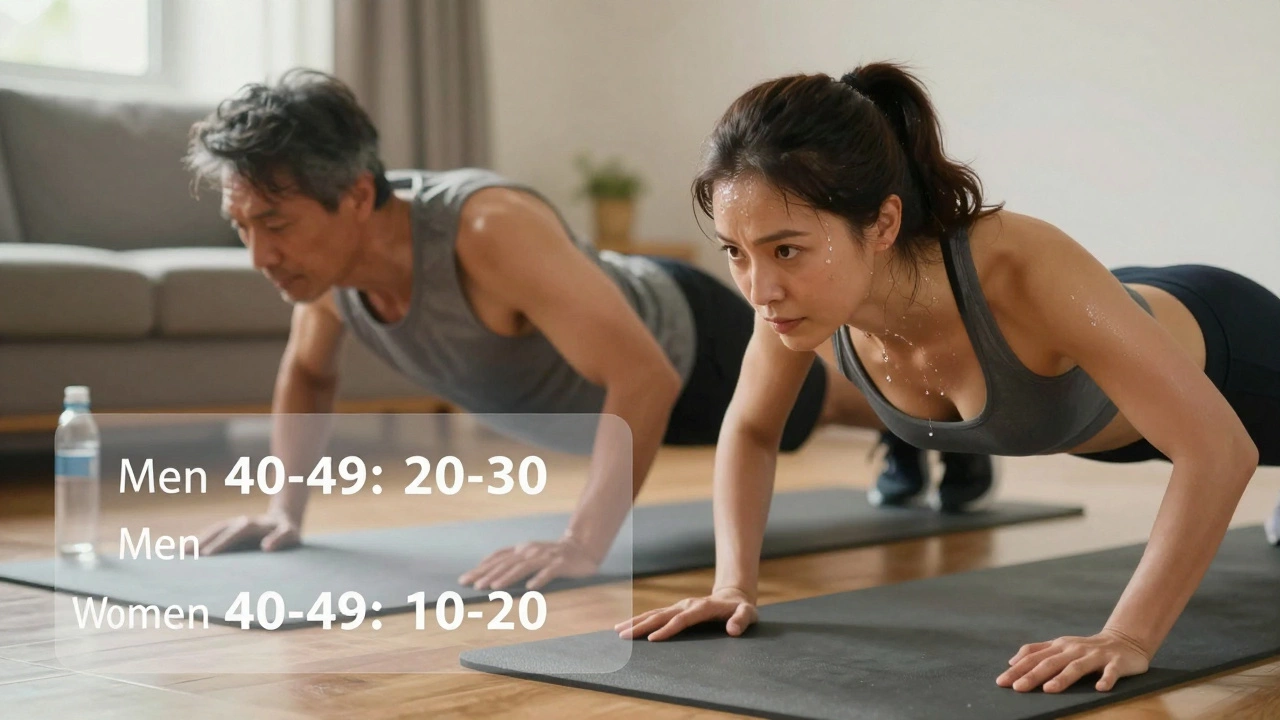
- Men aged 40-49: 20-30 push-ups is solid. Above 30 shows good maintenance.
- Women aged 40-49: 10-20 push-ups is typical. Over 20 is excellent.
- Men and women over 50: 10-20 push-ups is a solid baseline. Anything above that is a win.
These numbers aren’t targets. They’re benchmarks. If you’re below them, don’t panic. If you’re above, don’t stop there.
Why Numbers Alone Don’t Tell the Whole Story
Doing 30 push-ups in a row sounds impressive-until you realize one person’s 30 is perfect form, and another’s is half-reps with hips sagging. Quality beats quantity every time.
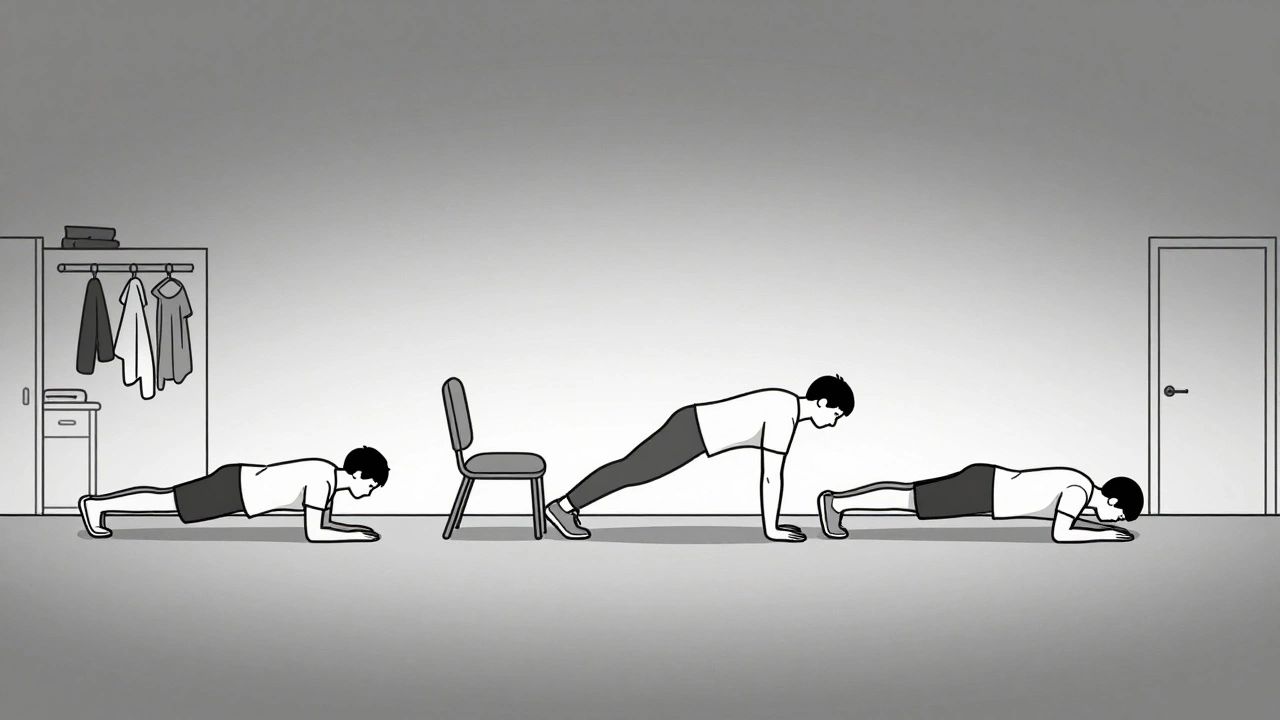
A push-up with full range of motion means your chest touches the floor and your arms lock out at the top. No sagging hips. No bouncing. No knees touching the ground unless you’re doing modified push-ups on purpose.
Here’s a simple test: record yourself doing five push-ups. Watch the video. If your lower back dips like a hammock, or your head juts forward, you’re not getting the full benefit. You might be building bad habits instead of strength.
One study from the University of Sydney found that people who focused on form over reps improved their upper body strength 40% faster than those chasing high numbers with sloppy technique. That’s not a fluke. It’s science.
How to Build Up to More Push-Ups
If you’re stuck at five, don’t try to jump to 20. That’s how people quit. Progress comes in small, consistent steps.
Try this simple plan:
- Do as many push-ups as you can with good form. Write down the number. That’s your baseline.
- Next time you train (every other day is fine), do 3-4 sets of 80% of your max. So if you did 8, do 6 per set.
- Rest 60 seconds between sets.
- After two weeks, try your max again. You’ll likely see a 2-4 rep increase.
- Once you hit a plateau, switch to incline push-ups (hands on a bench or sturdy chair) to reduce load, then go back to floor push-ups. It resets your muscles.
Don’t forget: push-ups aren’t just arms. Your core, glutes, and shoulders all work together. Squeeze your butt. Tighten your abs. Think of your body as one solid plank.
Push-Ups vs. Other Home Workouts
Some people think you need dumbbells, resistance bands, or a pull-up bar to build strength. Not true. Push-ups alone can build serious muscle-if you progress smartly.
Compare this:
| Exercise | Primary Muscles Worked | Progression Difficulty | Equipment Needed |
|---|---|---|---|
| Push-Ups | Chest, triceps, shoulders, core | Easy to scale (knees → incline → weighted → one-arm) | None |
| Plank | Core, shoulders, glutes | Hard to increase load without tools | None |
| Squats | Quads, glutes, hamstrings | Easy to add weight, hard to scale without resistance | None (basic), dumbbells (advanced) |
| Jumping Jacks | Cardio, shoulders, calves | Easy to do more reps, low strength gain | None |
Push-ups win because they’re scalable, full-body, and measurable. You can go from knee push-ups to one-arm push-ups over months. No gear required. Just time and patience.
When Too Many Push-Ups Backfire
Some people think more is always better. That’s dangerous.
Doing 100 push-ups a day with poor form can wreck your shoulders. Rotator cuff injuries are common in people who push through pain. If your elbows ache, your wrists sting, or your shoulders feel tight after a set, stop. Rest. Reassess.
There’s no prize for doing the most push-ups. Recovery matters as much as effort. Your muscles grow when you rest-not when you’re grinding.
Try this instead: do push-ups 3-4 times a week, not every day. Let your body recover. Add variety-planks, wall sits, step-ups-to balance your routine.
What Your Push-Up Count Says About Your Health
A 2019 study in JAMA Network Open followed over 1,100 middle-aged men for 10 years. Those who could do 40+ push-ups in one go had a 96% lower risk of heart disease compared to those who could do fewer than 10.
That’s not because push-ups cure heart disease. It’s because the ability to do them reflects overall fitness: muscle strength, cardiovascular endurance, and body composition. If you can do 40 clean push-ups, chances are you’re not carrying excess weight, you move well, and your heart is strong.
It’s not a magic number. But it’s a sign. A sign that your daily habits are working.
Final Thought: It’s Not About the Number
The goal isn’t to hit 50 push-ups. The goal is to feel stronger every week. To lift your suitcase without straining. To play with your kids without getting winded. To wake up and not feel stiff.
Do five today. Do six tomorrow. Do seven next week. That’s how real progress happens. Not in one big set. Not in a viral video. But in the quiet, consistent effort of showing up-even when no one’s watching.
Is 20 push-ups in a row good?
Yes, 20 push-ups in a row is good for most adults, especially if done with full form. For women under 50, it’s above average. For men under 40, it’s solid. The key is whether you’re doing them with control-chest to floor, body straight, no sagging. If so, you’re building real strength.
Can I build muscle with just push-ups?
Absolutely. Push-ups target your chest, shoulders, triceps, and core. With progressive overload-like elevating your feet, slowing down the movement, or adding pauses-you can keep challenging your muscles. Many athletes and military personnel build serious strength using only bodyweight exercises. You don’t need weights to grow stronger.
Why am I getting worse at push-ups even though I do them every day?
Overtraining without rest can cause fatigue and muscle breakdown. Push-ups stress your joints and connective tissue too. If you’re doing them daily without recovery, your body can’t repair itself. Try doing push-ups every other day instead. Add rest days. Focus on form. You’ll likely see improvement within two weeks.
Should I do push-ups on my knees?
Yes-if you can’t do a full push-up with good form yet. Knee push-ups are a valid way to build strength. Just make sure your body stays in a straight line from head to knees. Don’t let your hips sag. As you get stronger, gradually lower your chest closer to the floor. Eventually, transition to full push-ups. Don’t stay on your knees forever.
How long should I rest between push-up sets?
Rest 60 to 90 seconds between sets if you’re building strength. If you’re doing high-rep endurance sets (like 3 sets of 20), rest 30-45 seconds. Shorter rests raise your heart rate and build stamina. Longer rests let you lift harder and build muscle. Match your rest time to your goal.