
Getting a gift shouldn’t mean adding to the pile of things you don’t need. For minimalists, receiving something isn’t about obligation-it’s about intention. The real question isn’t whether you should keep a gift, but whether it adds value to your life right now. Most minimalists don’t say no to gifts outright. They say yes to what matters and no to what doesn’t.
They Don’t Feel Guilty About Letting Go
One of the biggest myths about minimalism is that you have to keep every gift you’re given, no matter how useless. That’s not true. Minimalists understand that a gift is a gesture, not a contract. If someone gives you a sweater in your least favorite color, a kitchen gadget you’ll never use, or a candle that smells like artificial lavender, you’re not being ungrateful if you don’t keep it.
Gratitude isn’t measured by how long you hold onto something. It’s shown in how you respond in the moment. A simple, heartfelt thank-you matters more than a closet full of unused items. People who give gifts usually want to make you happy-not burden you. Most will be relieved to know their gift found a good home, even if it’s not yours.
They Accept With Open Hands, Then Decide Later
Minimalists don’t make snap decisions when receiving gifts. Instead, they pause. They thank the giver, open the gift with presence, and then take time to reflect. No rushing to hide it in a drawer or toss it in the trash. They ask themselves: Does this fit my life right now?
For example, someone gives you a set of fancy ceramic mugs. You love coffee, but you already have five mugs you use daily. You don’t throw them out. You don’t keep them either. You store them in a box for a few weeks. If you still haven’t reached for them after a month, you donate them to a local shelter or give them to a friend who does use them. That’s not rejection-it’s respect. Respect for the giver’s thoughtfulness, and respect for your own space.
They Redirect Gifts With Purpose
Instead of letting unused gifts sit around, minimalists move them quickly to where they’ll be appreciated. This isn’t about being selfish. It’s about being thoughtful in a different way.
- Books you won’t read? Donate to a library or a community center.
- Clothes that don’t fit? Give them to a thrift store or a friend who loves secondhand finds.
- Electronics you don’t need? Sell them and donate the money to a cause the giver cares about.
- Food items you can’t use? Share them with neighbors or coworkers.
One minimalist in Wellington started keeping a small box by her door labeled “Gifts for Others.” When she received something she didn’t want, she’d write a note: “This made me think of you,” and pass it along. It turned gift-giving into a chain of connection-not clutter.

They Set Boundaries Before the Gift Arrives
Minimalists aren’t rude. They’re clear. Many start conversations early, especially during holidays or birthdays. They might say: “I’m trying to live with less, so I’d really appreciate experiences over things-like a coffee date, a hike, or a concert ticket.” Or: “If you want to give something, I’d love a book, a plant, or something handmade.”
These aren’t demands. They’re invitations. Most people are happy to adjust when they understand why. In fact, many givers feel more confident knowing their gift will be truly used. One woman told her family she wanted a subscription to a local museum instead of physical gifts. Her parents started giving her tickets every year-and she’s visited every exhibit since.
They Turn Gifts Into Experiences
Some gifts don’t fit into a home, but they fit into a life. Minimalists often turn material gifts into memories. A new camera? Use it to take photos on a weekend trip. A yoga mat? Book a retreat. A fancy cooking set? Host a dinner for friends. The gift becomes the start of something, not the end of it.
One man received a high-end espresso machine he didn’t need. Instead of storing it, he started hosting monthly coffee mornings for neighbors. He didn’t keep the machine, but he kept the connections it helped build. That’s minimalism in action: less stuff, more meaning.
They Say No-Politely and Consistently
Some gifts are simply not aligned with the minimalist path. A noisy gadget. A plastic toy. A bulky piece of decor. Minimalists don’t apologize for saying no. They say: “I appreciate you thinking of me, but I’m trying to keep my space simple. I’d rather not add more things.”
It sounds simple, but it’s powerful. People often assume minimalists are rejecting their love. But when you say no with kindness and clarity, most understand. One father told his daughter he didn’t want any more toys for his grandchildren. Instead, he asked for handwritten letters from them. Now he has a drawer full of drawings and stories-things he’ll keep forever.
They Don’t Hoard “Sentimental” Gifts Just Because
Sentimental value is real. But it’s not the same as emotional clutter. Just because a gift came from someone you love doesn’t mean you have to keep it forever. A scarf from your grandmother? Keep it if you wear it. If it’s tucked away in a box, take a photo of it, then pass it on. You’re not forgetting her-you’re honoring her by letting her gift live in someone else’s life.
Minimalists keep only what they use, love, or need. Not what they feel guilty about. If you’re holding onto something because you think you should, ask yourself: Who am I really keeping this for? The answer often reveals the real issue.
They Build a Gift Culture, Not a Collection
Minimalism isn’t about rejecting gifts. It’s about redefining them. The goal isn’t to receive nothing. It’s to receive only what matters. And when you do, you create a culture where giving is thoughtful, not wasteful.
Minimalist households often have a shared rule: “One in, one out.” Or: “Gifts must be useful, beautiful, or meaningful.” These aren’t strict rules-they’re gentle guides. They turn gift-giving from a chore into a practice of care.
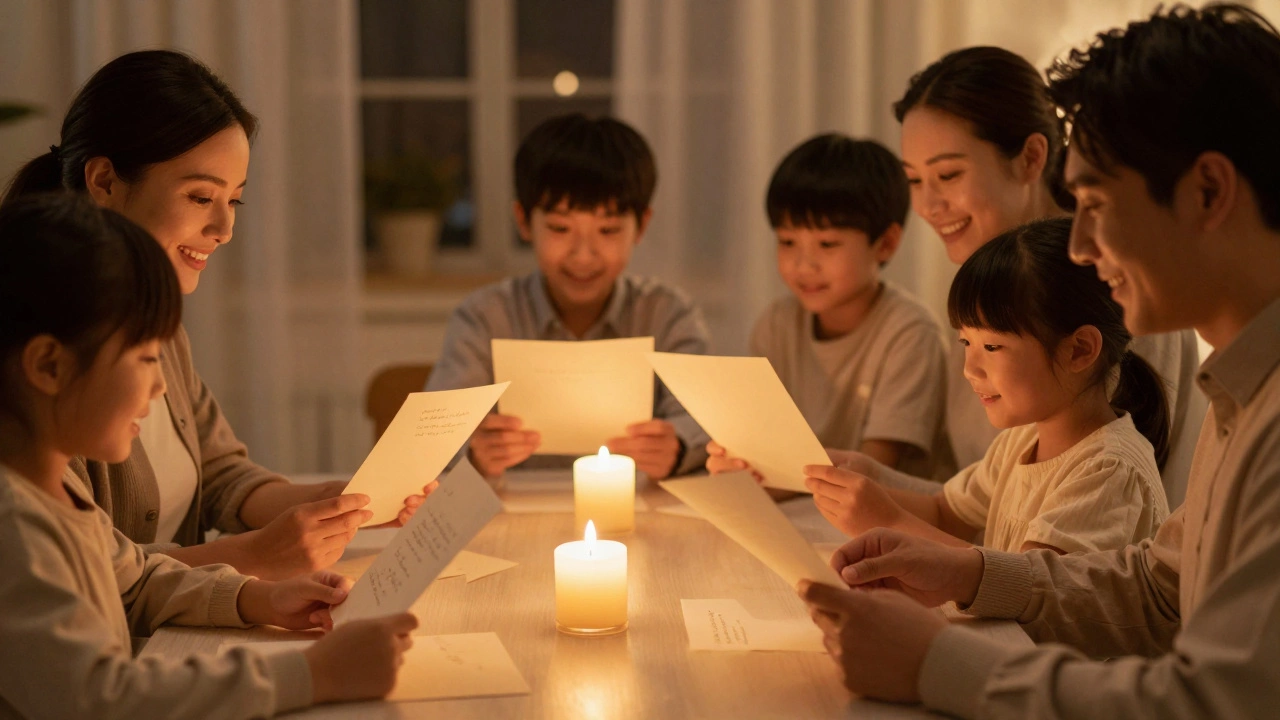
At the end of the year, one family in Auckland stopped exchanging physical gifts. Instead, they wrote letters to each other about what they appreciated most that year. They read them aloud over dinner. No wrapping paper. No returns. Just connection. That’s the quiet power of minimalist gift-giving.
It’s Not About What You Keep-It’s About What You Live With
Minimalism isn’t about owning less for the sake of it. It’s about living with only what supports your values. Gifts are no different. You don’t have to keep everything. You don’t have to feel guilty for letting go. You don’t have to say no to kindness.
You just have to be honest. Honest about what you need. Honest about what you love. Honest about what fills your space-and your soul.
Real minimalism isn’t about empty rooms. It’s about full hearts. And sometimes, the most generous thing you can do with a gift is to pass it on.
Do minimalists ever keep gifts they don’t like?
Yes, but only if the gift becomes meaningful over time. Most minimalists don’t keep gifts they don’t like right away. They give themselves space to see if it grows on them. If it doesn’t, they pass it on. The key is intention-not guilt.
Is it rude to give a minimalist a gift?
Not at all. Minimalists appreciate thoughtful gifts-they just prefer ones that align with their values. Many will tell you upfront what they’d prefer: experiences, books, or handmade items. Giving a gift to a minimalist is an opportunity to be more intentional, not less.
What if someone gives me something expensive and I don’t want it?
Value doesn’t change the rule. If it doesn’t fit your life, it doesn’t belong in your space. Thank them sincerely, then find a way to pass it on. You can sell it and donate the money to a cause they care about, or give it to someone who will use it. The gesture of giving is honored by the gift being used-not by it sitting unused.
How do I tell my family I don’t want physical gifts?
Start with honesty and gratitude. Say something like: "I love receiving gifts from you, but I’ve realized I’m happiest when I have less stuff. Could we try exchanging experiences instead-like a shared meal, a walk, or a movie night?" Most people will feel relieved. They don’t want to overwhelm you-they just want to show love.
Can I still be a minimalist if I enjoy receiving gifts?
Absolutely. Minimalism isn’t about denying joy. It’s about choosing joy wisely. If a gift makes you happy and fits your life, keep it. If it doesn’t, let it go. Minimalism isn’t about what you receive-it’s about what you choose to live with.
Minimalism isn’t a rigid set of rules. It’s a way of living that honors space, time, and relationships. Gifts are part of that. Not as clutter to manage-but as moments to reflect, respond to, and sometimes, pass along.