Swearing in public isn’t against the law in England-unless it’s used to cause harassment, alarm, or distress. That’s the key detail most travelers miss. You won’t get arrested for saying "bloody hell" after stubbing your toe, but shouting a string of curses at a police officer or screaming obscenities in a crowded train station? That’s a different story.
There’s no blanket ban on swearing
England doesn’t have a law that says "you can’t swear." There’s no national statute that bans the use of bad words in public. You’ll hear "f***" and "sh*t" on TV, in comedy clubs, and even on the Tube during rush hour. The British have a long history of using strong language as part of everyday expression. But context matters. The real legal line comes from the Public Order Act 1986.
This law doesn’t target words themselves. It targets the effect of those words. Section 5 says it’s an offense to use threatening, abusive, or insulting words or behavior that’s likely to cause harassment, alarm, or distress to someone within hearing or sight. So if you yell a four-letter word at a child in a park, or scream profanities at a shopkeeper who’s already stressed, you’re crossing the line-not because of the word, but because of how it’s used.
What happens if you cross the line?
Most of the time, police won’t arrest you for swearing. They’ll usually issue a warning or ask you to calm down. But if you’re being aggressive, drunk, or repeatedly disruptive, they can issue a Fixed Penalty Notice (FPN). That’s a £100 fine you can pay on the spot. If you refuse to pay, you could end up in court. At that point, fines can go up to £1,000, and you might get a criminal record.
Real cases happen. In 2023, a man in Manchester was fined £300 after shouting a series of abusive slurs at a group of teenagers on a bus. The court ruled his behavior was "intentionally provocative" and caused distress. Another person in Birmingham received an FPN for yelling "f*** you!" at a security guard during a protest. In both cases, the language itself wasn’t the issue-it was the aggression and intent to upset.
Swearing isn’t illegal-but context always is
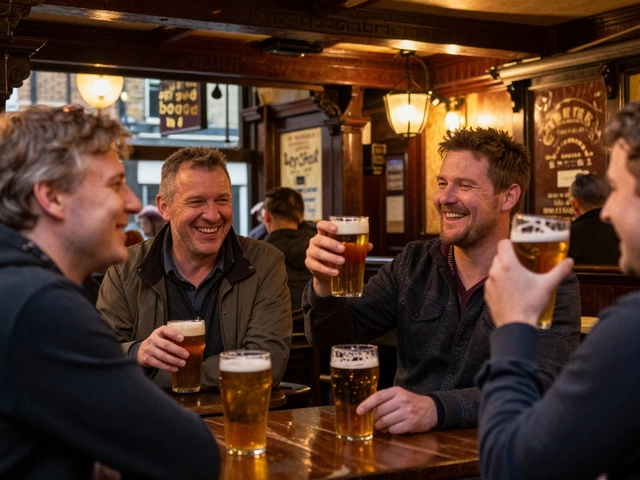
Think of it like this: swearing in a pub with friends? Totally fine. Swearing at a hospital nurse during a quiet moment? Not okay. Swearing while drunk in a nightclub? Probably just a laugh. Swearing at a religious service or a school playground? That’s when things get serious.
British law doesn’t care about the word. It cares about the impact. If you’re causing someone to feel unsafe, threatened, or humiliated, you’re breaking the law-even if you didn’t throw a punch. The courts have ruled multiple times that verbal abuse can be just as damaging as physical abuse in public spaces.
How do police decide what’s "distressing"?
There’s no official list of banned words. Officers use common sense and local norms. In a busy city center, louder language might be ignored. In a quiet residential street, even one shouted curse can trigger a complaint. The key factors they look at are:
- Was the language directed at a specific person?
- Was it aggressive, loud, or repeated?
- Did it happen near vulnerable people-children, elderly, disabled individuals?
- Was it part of a larger pattern of threatening behavior?
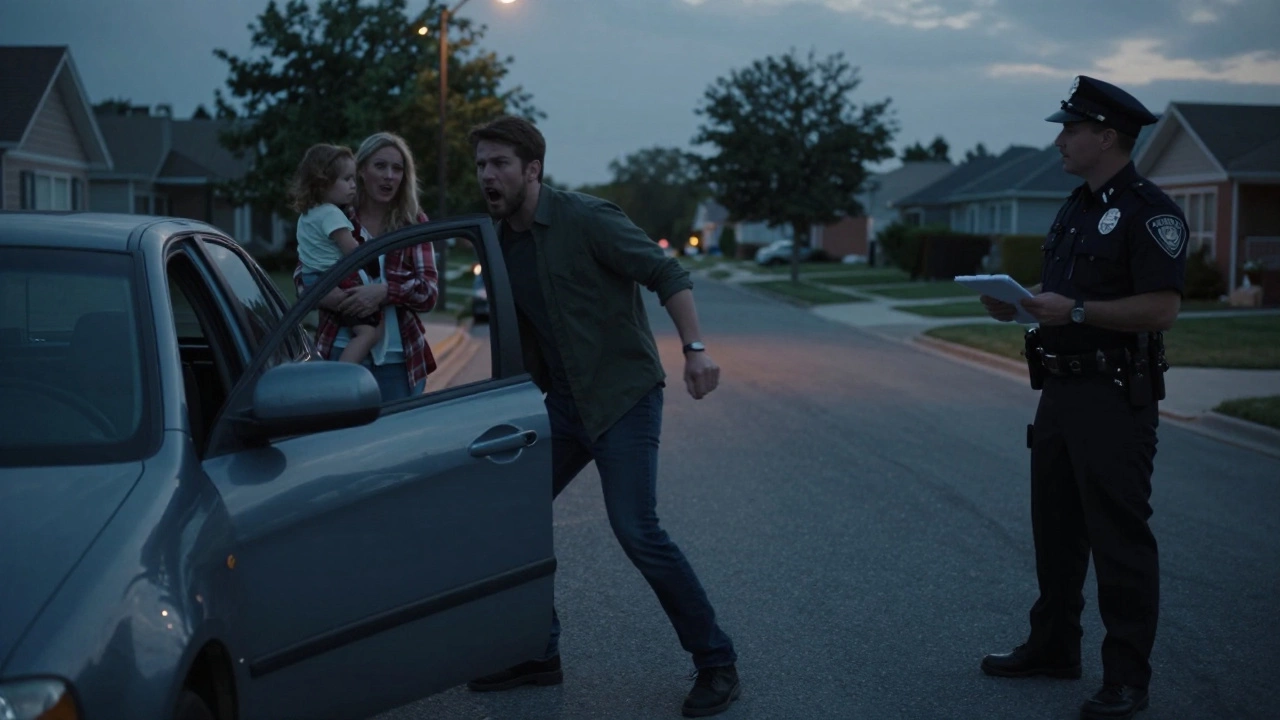
For example, saying "f***" while arguing with a friend on a street corner? Unlikely to get attention. Saying the same thing while kicking a car door and screaming at a woman holding a baby? That’s a clear case for intervention.
What about swearing on TV or online?
TV and radio have their own rules. Ofcom, the UK’s media regulator, allows some swearing during late-night programming (after 9pm) but enforces strict limits before then. You’ll hear "bloody" or "hell" on primetime shows, but "f***" is usually bleeped out unless it’s a documentary or comedy special with clear warnings.
Online, things get trickier. Social media posts that target individuals with abusive language can be reported under the Malicious Communications Act. If you tweet a string of slurs at someone, especially with threats, you could face prosecution-even if you’re not in England. UK law applies to anyone who posts content targeting UK residents.
Travel tips: How to avoid trouble
If you’re visiting England and want to stay out of trouble, here’s what to remember:
- Swearing among friends in a pub or on a walk? Fine. No one will blink.
- Swearing at staff, security, or police? Big risk. They’re trained to take it seriously.
- Swearing near schools, hospitals, or places of worship? Avoid it. Even if you’re not angry, it can be misread.
- Drunk and loud? You’re more likely to be targeted. Police are more likely to act if they think you’re out of control.
- Don’t assume "everyone does it" means it’s legal. British tolerance has limits.
Most British people don’t care if you say "bugger" or "bloody hell." In fact, they might even laugh. But if your language makes someone feel unsafe, you’re not just being rude-you’re breaking the law.
Myth: "It’s okay to swear because it’s England"
Some travelers think England is a free-for-all when it comes to language. That’s not true. While the UK is more relaxed than places like Saudi Arabia or Singapore, it’s still a country with clear boundaries around public behavior. The British value order, quietness, and respect-even if they don’t always show it.
Compared to the U.S., where swearing is often seen as free speech, the UK treats public disorder as a matter of public safety. It’s not about censorship. It’s about keeping public spaces livable for everyone.
Final takeaway
You can swear in England. You just can’t use it to hurt, scare, or humiliate someone. If you’re just being casual, loud, or even a little crude-no problem. But if you’re angry, aggressive, or targeting someone, you’re stepping into legal territory. The law isn’t about words. It’s about power, control, and respect.
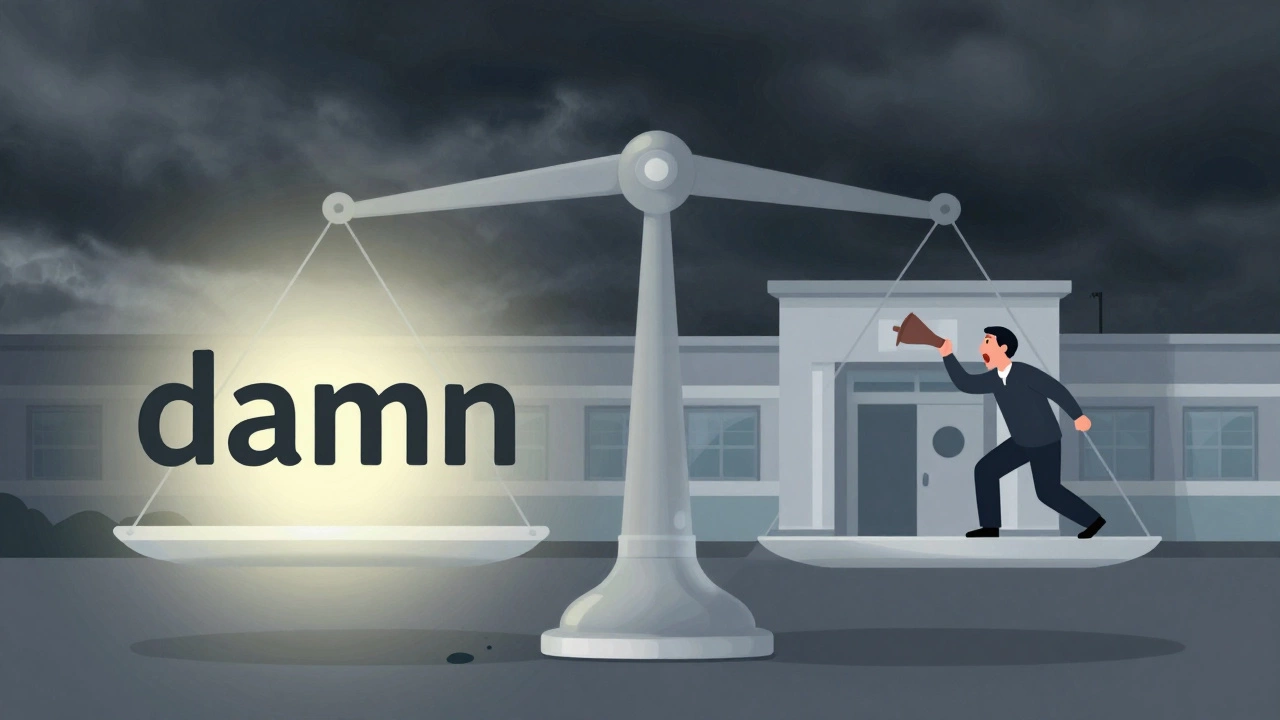
When in doubt, keep it calm. A simple "damn" is less likely to get you trouble than a full rant. And if you’re not sure? Just don’t say it. Better to be polite than to find yourself explaining yourself to a police officer at 2 a.m. in a city you don’t know.
Is it illegal to swear in public in England?
No, swearing itself isn’t illegal. But under the Public Order Act 1986, using abusive, threatening, or insulting language that causes harassment, alarm, or distress to someone else is a criminal offense. The word itself doesn’t matter-how it’s used does.
Can you get fined for swearing in England?
Yes. Police can issue a Fixed Penalty Notice of £100 for behavior that causes distress under Section 5 of the Public Order Act. If you refuse to pay, you could be taken to court, where fines can reach £1,000. Repeat offenses or aggressive behavior make prosecution more likely.
Does it matter where you swear?
Yes. Swearing in a crowded pub or on a busy street is often ignored. But doing it near schools, hospitals, places of worship, or in front of children or elderly people increases the risk of being reported. Police are more likely to act if the environment is quiet or sensitive.
Is swearing on social media illegal in England?
If your post targets a specific person with abusive or threatening language, it can be prosecuted under the Malicious Communications Act 1988. Location doesn’t matter-what matters is whether the message was intended to cause distress to someone in the UK. Even overseas users have been prosecuted for this.
Do police always arrest people for swearing?
No. Most officers will issue a warning or ask you to calm down. Arrests are rare unless there’s aggression, violence, repeated offenses, or if you’re intoxicated and uncooperative. The goal is to de-escalate, not punish casual language.