House Decluttering: Simple Steps to a Calmer, Cleaner Home
When you think about house decluttering, the process of removing excess items to create functional, peaceful living spaces. Also known as clutter reduction, it's not about buying new storage bins or following rigid rules—it's about keeping what serves you and letting go of what doesn't. This isn’t a weekend project you tick off a list. It’s a shift in how you relate to your stuff—and your space.
True house decluttering connects to home organization, the system of arranging belongings so they’re easy to find and use. But you can’t organize what you haven’t cleared out. That’s why most people start with the wrong room. The kitchen? The closet? Those feel urgent, but they’re not always the best place to begin. The real key is starting where clutter hits hardest emotionally—maybe it’s the pile of unread mail, the drawer full of broken chargers, or the corner where coats pile up like a forgotten mountain. minimalist lifestyle, a way of living focused on intentionality over accumulation doesn’t mean owning only ten things. It means every item you keep has a purpose, a place, or real joy attached to it.
People often confuse decluttering with cleaning. Cleaning is wiping surfaces. Decluttering is asking: Do I need this? Do I use this? Does this make me feel better or worse? You don’t need to be perfect. You don’t need to donate everything. You just need to make one decision: keep, toss, or move. One drawer. One shelf. One corner. That’s how momentum builds. And once you feel the relief of an empty drawer or a clear countertop, you start wanting more of it.
House decluttering also ties into how you think about money, time, and stress. That unused gym equipment? It’s not just taking up space—it’s a silent reminder of goals you’ve dropped. That stack of old magazines? They’re not "just in case"—they’re stealing mental bandwidth. When you reduce clutter, you reduce noise. Your brain stops working overtime trying to manage things you don’t need.
Below, you’ll find real advice from people who’ve been there. How to pick the first room to declutter without getting stuck. How to handle sentimental items without guilt. How to keep things from piling up again. No fluff. No overpriced organizers. Just what works when you’re tired, busy, or just done pretending you’ll get around to it someday.
Effective Steps to Clean Out a House Full of Junk
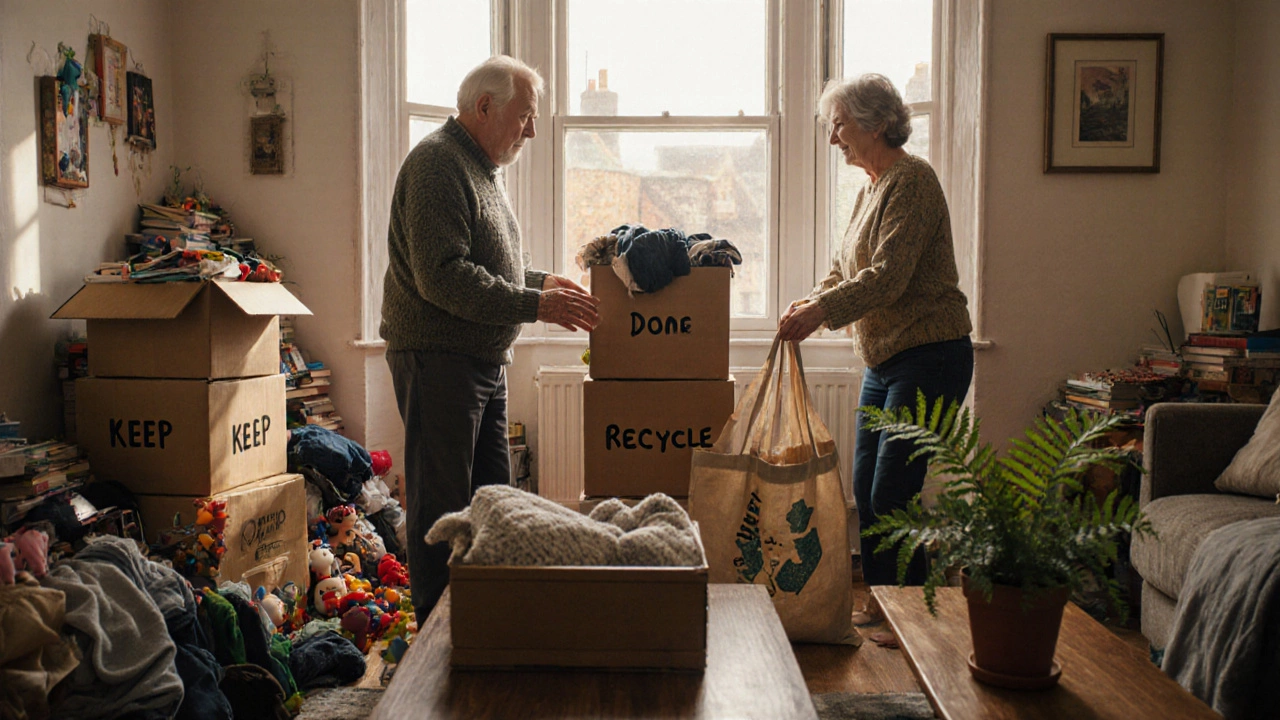
A step‑by‑step guide to declutter a junk‑filled home, covering sorting, donation, recycling, junk‑removal services, and long‑term upkeep.
Categories
RECENT POSTS

Can You Skip Moisturizer If You Use Hyaluronic Acid? The Truth
Discover why hyaluronic acid alone isn't enough for hydrated skin. Learn the science behind humectants vs. occlusives, correct layering techniques, and whether you can truly skip moisturizer.
How to Tell If a Fashion Brand Is Truly Sustainable
Learn how to spot real sustainable fashion brands-not just greenwashing. Check certifications, labor practices, materials, and transparency to make smarter, longer-lasting clothing choices.

Why Do You Cross Your Legs When Meditating?
Crossing your legs during meditation isn't about tradition-it's about stability and comfort. Learn why this posture works for most people and what alternatives exist if it doesn't suit your body.
What Is the Lipstick Trend in 2024?
Discover the 2024 lipstick trends: skin-like nudes, creamy mattes, and hydrating formulas that prioritize comfort over color. Learn what shades and textures are dominating beauty routines worldwide.
Do Millennials Like Minimalism? The Real Story Behind the Trend
Millennials aren't chasing minimalism for looks-they're chasing peace. Learn why this generation is quietly ditching clutter for space, time, and financial freedom-not because it's trendy, but because it works.