Minimalism isn’t just about owning fewer things. It’s about making space-for what matters. And for many, that includes something deeper than furniture or clothes: meaning, purpose, connection. So do minimalists believe in God? The answer isn’t yes or no. It’s messy, personal, and often surprising.
Minimalism doesn’t dictate belief
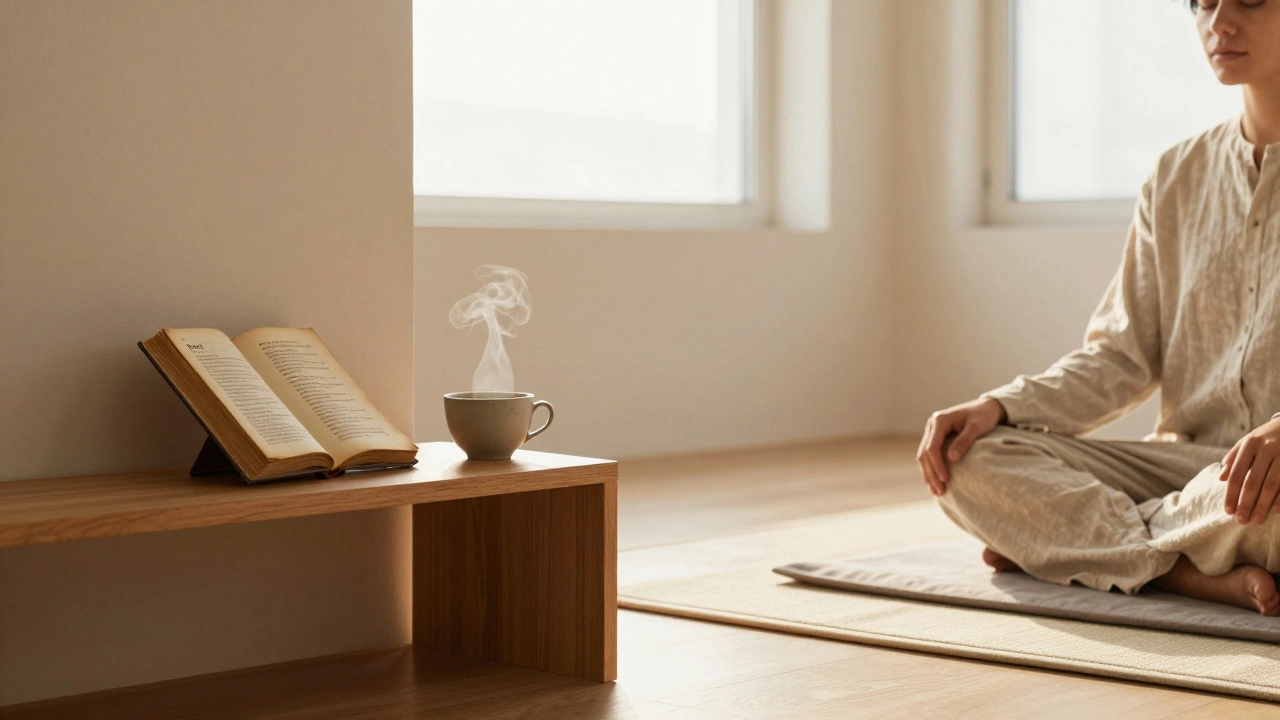
Minimalism is a practice, not a doctrine. You can be a minimalist and be atheist, agnostic, Christian, Muslim, Buddhist, or follow no organized religion at all. There’s no rulebook that says owning ten t-shirts means you must reject the divine-or embrace it. What minimalism does is strip away noise. That includes religious rituals, dogma, and social pressure to believe a certain way. What’s left is the raw question: Do I feel connected to something greater?Take Sarah, a teacher in Portland who downsized from a 3,000-square-foot home to a 600-square-foot apartment. She cleared out her bookshelf of ten theology texts, kept only one: a worn copy of Rumi’s poetry. She doesn’t go to church. But she meditates every morning, watches the sunrise, and says quiet thanks before meals. She calls it spiritual, not religious. Her minimalism didn’t change her belief-it revealed it.
Less stuff, more silence
One reason minimalism leads people toward spiritual questions is silence. When you stop filling your days with shopping, scrolling, clutter, and social obligations, there’s space for inner voice to speak. That silence isn’t empty. It’s full of questions: Why am I here? What am I part of? What lasts?A 2023 survey by the Minimalist Institute found that 68% of people who practiced minimalism for over two years reported increased interest in spirituality, regardless of their prior beliefs. That doesn’t mean they all became religious. But many began journaling, walking in nature, or practicing gratitude-not because they were told to, but because the quiet made them want to.
Think of it like cleaning a dusty mirror. You don’t know what’s reflected until the grime is gone. For some, the reflection is God. For others, it’s the universe, energy, ancestors, or simply the mystery of being alive.
Religious minimalists exist
There are plenty of people who combine faith with minimalism. Franciscan monks, for example, have lived simply for centuries. Muslim families in Indonesia downsize homes to focus on prayer and community. Jewish households observe bitul-removing excess to make room for sacred moments. These aren’t trends. They’re ancient traditions that align with modern minimalism because they both value intention over accumulation.In Japan, the concept of wabi-sabi-finding beauty in imperfection and transience-has deep roots in Zen Buddhism. Many Japanese minimalists don’t talk about God in Western terms, but they honor the sacred in everyday things: a cracked teacup, a single candle, the sound of rain on a roof. For them, spirituality isn’t a belief system. It’s a way of seeing.

Atheist minimalists? Absolutely
On the other side, many minimalists are clear-eyed atheists. They don’t believe in gods, souls, or afterlives. But they still seek meaning. They find it in human connection, in art, in science, in the quiet awe of standing under a starry sky. For them, minimalism isn’t a path to God-it’s a path away from illusion. They reject the idea that possessions define worth. And they reject the idea that belief in a higher power is necessary for peace.James, a software engineer in Berlin, lives in a 400-square-foot studio. He owns no religious symbols. He doesn’t pray. But he spends two hours every Sunday hiking in the woods without his phone. He says, “I don’t need God to feel small and connected. The trees do that for me.” His minimalism isn’t spiritual-it’s existential. And it’s just as deep.
The common thread: intention
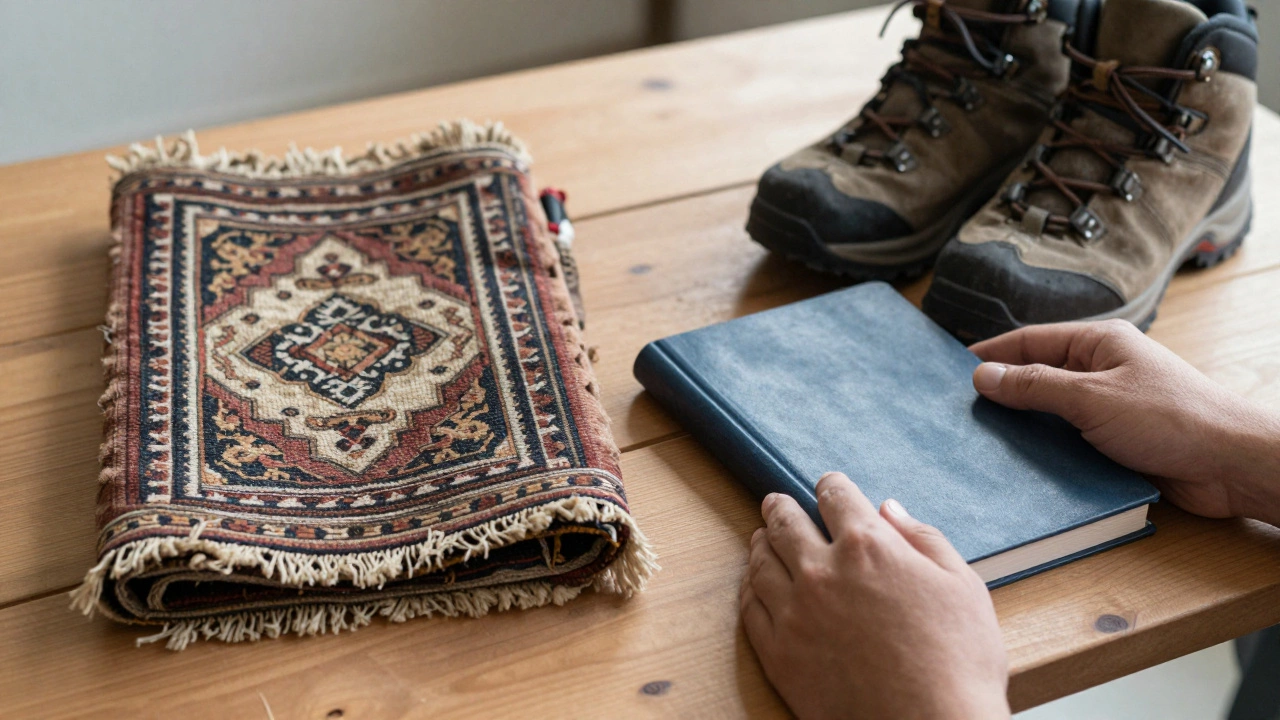
Whether someone believes in God or not, minimalists share one thing: intention. They choose what to keep. What to let go. What to honor. That’s where the real overlap happens.Religious minimalists might keep a prayer rug, a Bible, or a mala bead because it holds meaning. Atheist minimalists might keep a journal, a sketchbook, or a pair of hiking boots because they anchor them to the present. Neither group fills space with things they don’t need. Both use simplicity to focus on what gives life weight.
The difference isn’t in the belief. It’s in the language. One calls it God. Another calls it presence. One says grace. Another says gratitude. The practice is the same: remove distraction. Pay attention. Live fully.
Minimalism as a spiritual practice
Many people-religious or not-use minimalism as a daily spiritual discipline. Decluttering becomes a ritual. Letting go becomes a prayer. Choosing one sweater over ten becomes an act of mindfulness.It’s not about becoming holy. It’s about becoming aware. When you stop buying things to fill a void, you start noticing the void. And that’s where transformation begins. You might not find God in that space. But you might find something just as real: yourself.
Minimalism doesn’t answer the question of whether God exists. But it gives you the quiet to ask it-and the courage to live with the answer, whatever it is.
What minimalism reveals about belief
The real insight isn’t whether minimalists believe in God. It’s that minimalism reveals what you already believe-deep down.If you’re drawn to simplicity, you probably value authenticity. If you let go of excess, you likely care about what lasts. If you find peace in quiet, you’re probably seeking truth beyond noise.
Those aren’t religious traits. They’re human ones. And they show up whether you’re kneeling in a chapel, sitting on a meditation cushion, or standing barefoot on a cold kitchen floor at dawn, sipping tea and watching the light change.
Minimalism doesn’t create belief. It strips away the clutter so you can see what’s already there.