Mindful Breathing Timer
Use this tool to anchor your attention to the present moment. Choose a duration, press start, and follow the visual cue. When your mind wanders, gently bring it back to the breath.
Session Complete
You've practiced being present. Well done.
You’re sitting at your desk, staring at a screen, but your mind is already three emails ahead. You’re not really here; you’re worrying about tomorrow’s meeting or replaying an awkward conversation from last week. This mental time-travel is exhausting. Mindfulness is the antidote to this autopilot mode. It isn’t about emptying your brain or achieving some zen-like bliss that requires a mountain retreat. It’s simply the act of paying attention to the present moment, on purpose, without judgment.
If you’ve ever tried to meditate and felt like you failed because your thoughts wouldn’t stop, you haven’t failed. That’s actually the work. For a beginner, the biggest hurdle isn’t finding silence; it’s noticing when you’ve drifted away and gently coming back. Here is how you can start practicing mindfulness today, with zero equipment and no prior experience.
The Core Concept: What Is Actually Happening?
Before you close your eyes, let’s clear up what mindfulness is not. It’s not relaxation, though you might feel relaxed. It’s not zoning out, which is passive. Mindfulness is active awareness. Think of it as training your brain to be a better observer of its own activity.
Neuroscience backs this up. Studies using MRI scans show that consistent mindfulness practice can increase gray matter density in the hippocampus, the area responsible for learning and memory, while shrinking the amygdala, our fight-or-flight center. In plain English: you become less reactive and more resilient. But you don’t need a PhD to get these benefits. You just need five minutes and a willingness to notice things.
| Aspect | What People Think | What It Actually Is |
|---|---|---|
| Goal | To stop thinking | To notice thinking without engaging |
| Duration | Must be 30+ minutes | Can be 1 minute or 1 hour |
| Setting | Quiet room, cushion required | Anywhere (bus, kitchen, office) |
| Outcome | Instant happiness | Greater clarity and emotional regulation |
Start With Your Breath (The Anchor)
The breath is the most accessible tool you have. It’s always with you, and it only happens in the now. You can’t breathe yesterday or tomorrow. When you anchor your attention to the physical sensation of breathing, you give your wandering mind a home base to return to.
Here is a simple way to do it:
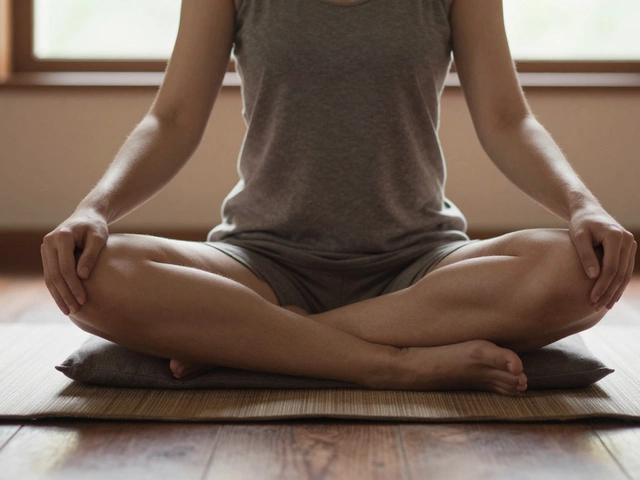
- Sit comfortably. You don’t need to cross your legs like a pretzel. A chair is fine. Keep your spine straight but not rigid.
- Close your eyes if it feels safe, or soften your gaze downward.
- Take a few deep breaths to settle in. Then, let your breathing return to its natural rhythm.
- Focus on one specific spot where you feel the breath most clearly. Maybe it’s the cool air entering your nostrils, or the rise and fall of your chest.
- When you notice your mind has wandered (and it will), gently bring your attention back to that spot. No scolding. Just return.
This "notice and return" loop is the actual exercise. Each time you catch yourself drifting, you’re doing a bicep curl for your attention span.
Body Scan: Getting Out of Your Head
If focusing on the breath feels too abstract, try connecting with your body. Stress often lives physically-in tight shoulders, a clenched jaw, or a knotted stomach. A body scan is a mindfulness technique where you systematically focus on different parts of your body to release tension.
Lie down or sit back. Start at your toes. Notice any sensation-tingling, warmth, cold, or nothing at all. Move slowly up to your feet, ankles, calves, and knees. Don’t try to change anything. Just observe. If you find tension, imagine breathing into that area. By the time you reach the top of your head, you’ll likely feel more grounded. This practice is particularly helpful before sleep because it signals to your nervous system that it’s safe to relax.

Mindful Daily Activities: No Extra Time Needed
One of the best ways to practice mindfulness as a beginner is to integrate it into tasks you already do. You don’t need to carve out new time; you just need to change how you pay attention during existing routines. This is often called "informal practice."
Mindful Eating: Put your phone away. Look at your food. Smell it. Take a small bite and chew slowly, noticing the texture and temperature. Most of us eat while scrolling through news feeds, barely tasting our meals. Slowing down turns a chore into a sensory experience.
Mindful Walking: Whether you’re walking to the bus stop or pacing around your office, feel the ground beneath your feet. Notice the shift of weight from heel to toe. Feel the air against your skin. Listen to the sounds around you-the traffic, birds, or distant chatter. Instead of rushing to the destination, inhabit the journey.
Mindful Washing Up: Feel the warmth of the water on your hands. Notice the slipperiness of the soap. Watch the bubbles form and pop. These micro-moments of presence break the cycle of rumination.
Dealing with Thoughts: The Cloud Analogy
New practitioners often quit because they think they’re "bad" at mindfulness since their minds are busy. Here’s a helpful visualization: Imagine your mind is the blue sky, and your thoughts are clouds passing by. Some clouds are dark and stormy (anxiety), others are fluffy and white (daydreams). Your job isn’t to grab the clouds or push them away. You are the sky. You just watch them drift across.
When a thought arises, label it softly. Say to yourself, "Planning," "Worrying," or "Remembering." This labeling creates a tiny bit of distance between you and the thought. You realize you are not your thoughts; you are the awareness observing them. This shift reduces the power negative thoughts have over you.

Building a Sustainable Habit
Consistency beats intensity. Ten minutes daily is far more effective than a two-hour session once a month. To make it stick, use habit stacking. Attach your mindfulness practice to an existing habit.
- After brushing your teeth, take three mindful breaths.
- Before opening your laptop, pause for one minute of body scanning.
- While waiting for the kettle to boil, practice mindful listening.
Don’t aim for perfection. Aim for curiosity. If you miss a day, just start again the next morning. The goal isn’t to never get distracted; it’s to shorten the time between getting distracted and realizing it.
Common Pitfalls for Beginners
Be wary of trying to "force" calmness. If you sit down expecting immediate peace and feel agitated instead, you might judge yourself harshly. Accept the agitation. Mindfulness includes accepting discomfort. Also, avoid using apps as a crutch forever. Apps like Headspace or Calm are great guides, but eventually, try practicing without audio cues to build self-reliance.
Finally, remember that mindfulness isn’t a quick fix for deep-seated trauma. If you find that closing your eyes brings up overwhelming emotions, consider working with a therapist who incorporates mindfulness-based approaches, such as MBSR (Mindfulness-Based Stress Reduction), developed by Jon Kabat-Zinn.
How long should a beginner meditate?
Start with just 3 to 5 minutes a day. It’s better to establish a short, consistent habit than to attempt 20 minutes and quit after three days due to frustration. Gradually increase the time as your comfort grows.
Do I need to sit cross-legged to practice mindfulness?
No. Comfort is key. You can sit in a chair, on a cushion, lie down, or even stand. The posture should support alertness without causing pain. If you lie down, be aware you might fall asleep, which is fine if rest is your goal.
What if my mind won't stop racing?
That’s normal. The goal isn’t to stop thoughts but to notice them. Every time you catch your mind wandering and bring it back to your anchor (like the breath), you are strengthening your mindfulness muscle. Treat it as a rep, not a failure.
Is mindfulness religious?
No. While mindfulness has roots in Buddhist traditions, modern secular mindfulness is a mental training technique compatible with any belief system or none at all. It focuses on psychological well-being rather than spiritual dogma.
Can I practice mindfulness while working?
Absolutely. You can practice single-tasking by giving full attention to one task at a time. Take short "micro-breaks" every hour to check in with your body and breath. This prevents burnout and improves focus.