Personalized Night Routine Builder
Your Profile
Select your profile and click "Generate" to see your ideal order of operations.
Your skin works overtime while you sleep. It repairs damage from the day, regenerates cells, and fights off environmental stressors. Yet, many of us wash our faces with soap and water, slap on a heavy moisturizer, and call it a night. This approach misses a huge opportunity to improve your complexion. The right night skincare routine can transform dull, tired skin into something glowing and resilient.
Think of nighttime as your skin’s prime time for repair. During the day, your skin is in defense mode, protecting itself from UV rays, pollution, and bacteria. At night, it switches to repair mode. Cell turnover increases, and blood flow to the skin improves. If you clog your pores with the wrong products or skip essential steps, you block this natural healing process. Let’s break down exactly what you should be using and why.
The Foundation: Double Cleansing
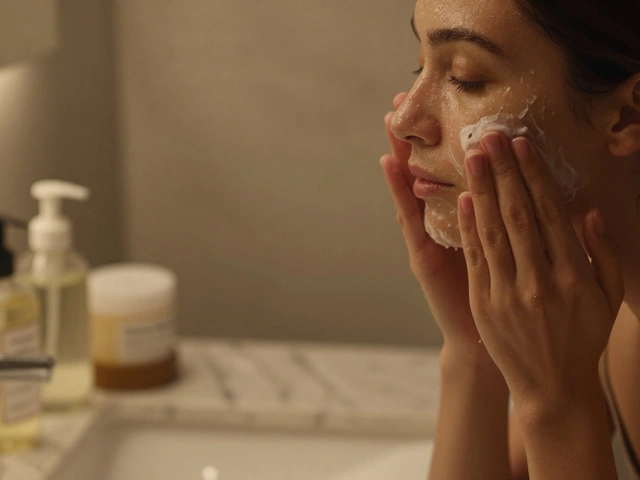
You cannot build a good routine on a dirty canvas. Most people make the mistake of washing their face once with a foaming cleanser. This removes surface oil but leaves behind sunscreen, makeup, and sebum trapped deep in your pores. Enter double cleansing.
This method involves two steps. First, use an oil-based cleanser or micellar water. Oil dissolves oil, meaning it breaks down sunscreen and makeup without stripping your skin barrier. Massage it onto dry skin for about sixty seconds. Then, rinse it off. Second, follow up with a gentle water-based cleanser. This removes sweat, dirt, and any residue left by the first step. Your skin should feel clean but never tight or squeaky. Tightness means you’ve damaged your moisture barrier, which leads to irritation and breakouts.
| Skin Type | First Cleanse (Oil/Balm) | Second Cleanse (Water-Based) |
|---|---|---|
| Oily/Acne-Prone | Lightweight cleansing oil | Gel cleanser with salicylic acid |
| Dry/Sensitive | Creamy cleansing balm | Milk or lotion cleanser |
| Combination | Balanced cleansing oil | Foaming cleanser with ceramides |
Treatment Phase: Active Ingredients
Now that your skin is prepped, it’s time for the heavy lifters. These are the ingredients that actually change how your skin looks and feels over time. You don’t need every product on the market, but you do need to choose wisely based on your goals.
If anti-aging is your priority, Retinol is a derivative of vitamin A that speeds up cell turnover and boosts collagen production. Start with a low concentration, like 0.25%, and use it two or three times a week. Retinol can be drying, so apply it to dry skin and follow with a moisturizer. Over time, your skin will tolerate higher strengths. If you have sensitive skin, look for bakuchiol, a plant-based alternative that offers similar benefits without the irritation.
For brightening and fading dark spots, vitamin C is great during the day, but at night, niacinamide shines. Niacinamide strengthens the skin barrier, reduces inflammation, and minimizes pore appearance. It plays well with almost every other ingredient, making it a safe bet for beginners. Apply a serum with 5% to 10% niacinamide after cleansing and before heavier creams.
Exfoliation is another key player, but not every night. Chemical exfoliants like alpha hydroxy acids (AHAs) such as glycolic acid or lactic acid dissolve dead skin cells. Beta hydroxy acids (BHAs) like salicylic acid penetrate pores to clear out gunk. Limit these treatments to one or two nights a week. Using them too often compromises your skin barrier, leading to redness and sensitivity. Never mix strong exfoliants with retinol in the same routine unless you have very experienced, resilient skin.

Hydration and Protection: Moisturizers and Occlusives
After applying actives, you need to seal everything in. Moisturizers do more than just hydrate; they lock in the active ingredients and prevent transepidermal water loss (TEWL). This is crucial because air conditioning and heating systems can dry out your room, pulling moisture from your skin while you sleep.
Choose a moisturizer based on your skin type. Oily skin types might prefer a lightweight gel-cream with hyaluronic acid. Dry skin types benefit from richer creams containing ceramides, squalane, or shea butter. Ceramides are lipids that naturally occur in your skin barrier. As we age, our natural ceramide levels drop, so replenishing them helps keep skin plump and protected.
For extra-dry patches or extreme weather conditions, consider an occlusive layer. Products containing petrolatum or dimethicone create a physical barrier on top of your skin. This traps all the moisture and nutrients underneath. Many people fear "slugging"-the term for applying a thick layer of ointment-but when done correctly, it can dramatically improve hydration overnight. Just avoid slugging if you are prone to acne, as it can trap bacteria.
Specialized Treatments: Eye Creams and Sleeping Masks
The skin around your eyes is thinner and more delicate than the rest of your face. It shows signs of aging faster because we blink thousands of times a day and rub our eyes when tired. An eye cream isn’t strictly necessary if your facial moisturizer is gentle enough, but specialized formulas often contain caffeine to reduce puffiness or peptides to target fine lines. Apply eye cream with your ring finger, patting gently rather than rubbing.
Sleeping masks offer a boost in hydration and glow. Think of them as intensive conditioners for your hair, but for your face. They usually contain higher concentrations of humectants like glycerin and honey. Use them once or twice a week instead of your regular moisturizer. Leave them on overnight, and wake up to softer, more radiant skin.

Common Mistakes to Avoid
Even with the best products, bad habits can ruin results. One major error is skipping sunscreen the next morning. Retinol and exfoliants make your skin more sensitive to UV light. If you don’t wear SPF 30 or higher daily, you undo all the repair work your night routine did. Sun damage is cumulative, so protection is non-negotiable.
Another mistake is introducing too many new products at once. If you start using retinol, a new vitamin C serum, and a BHA exfoliant all in the same week, you won’t know which product is causing irritation if a breakout occurs. Introduce one new product every two weeks. This allows your skin to adjust and helps you track what works.
Also, remember that consistency beats intensity. A simple routine done every night is better than a complex ten-step routine done sporadically. Your skin needs time to respond to active ingredients. Collagen production takes months to show visible changes. Patience is part of the process.
Tailoring Your Routine to Your Goals
Not everyone needs the same regimen. Here is how to adjust based on specific concerns:
- Acne-Prone Skin: Focus on salicylic acid cleansers and lightweight, non-comedogenic moisturizers. Avoid heavy oils. Spot treat breakouts with benzoyl peroxide or sulfur.
- Aging Skin: Prioritize retinol and peptide-rich serums. Hydration is key to plumping fine lines, so layer hyaluronic acid under a rich cream.
- Dull Skin: Incorporate AHAs like glycolic acid twice a week to shed dead cells. Add a brightening serum with niacinamide or licorice root extract.
- Sensitive Skin: Stick to fragrance-free products with soothing ingredients like centella asiatica, oat extract, and panthenol. Avoid high-strength acids and retinol initially.
Your skin is unique, so listen to it. If it stings, burns, or turns red, scale back. Simplicity often yields the best long-term results. Build a foundation of cleansing, treating, and moisturizing, then add extras only if needed.
Can I use retinol and vitamin C together at night?
It is generally not recommended to use high-strength retinol and vitamin C simultaneously because both can be irritating and alter the skin's pH levels. Vitamin C is most effective in the morning to protect against free radicals, while retinol works best at night for repair. If you want to use both, apply vitamin C in the AM and retinol in the PM.
How long does it take to see results from a night skincare routine?
Results vary by ingredient. Hydration improvements can be seen within days. Brightening effects from niacinamide may appear in four to six weeks. Anti-aging benefits from retinol typically take three to six months of consistent use because collagen remodeling is a slow biological process.
Is double cleansing necessary if I don't wear makeup?
Yes, if you wear sunscreen. Most sunscreens are water-resistant and contain oils or silicones that standard cleansers struggle to remove completely. An oil-based first cleanse ensures these residues are broken down, preventing clogged pores and allowing your treatment products to absorb better.
What order should I apply my skincare products?
Apply products from thinnest to thickest consistency. Start with cleansers, then toners (if used), followed by water-based serums like vitamin C or niacinamide. Next, apply thicker serums or treatments like retinol. Finish with eye cream, moisturizer, and finally an occlusive oil or balm if needed.
Should I change my skincare routine with the seasons?
Yes. In winter or dry climates, switch to richer moisturizers and reduce exfoliation frequency to protect your barrier. In summer or humid environments, lighter gel-based moisturizers and increased cleansing may be necessary to manage excess oil and sweat.