Plastic Footprint Calculator
Personal Plastic Usage
Estimate how much plastic you use daily
Plastic Savings Potential
See how much plastic you could save by switching to reusable alternatives
Every item you replace with a reusable alternative helps reduce plastic pollution in our oceans and soil.
Every year, over 400 million tons of plastic are produced worldwide. Half of it is designed to be used once and thrown away. And while we talk about climate change, deforestation, and ocean acidification, the single most damaging product to the environment isn’t a factory, a power plant, or even a coal mine. It’s single-use plastic.
Why single-use plastic is the worst offender
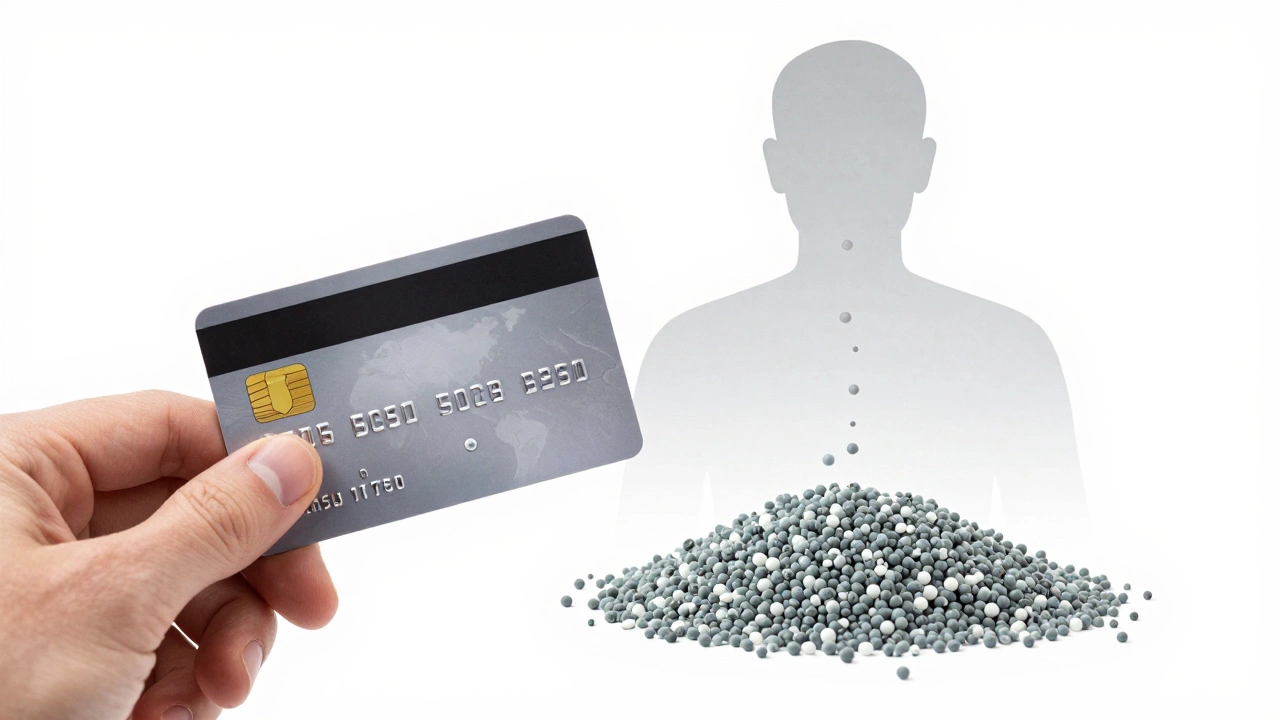
Single-use plastic isn’t just annoying litter. It’s a systemic disaster. Unlike paper or glass, plastic doesn’t break down. It fragments. A plastic bottle doesn’t vanish-it turns into microplastics. These tiny particles are now found in the deepest ocean trenches, in Arctic ice, and even in human blood. A 2022 study in Nature confirmed that the average person ingests about 5 grams of plastic every week-roughly the weight of a credit card.
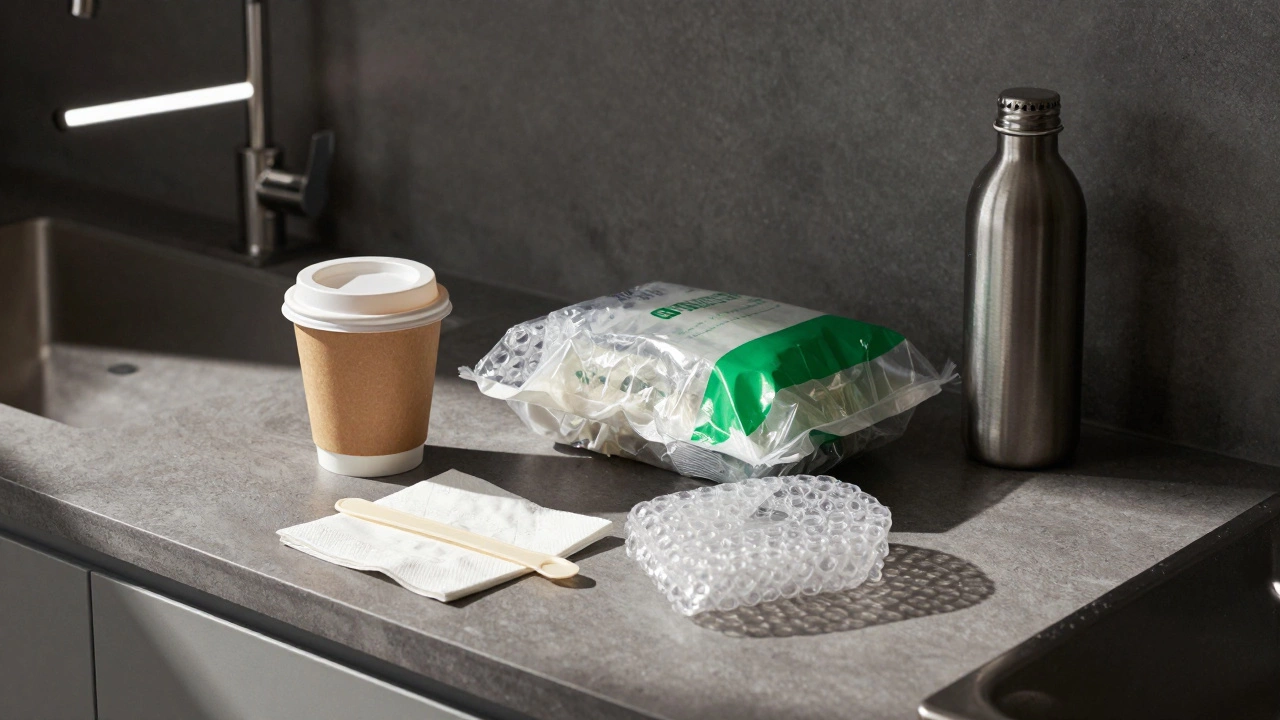
Why does this happen? Because plastic was designed to be cheap, durable, and disposable. It’s not a flaw-it’s the point. Companies make billions selling products wrapped in plastic bags, sealed in plastic film, or packed in plastic containers. Think about your last takeaway coffee. The cup is lined with plastic. The lid is plastic. The stirrer is plastic. Even the napkin comes in a plastic wrapper. All of it, used for minutes, lasts for centuries.
The lifecycle of harm
Plastic’s damage starts before it’s even used. Making plastic requires fossil fuels. Every ton of virgin plastic produces about 5.5 tons of CO₂. That’s more than burning a barrel of oil. In 2023, plastic production accounted for 3.4% of global greenhouse gas emissions-more than all of aviation combined.
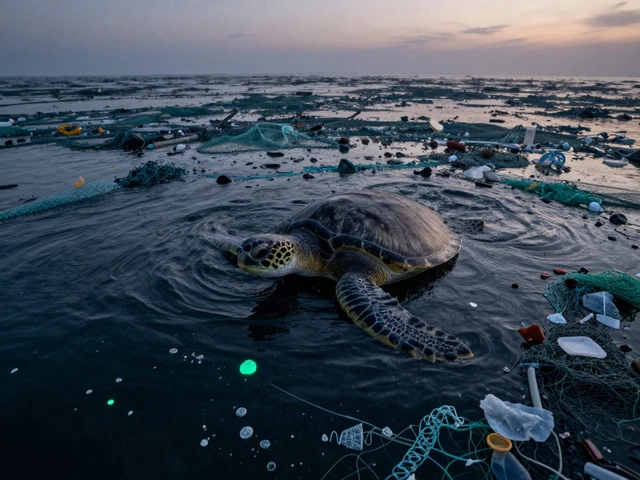
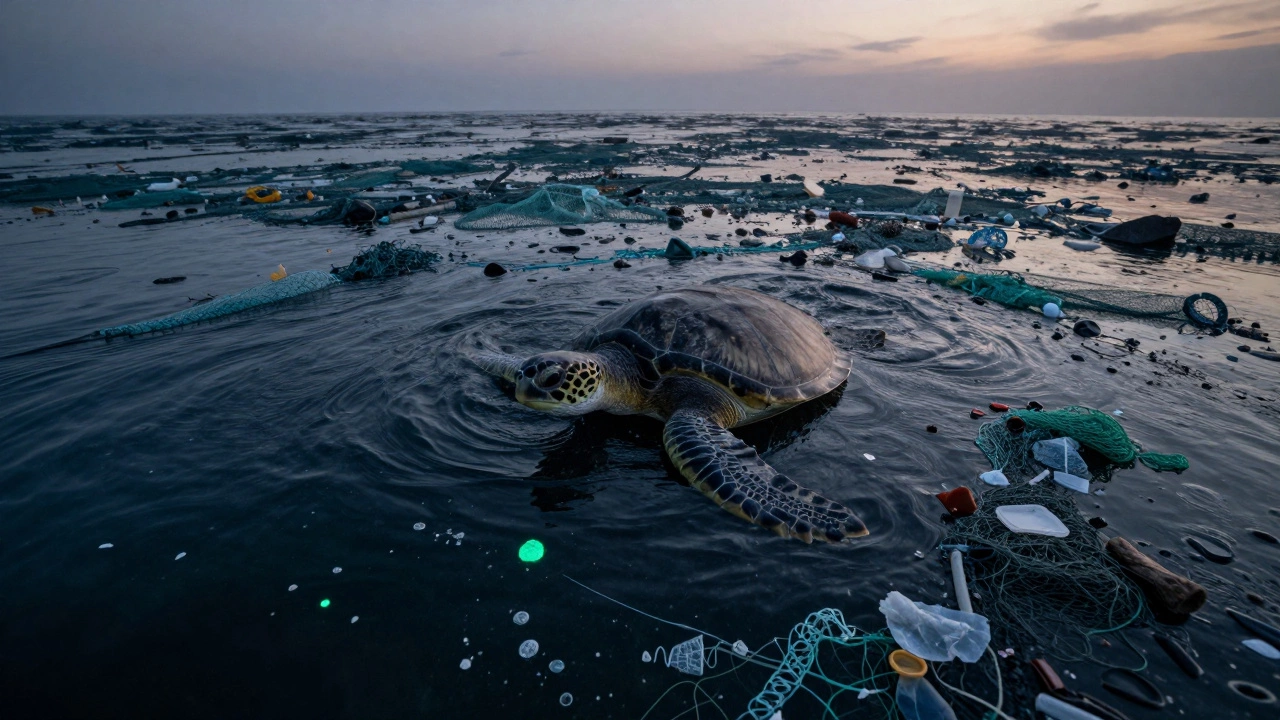
Then comes the waste. Only 9% of all plastic ever made has been recycled. The rest ends up in landfills, incinerators, rivers, or oceans. The Great Pacific Garbage Patch isn’t just a floating island of bottles. It’s a swirling soup of microplastics, tangled fishing nets, and degraded packaging. Marine life mistakes it for food. Sea turtles eat plastic bags thinking they’re jellyfish. Seabirds fill their stomachs with bottle caps and die of starvation. Over 90% of seabirds have plastic in their guts.
And it doesn’t stop there. Microplastics seep into soil, into groundwater, into the crops we eat. A 2024 study from the University of Wellington found detectable levels of microplastics in 78% of local vegetables grown in urban gardens. That’s not a future problem. It’s happening now.
What’s worse than plastic? The systems that support it
Some people point to fast fashion or beef production as bigger threats. And yes, those are serious. But plastic’s scale is unmatched. It’s everywhere. It’s in everything. It’s not just a product-it’s a system. The global packaging industry spends $300 billion a year on single-use plastic. That’s more than the entire GDP of New Zealand.
And the companies behind it? They know the damage. Internal documents from ExxonMobil and Dow Chemical, leaked in 2021, show they spent decades funding PR campaigns to shift blame onto consumers. “Recycle more,” they said. “It’s not our fault.” Meanwhile, they kept increasing plastic production by 4% every year.
Real-world examples: What you’re using every day
- Plastic water bottles - Over 1 million sold every minute. Most are never recycled.
- Plastic packaging - A single online order can come with five layers of plastic: bubble wrap, air pillows, tape, poly bags, and inner liners.
- Disposable coffee cups - Lined with polyethylene. Non-recyclable in 95% of municipal systems.
- Plastic straws and cutlery - Used for 15 minutes. Takes 500 years to degrade.
- Microbeads in toothpaste and face wash - Banned in many countries, but still sold illegally in others.
These aren’t niche products. They’re everyday items. And they’re not going away because people forget to recycle. They’re going away because they’re designed to be thrown away.
Why recycling doesn’t fix it
You’ve been told to recycle. But recycling plastic is a myth. Most plastic can’t be recycled. Even the ones labeled “recyclable” often aren’t. Why? Because sorting is expensive. Contamination is high. Markets for recycled plastic are weak. In New Zealand, only 12% of plastic waste gets recycled. The rest is shipped overseas-or burned in local incinerators.
Recycling plants aren’t broken. They’re doing exactly what they were designed to do: process the plastic we give them. The problem is that we keep giving them too much of the wrong kind.
What actually works
Real change doesn’t come from better recycling bins. It comes from redesigning the system.
- Reuse systems - Cafes in Wellington now offer discounts if you bring your own cup. A simple idea, but it cuts waste fast.
- Ban single-use items - New Zealand banned plastic bags in 2019. Sales dropped 80% in six months.
- Extended producer responsibility - Companies must pay for the waste their products create. The EU made this law in 2024. Canada followed in 2025.
- Alternative materials - Mushroom packaging, seaweed wraps, and compostable cellulose films are already being used by brands like IKEA and Unilever.
The solution isn’t guilt. It’s accountability. It’s not about you forgetting your reusable bag. It’s about corporations being forced to stop making things that can’t be undone.
What you can do right now
Don’t wait for policy. Don’t wait for companies to change. Start where you are.
- Choose products with zero plastic packaging.
- Support brands that use refillable containers or take-back programs.
- Ask your local store: “Can you sell this without plastic?”
- Vote for leaders who back plastic reduction laws.
- Don’t buy bottled water. Carry a reusable bottle.
One person won’t stop the plastic tide. But 10,000 people refusing a plastic bag? That changes the market. 100,000 people demanding refill stations? That forces retailers to adapt.
The bigger picture
Plastic is the symptom. The disease is overconsumption. A culture that treats the planet like a dumpster. But we can change that. We’ve done it before. We banned lead in gasoline. We phased out CFCs in spray cans. We stopped the ozone hole from growing.
Single-use plastic is the most harmful product because it’s everywhere, it lasts forever, and we’ve been lied to about how to fix it. But it’s not inevitable. It’s a choice. And choices can be undone.
Is plastic really the worst environmental product, or is it something else like coal or oil?
Coal and oil are major drivers of climate change, but they’re energy sources, not consumer products. Plastic is different-it’s a product we use daily, and its entire lifecycle-from production to disposal-is designed to cause harm. Unlike oil, which can be replaced by renewables, plastic is embedded in nearly every consumer good. Its physical persistence in ecosystems, combined with its massive scale, makes it uniquely destructive.
Can bioplastics solve the plastic problem?
Bioplastics sound promising, but most aren’t the solution. Many require industrial composting facilities that don’t exist in most cities. If they end up in landfills or oceans, they behave just like regular plastic. Only a few types, like PHA made from algae, break down safely in nature-and even those are rare and expensive. Don’t assume “biodegradable” means harmless.
Why don’t governments just ban all plastic?
They’re trying-but slowly. Plastic is in medical devices, food safety packaging, and electronics. A total ban isn’t practical. But banning single-use items-bags, straws, cutlery, foam containers-is both possible and effective. Countries like Canada, the EU, and New Zealand have already done it. The goal isn’t to eliminate all plastic, but to stop the unnecessary, disposable kind.
What happens to plastic waste shipped overseas?
For years, wealthy countries shipped plastic waste to Southeast Asia. Many of these countries lacked the infrastructure to process it. Some waste was burned in open pits, poisoning air and soil. Others were dumped in rivers. When China banned plastic imports in 2018, the crisis became visible. Now, countries are forced to deal with their own waste-and that’s forcing real change.
Is there any plastic that’s actually safe to use?
Not really. Even “safe” plastics like PET (used in water bottles) can leach chemicals when heated or aged. And while they’re technically recyclable, most aren’t. The only truly safe option is avoiding plastic altogether. Use glass, metal, silicone, or bamboo instead. The goal isn’t to find a better plastic-it’s to stop using plastic where alternatives exist.