Big Tummy Style Analyzer
Select your current outfit details below to receive personalized styling tips on how to better flatter your silhouette.
Style Score: 0%
Here is the truth about dressing a midsection that has decided to take up more space than you planned for: it is rarely about hiding your stomach. It is about where you put the eye. When you try to hide, you often create more bulk. When you direct attention elsewhere, the problem disappears into the background. If you have been standing in front of your closet holding a shirt that fits everywhere except your belly, this guide is for you. We are looking at specific fabrics, cuts, and patterns that fight against your silhouette, and why they fail.
The Tight Fit Trap
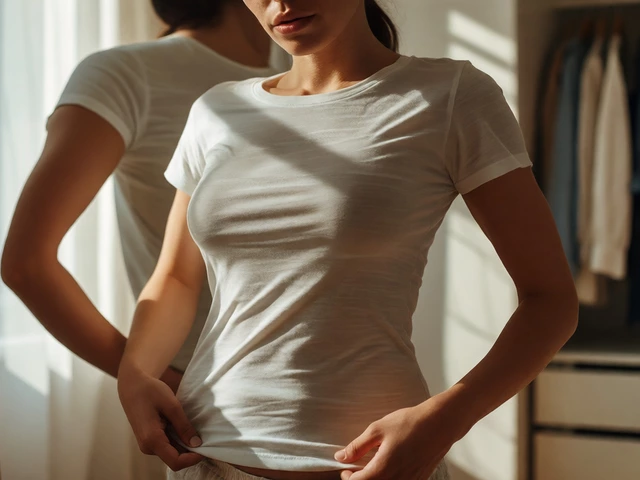
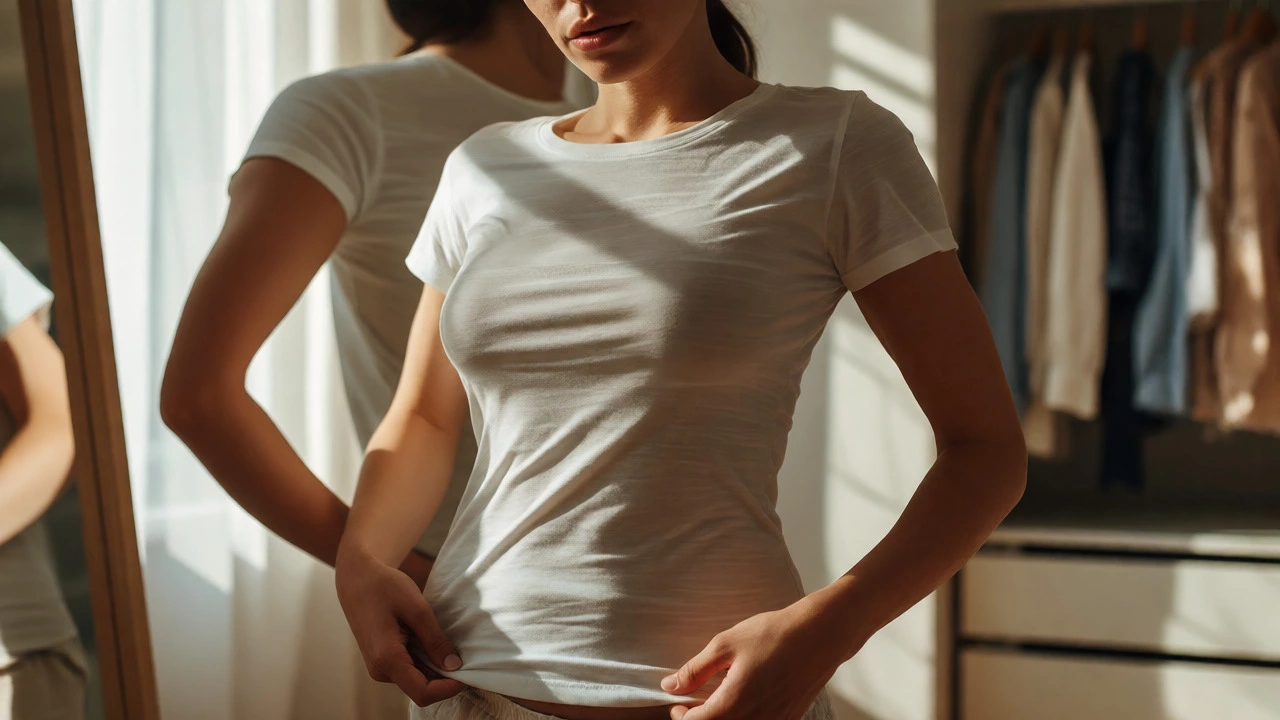
You might think tight clothes show off your figure or loose clothes hide it. Both can be wrong if you have a prominent belly. The biggest mistake? Wearing something too small. When a top pulls across your stomach, it creates horizontal tension lines. These lines cut your torso visually, making you look wider. Worse, tight waistbands dig in, creating a "muffin top" effect even if you are wearing high-waisted jeans. This isn't about being overweight; it's about physics. Fabric under tension highlights every contour underneath it.
On the flip side, throwing on a tent-like oversized tee doesn't help either. It adds volume around your arms and shoulders while still clinging slightly to the widest part of your back. The sweet spot is a fit that skims. Think of it as a gentle hug, not a squeeze or a cloud. Your clothes should follow the line of your body without pressing into it. If you see fabric pulling between buttons, size up. If you feel like you are swimming in cotton, size down.
Fabric Choices That Betray You
Not all materials behave the same way. Some cling, some add bulk, and some drape beautifully. Knowing which is which saves you hours of shopping frustration. Thin, cheap knits are notorious offenders. They have no structure, so they mold to every bump and curve. A thin jersey t-shirt will outline your stomach exactly as it is. There is no forgiveness there.
Instead, look for structured fabrics. Cotton poplin, linen blends, and heavier viscose hold their own shape. They stand away from the body slightly, creating a clean line over your midsection. Denim needs care, too. Rigid denim holds its shape well but can be uncomfortable if the rise is wrong. Stretch denim is tricky; too much elastane makes it clingy, while rigid stretch offers support without the shine.
| Fabric Type | Behavior | Verdict |
|---|---|---|
| Thin Jersey Knit | Clingy, highlights contours | Avoid |
| Stiff Cotton Poplin | Holds shape, stands away | Excellent |
| Heavyweight Linen | Drapes well, breathable | Good |
| High-Stretch Spandex | Reveals every detail | Risky |
| Silk Charmeuse | Slippery, clings when static | Use with slip |
Necklines and Vertical Lines
Where does the eye go first? Usually, it goes to the face and then follows the lines of the clothing. High necklines, like crew necks or turtlenecks, can shorten your neck and draw attention downward to the chest and stomach area. They box in the upper body, making the transition to the belly more abrupt.
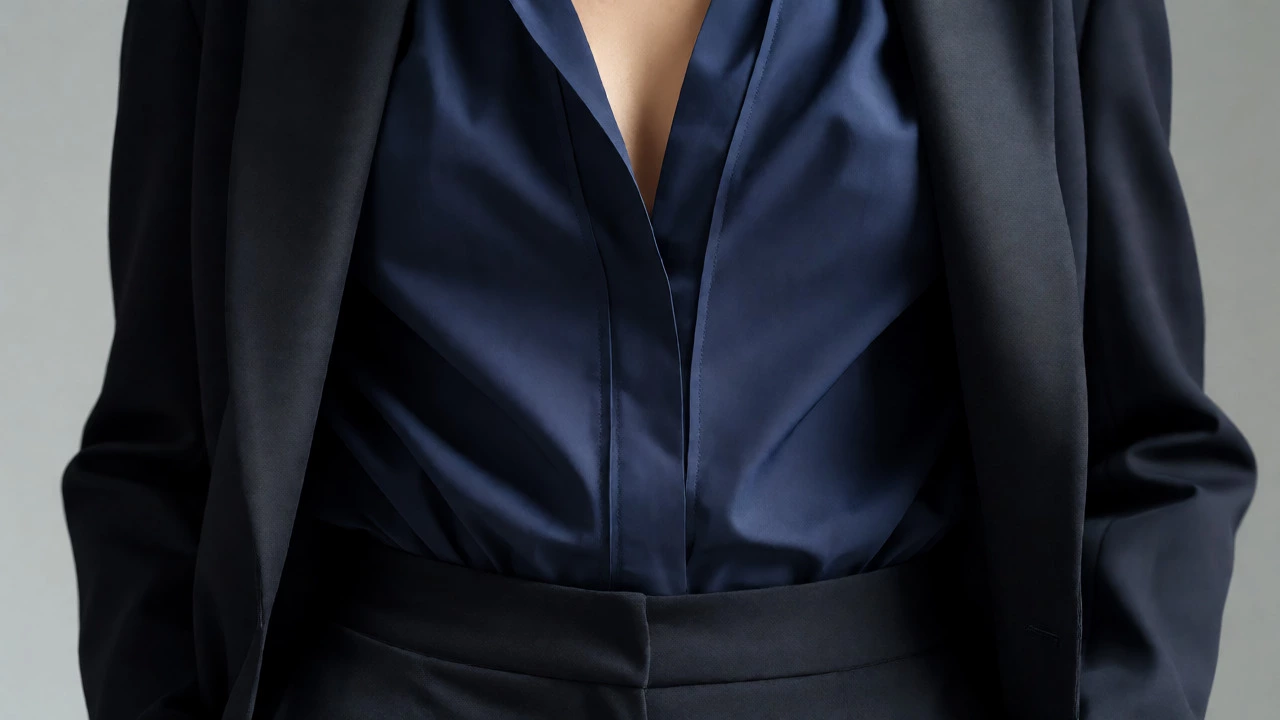
V-necks and scoop necks are your best friends. They create a vertical line that draws the eye down and elongates the torso. This breaks up the width of the upper body. If you love turtlenecks, keep them fitted but not skin-tight, and layer them under open cardigans or blazers to maintain that vertical break. The goal is to avoid a solid block of color from your chin to your hips. Break that block up.
Patterns and Prints
There is a myth that large prints make you look bigger and small prints make you look smaller. Neither is strictly true. What matters is scale relative to your body. Tiny, busy patterns (like micro-florals) can look like static noise, drawing attention to the shape they cover. Large, bold geometric prints can overwhelm a smaller frame but work well on larger frames if placed strategically.
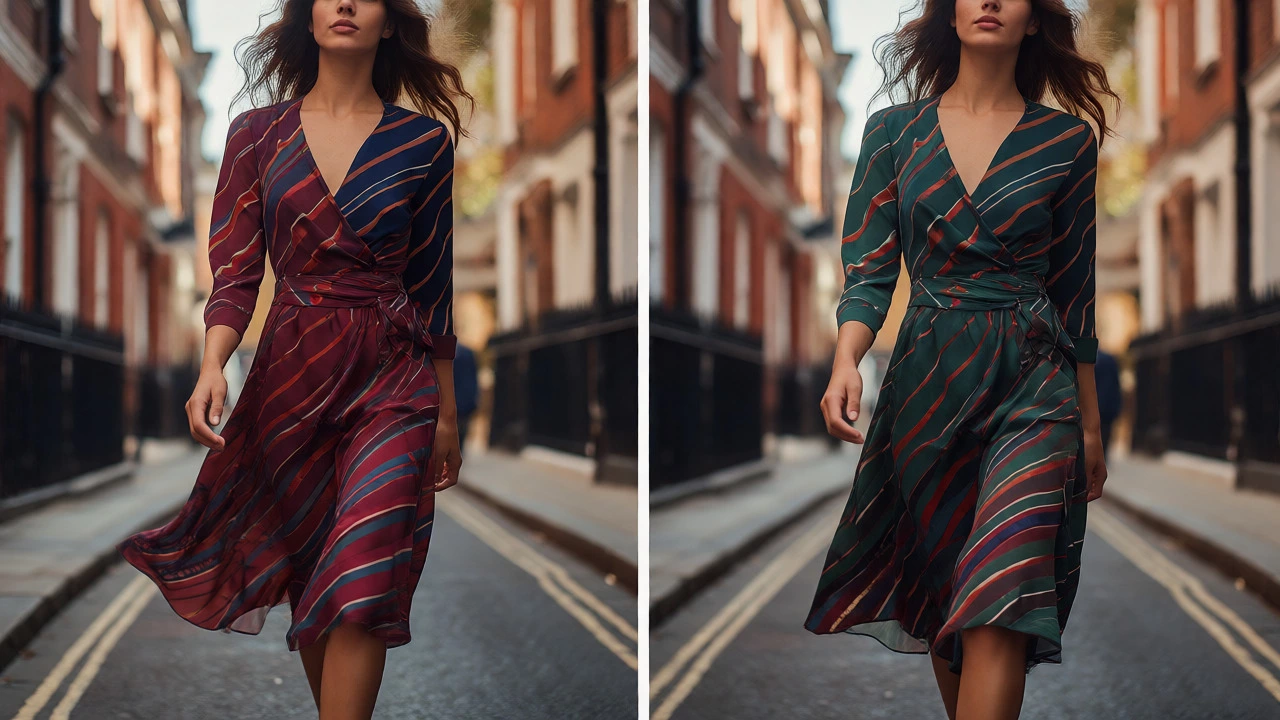
Solid colors are safer, but monochrome outfits can sometimes lack definition. If you want pattern, choose one with a clear direction. Vertical stripes are classic for a reason-they elongate. But beware of thick, wide horizontal stripes. Those literally say "look how wide I am." Diagonal stripes or abstract prints with vertical elements offer movement without adding width. Darker colors do recede visually, but black isn't the only option. Navy, charcoal, deep forest green, and burgundy also slim effectively while offering more personality than black.
Waist Definition vs. Waist Hiding
Many people with a big tummy believe they must wear empire waists (where the seam sits just under the bust). While this hides the stomach, it often adds volume to the lower half because the fabric falls straight from the chest, ignoring the natural waistline. This can make you look pregnant rather than curvy.
Try defining the waist instead. You don't need a tight belt. Look for tops with ruching or gathering along the sides or center front. This texture disguises the stomach while suggesting a shape. Wrap dresses are fantastic because they create a diagonal line across the body and allow you to adjust the fit at the waist. Belts should be worn over flowy tops, not cinched tightly into the softest part of your belly. Place a belt higher, near the natural waist (above the navel), or lower on the hips if you prefer a relaxed look.
Layering Strategies
Layers are powerful tools. An open jacket, cardigan, or kimono creates two vertical lines running down the front of your body. These lines act like parentheses, framing your midsection and cutting down perceived width. This is far more effective than a single bulky sweater.
Keep the inner layer simple and fitted enough to skim, and the outer layer open. Ensure the outer layer is longer than the inner layer to continue the vertical line. Avoid cropped jackets that end right at the widest part of your belly; they cut you in half horizontally. Instead, aim for hip-length or longer. In Wellington's unpredictable weather, a long-line blazer or a trench coat works double duty: it keeps you warm and sharpens your silhouette instantly.
Bottoms Matter Too
Your top choice fails if your bottoms fight against it. Low-rise jeans sit below the belly button, causing the stomach to spill over the waistband. High-rise pants smooth everything out and hold the midsection in place. Look for flat-front trousers rather than pleated ones, as pleats add extra fabric at the waist that can billow out when you sit or move.
Skirts should fall at a length that balances your proportions. Knee-length or midi skirts often work better than mini skirts, which can emphasize the gap between the skirt hem and the knee. A-line skirts flare gently from the waist, skimming over the hips and stomach without clinging. Pencil skirts can work if the fabric has some stretch and the waistband is wide and supportive, but they require careful fitting to avoid pulling at the back or front.
Undergarments Are the Foundation
No amount of clever tailoring fixes bad underwear. Seamless, smoothing shapewear can make a huge difference under fitted clothes. It isn't about squeezing yourself into a corset; it's about creating a smooth canvas. For everyday wear, look for high-waisted briefs with moderate control panels. Avoid lace edges that show through thin fabrics. Bra fit is equally critical. A poorly supported bust causes shoulder straps to dig in and the back band to ride up, distorting the entire upper body shape. Get professionally fitted once a year; bodies change, and so do bra sizes.
Does black always make me look thinner?
Black absorbs light, which reduces shadows and makes shapes less defined, so yes, it generally has a slimming effect. However, head-to-toe black can look severe. Mixing dark neutrals like navy or charcoal with lighter accents keeps the outfit interesting while maintaining the slimming benefit.
Can I wear horizontal stripes?
You can, but proceed with caution. Wide, bold horizontal stripes emphasize width. Thin, subtle pinstripes or irregular horizontal patterns are less likely to widen your silhouette. If you love stripes, use them on accessories like scarves or belts rather than across the entire torso.
Are empire waists bad for big tummies?
Not necessarily bad, but they aren't always flattering. Empire waists hide the stomach but can add volume to the hips and thighs. If you have an hourglass shape with a protruding belly, a defined natural waist often looks more balanced than an empire seam.
What kind of jeans should I avoid?
Avoid low-rise jeans, as they cause spillover. Also, steer clear of extremely stiff, non-stretch denim with narrow leg openings, which can make legs look thicker and unbalance the proportion with a larger midsection. Opt for mid-to-high rise with a slight stretch and a straight or bootcut leg.
Do ruffles help hide a tummy?
Ruffles add texture and volume. Placed vertically along the center front or sides, they can disguise the stomach shape well. However, excessive ruffling across the bust and stomach can add bulk. Use them sparingly and ensure they are structured, not floppy.