There’s a reason you feel better walking into some houses and stressed out in others. It’s not about how much stuff you own-it’s about how space feels. A cozy home doesn’t mean every surface is piled with blankets, candles, and knickknacks. In fact, too much of that makes a place feel heavy, not warm. The trick isn’t removing everything. It’s keeping only what serves comfort, purpose, or joy-and letting the rest breathe.
Start with the rule of three
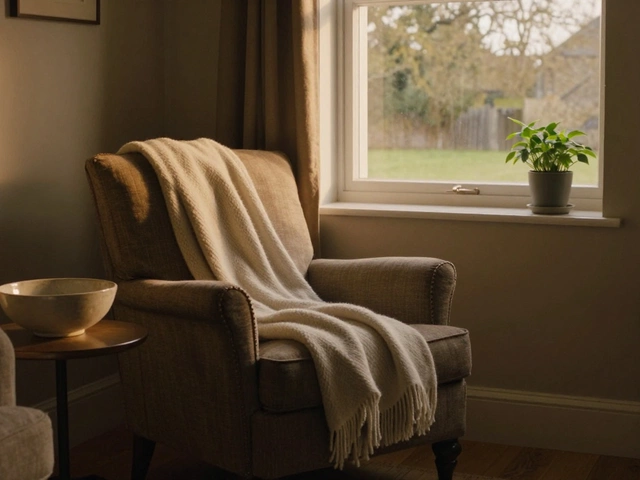
Pick three things you love that make your space feel like home. Maybe it’s your grandmother’s wool throw, a ceramic bowl you bought on a weekend trip, and the small plant that survived your first year of forgetting to water it. These aren’t decorative afterthoughts. They’re anchors. Put each one in a spot where you naturally pause: beside your favorite chair, on the windowsill you stare at in the morning, at the end of your bed. Now stop. Don’t add more. This is your cozy baseline. Everything else you bring in needs to earn its place by matching one of those three qualities: warmth, function, or memory.Let light do the heavy lifting
Natural light makes a room feel open. Artificial light makes it feel alive. If your house feels cramped, it’s often not because it’s full of stuff-it’s because it’s dark. Swap out harsh overhead lights for lamps with warm bulbs (2700K or lower). Place one in every corner where you sit. A floor lamp by the sofa. A small table lamp on the nightstand. Even a string of fairy lights draped over a bookshelf can soften the edges. In Wellington, where winters are long and gray, this isn’t a luxury-it’s survival. Light doesn’t take up space. It changes how space feels.Choose furniture that works double duty
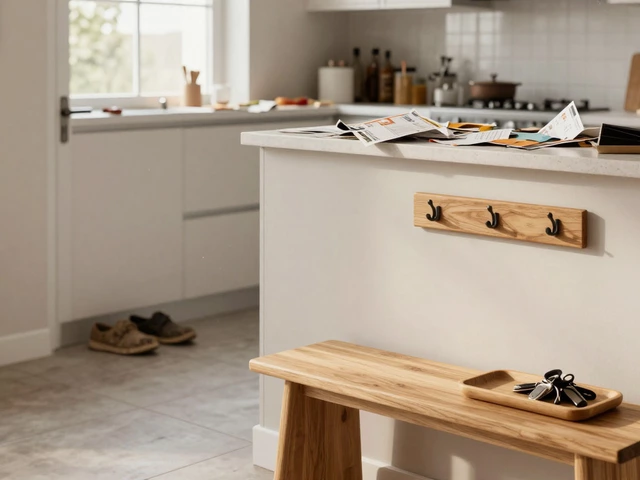
A bench with hidden storage under the seat? That’s not just furniture. That’s your entryway clutter solution. A coffee table with drawers? That’s where your remote controls, chargers, and spare blankets live-out of sight, but easy to reach. A bed with built-in drawers underneath? That’s where off-season clothes go instead of crowding your closet. You don’t need more shelves. You need smarter pieces. Look for items that hide what you use daily. That way, your surfaces stay clear, and your mind stays calm.Limit textures to three or four
Cozy doesn’t mean chaotic. Too many fabrics-knits, faux fur, velvet, linen, cotton, wool, boucle-can make a room feel busy, not comforting. Pick three textures that feel good to touch and stick with them. Maybe it’s a chunky knit blanket, a smooth ceramic vase, and a soft wool rug. Repeat those materials in small doses around the room. One throw pillow in the same knit as the blanket. One candle holder in the same ceramic as the vase. This creates rhythm, not randomness. Your eyes don’t have to work hard to make sense of the space. That’s what makes it calming.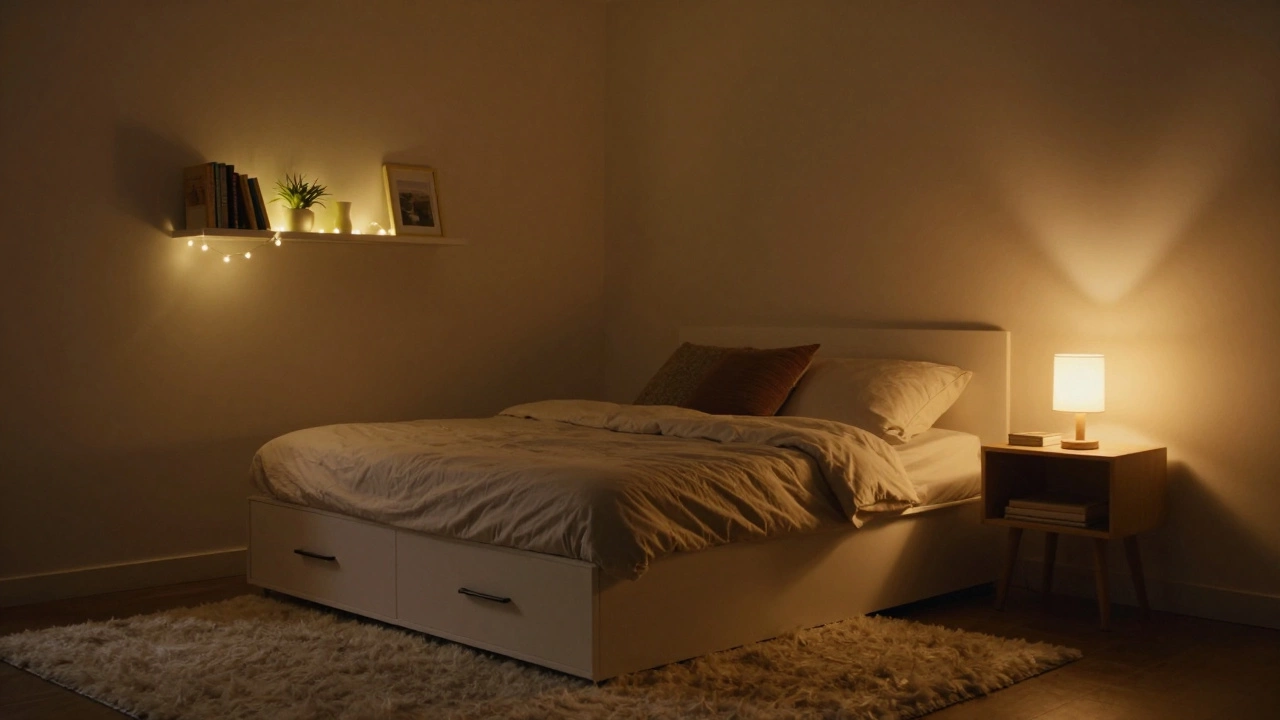
Use walls, not tables
If you’re tempted to put a shelf on every wall, stop. Instead, pick one or two walls to highlight. Hang a single large piece of art. Install one floating shelf with just three items: a book, a small plant, a framed photo. That’s it. Empty space isn’t empty. It’s breathing room. Walls that are too full make a room feel like a storage unit. A single well-placed object on a plain wall draws attention, not distraction. In small homes, this rule matters even more. Less on the walls means more space to move, think, and relax.Declutter by category, not room
Don’t tackle the living room. Don’t tackle the kitchen. Tackle one category across the whole house. Start with mugs. Gather every single mug you own-from the kitchen, the office, the guest room. Lay them all out. Keep the ones you actually use. Donate the rest. Then do the same with books. Then with cords. Then with towels. When you see how many duplicates you have, you’ll realize clutter isn’t spread out-it’s concentrated. Cleaning one category at a time gives you a clear win. And once you’ve done it once, you’ll start noticing duplicates before they pile up.Build habits, not systems
You don’t need a label maker, a color-coded bin system, or a 12-step decluttering app. You need two habits: put things back where they belong, and ask yourself, “Do I need this?” before buying or keeping something. If you leave your coffee mug on the coffee table instead of washing it and putting it away, the table gets messy. If you buy a new candle because it looks nice, but you never light it, it becomes clutter. The system isn’t complicated. The habit is. Make it automatic. Wash the mug. Return the book. Put the coat on the hook. These tiny actions keep clutter from creeping in.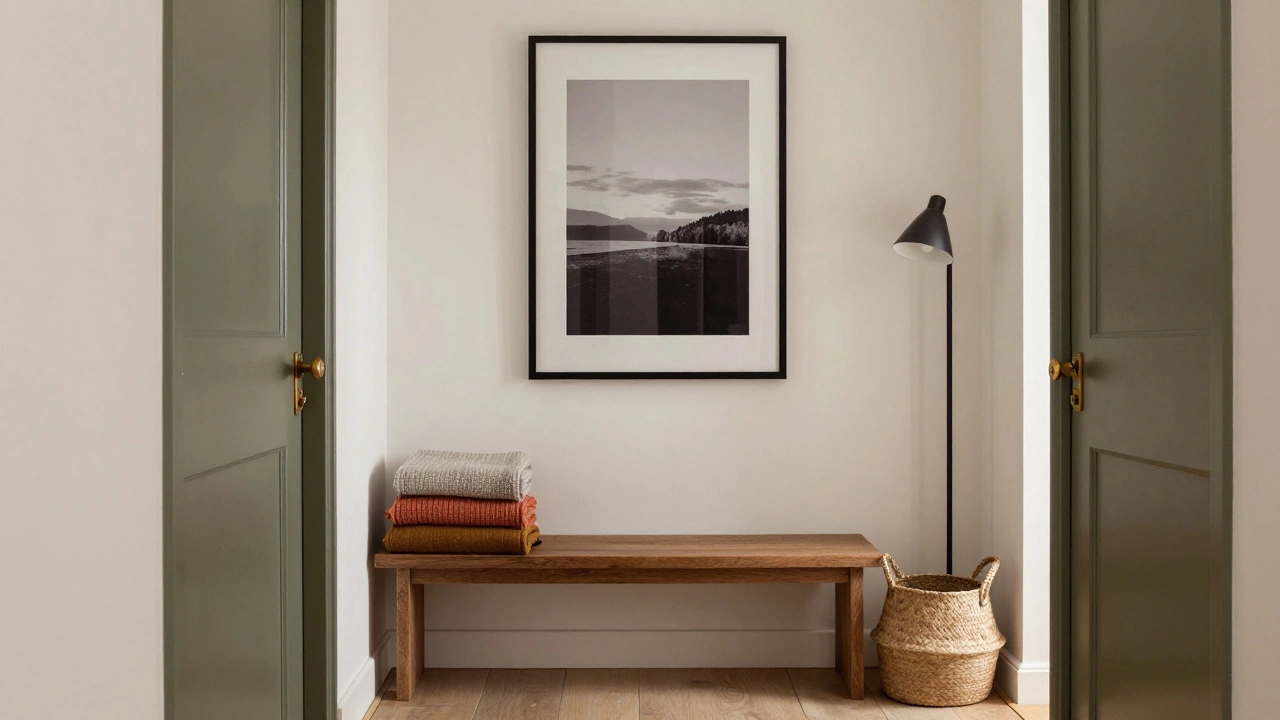
Seasonal swaps keep things fresh
In Wellington, seasons shift fast. Winter brings heavy woolens. Summer brings light linens. Instead of storing all your seasonal stuff in boxes under the bed, rotate it. Swap out heavy throws for lightweight ones. Swap summer cushions for autumn tones. Store off-season clothes in clear bins under the bed or in the closet. This keeps your space feeling current without adding new stuff. It also reminds you what you own-and what you don’t miss. You’ll be surprised how little you actually need when you rotate what’s in use.Let silence be part of the design
A cozy home isn’t loud. It doesn’t need to be filled with sound, color, or objects. Sometimes the most comforting thing is quiet. A blank wall. An empty corner. A single chair facing the window. Silence gives your brain space to rest. Don’t fill every inch because you think it should be used. Leave room for stillness. That’s where real comfort lives-not in the things you own, but in the space you allow yourself to breathe.What to do when you feel overwhelmed
If your house feels too full and you don’t know where to start, pick one small area: the top of your dresser. Clear everything off. Wipe it down. Put back only what you use every day-your phone charger, your favorite perfume, your reading glasses. Everything else goes in a box, labeled, and stored out of sight. Do this for one spot. Then another. You don’t need to fix everything at once. Just make one corner feel calm. That’s where the change begins.Final thought: Cozy isn’t full. It’s felt.
A house can be full of stuff and still feel cold. Or it can be simple and feel like a hug. The difference is intention. Every item you keep should make you feel something-safe, remembered, calm, or joyful. If it doesn’t, it’s just taking up space. Let go of the idea that more means more comfort. True coziness is quiet. It’s warm light. It’s a single favorite book on the side table. It’s silence between the raindrops outside your window. You don’t need to fill your home to feel at home. You just need to let it be.Can I still have a cozy home if I live in a small apartment?
Absolutely. Small spaces benefit even more from the rule of three and intentional clutter control. Use vertical space with floating shelves, choose furniture with hidden storage, and focus on lighting to create warmth. A single plant, a soft blanket, and a warm lamp can make a tiny room feel like a sanctuary.
What colors make a room feel cozier?
Warm neutrals like soft beige, warm gray, and muted olive create a calm base. Add depth with rich textures in terracotta, deep green, or burnt sienna. Avoid cool whites and stark grays-they can make a room feel clinical. In Wellington’s damp weather, warmer tones help balance the gray skies.
How often should I declutter to keep my home cozy?
Do a quick seasonal check-in: every three months. Go through one category-socks, books, kitchen gadgets-and remove what you haven’t used. You don’t need a big purge. Just enough to keep things feeling fresh. If you notice clutter creeping back, you’ve probably added something that doesn’t serve you. Pause before buying the next thing.
Is it okay to have photos on the walls?
Yes, but limit them. One large photo or a small grouping of three meaningful frames works. Too many photos turn a wall into a collage, which feels busy, not personal. Choose images that spark real emotion-not just ones you think you should display.
What if I love collecting things?
Collecting doesn’t have to mean cluttering. Pick one display area-a shelf, a cabinet, a side table-and let that be your showcase. Rotate items seasonally so your collection feels curated, not chaotic. The goal isn’t to stop collecting. It’s to let your collection breathe.