Skincare Order Checker
Select your skincare products below to see the correct order for maximum absorption and effectiveness. This tool helps you avoid common mistakes like applying retinol on damp skin or using incompatible ingredients together.
Morning Products
Night Products
Your Correct Order
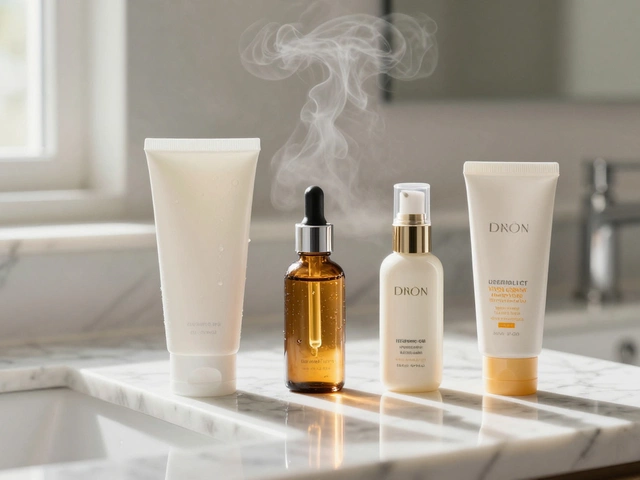
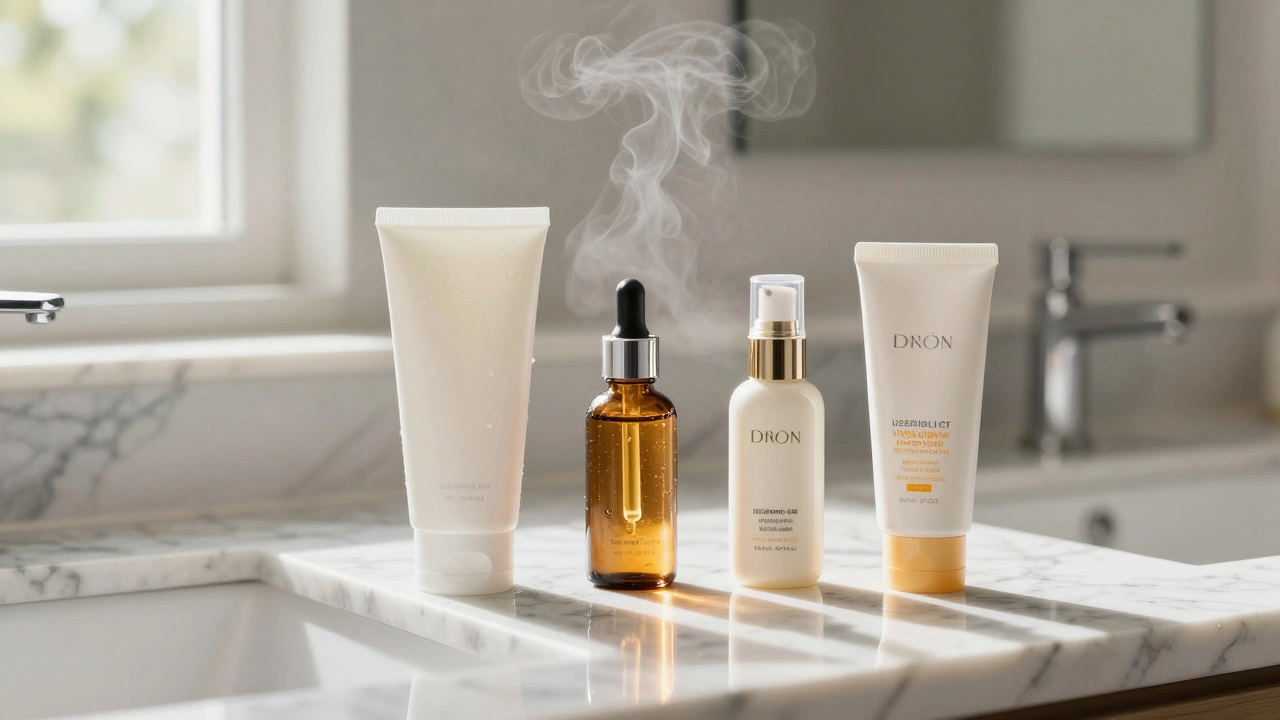
Getting your skincare routine right isn’t about buying the most expensive products. It’s about putting them on in the right order. If you’re layering your vitamin C serum after your moisturizer, or slathering on retinol before cleansing, you’re wasting time-and money. The order matters because your skin absorbs products differently depending on their texture, pH, and purpose.
Why the order of skincare matters
Your skin isn’t a blank canvas. It’s a barrier with layers, pores, and natural oils. Think of it like building a house: you lay the foundation before the walls, and the roof goes on last. Skincare works the same way. Thinner, water-based products need to sink in first. Thick, oily ones sit on top to seal everything in. If you put a heavy cream on before a lightweight serum, the serum can’t penetrate. It just sits there, useless.
Also, some ingredients only work at certain pH levels. For example, vitamin C works best around pH 3.5. If you slather on an alkaline cleanser right before it, you’ll neutralize its power. Same goes for retinol-it needs a clean, dry surface to work without irritation. Mess up the sequence, and you’re not just wasting product. You’re risking redness, breakouts, or no results at all.
The morning skincare order: protect and prepare
Mornings are about defense. Your skin wakes up tired, exposed to overnight buildup, and ready to face pollution, UV rays, and stress. Here’s the order that works:
- Cleanser - Use a gentle, water-based cleanser. You don’t need to strip your skin in the morning. Just remove sweat and oils that built up overnight. A simple foaming or gel cleanser is enough.
- Toner or essence - Not mandatory, but if you use one, apply it while skin is still damp. It helps balance pH and preps skin to absorb what comes next. Look for hydrating ingredients like hyaluronic acid or niacinamide.
- Antioxidant serum (like vitamin C) - This is your armor. Vitamin C fights free radicals from sunlight and pollution. Apply it after toner, while skin is still slightly damp. It absorbs best when not blocked by thicker products.
- Eye cream - The skin around your eyes is thinner and drier. Apply a small amount gently with your ring finger. Don’t tug. Do this before moisturizer so it can sink in.
- Moisturizer - Lock in all the active ingredients. Pick one based on your skin type: gel for oily skin, cream for dry. Even oily skin needs hydration. Skipping this makes your skin overproduce oil.
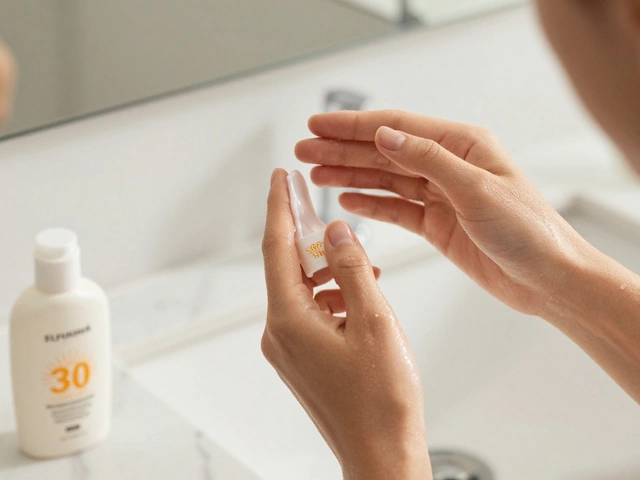
- Sunscreen - Non-negotiable. No matter the weather, UV rays are hitting your skin. Use at least SPF 30. Apply it as the last step. If you put anything over sunscreen, you’re reducing its protection.
That’s it. Six steps. No more. No less. If you’re rushing, skip the toner and eye cream. But never skip sunscreen.
The night skincare order: repair and renew
Nighttime is when your skin does its heavy lifting. It repairs DNA damage, boosts collagen, and sheds dead cells. This routine is more involved because you’re not fighting the sun-you’re fixing what the day did to you.
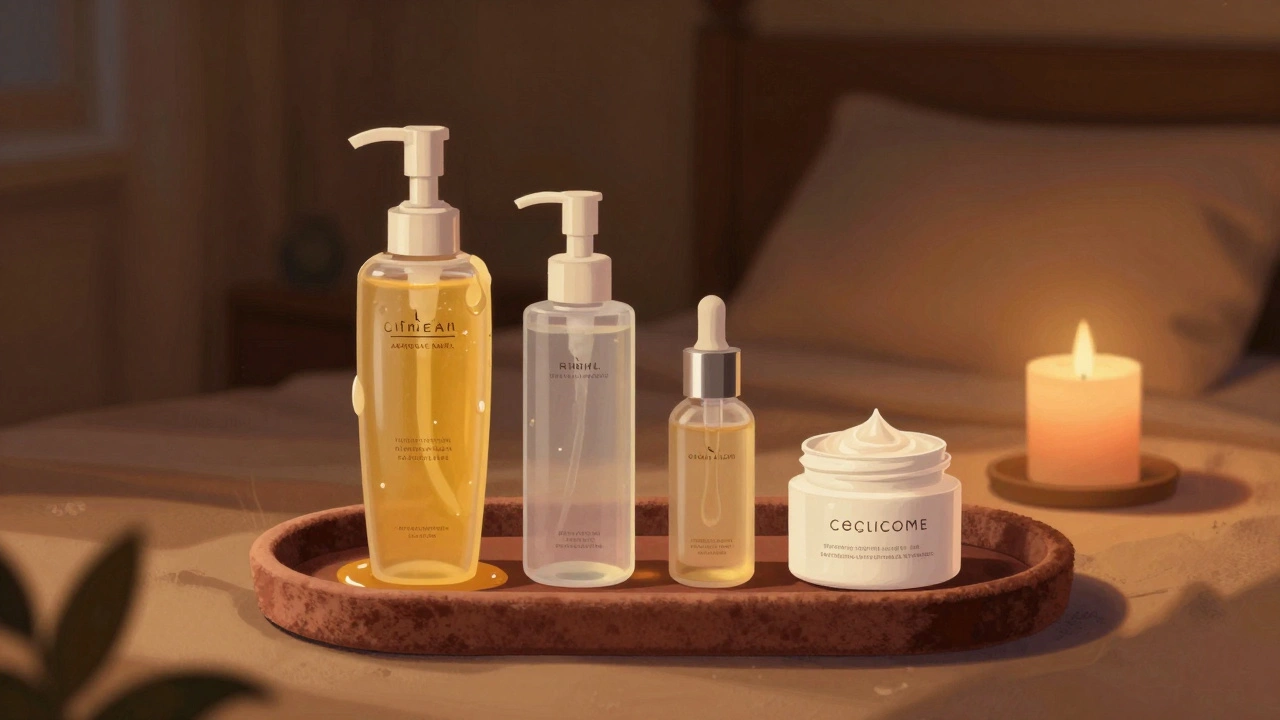
- First cleanse (oil-based) - If you wore makeup, sunscreen, or even just SPF, start with an oil cleanser. It breaks down oil-based gunk without tugging. Massage it on dry skin, then rinse with water.
- Second cleanse (water-based) - Follow up with your regular cleanser. This removes sweat, dirt, and leftover residue. Double cleansing ensures your skin is truly clean before actives go on.
- Toner or essence - Again, apply while skin is damp. This step helps balance your skin’s pH after cleansing and preps it for stronger ingredients.
- Treatment serums - This is where you target concerns. Apply thinnest to thickest. For example: hyaluronic acid first (it’s watery), then niacinamide (slightly thicker), then retinol (oil-based, and the strongest). Never mix retinol with vitamin C or AHA/BHA at night-they can irritate. Use them on alternate nights.
- Eye cream - Apply after serums. Your eye area needs extra hydration, especially if you’re using retinol, which can dry it out.
- Moisturizer - Seal everything in. At night, you can use a richer cream than in the morning. Look for ceramides, squalane, or peptides to support repair.
- Face oil (optional) - Only if your skin is very dry or you live in a cold climate. Apply last. Oils create a barrier that locks in moisture but can block actives if applied too early.
Remember: retinol is powerful. If you’re new to it, start with a low concentration twice a week. Let your skin adjust. Redness? Flaking? You’re going too fast.
What not to do
Here are the most common mistakes people make-and why they backfire:
- Applying retinol on damp skin - Water increases irritation. Always apply retinol to completely dry skin.
- Using too many actives at once - Mixing vitamin C, AHA, BHA, and retinol in one night is asking for a reaction. Pick one or two. Rotate them.
- Skipping sunscreen - Even on cloudy days in Wellington, UV rays penetrate. Sun damage adds up. No product can undo it.
- Using toner as a moisturizer - Toners hydrate, but they don’t seal. You still need a moisturizer or oil to lock it in.
- Applying eye cream with your fingers - Use your ring finger. It’s the weakest. Tugging creates fine lines.
Simple routines for different skin types
You don’t need 10 products. Here’s how to simplify:
Oily skin: Cleanse → Toner → Vitamin C → Light moisturizer → Sunscreen (AM). Cleanse → Toner → Retinol → Light gel moisturizer (PM).
Dry skin: Cleanse → Essence → Hyaluronic acid → Niacinamide → Rich cream → Face oil (PM). AM: Same as above, but add a thicker moisturizer before sunscreen.
Acne-prone skin: Cleanse → Niacinamide → BHA toner (2-3x/week) → Lightweight moisturizer → Sunscreen. Avoid heavy oils and retinol until your skin stabilizes.
Sensitive skin: Cleanse → Hyaluronic acid → Ceramide moisturizer → Sunscreen. Skip exfoliants and retinol until you’ve built tolerance. Patch test everything.

How long to wait between steps
You don’t need to wait five minutes between each product. But you do need to let each layer absorb before the next. Here’s the rule: if it feels tacky or sticky, wait 30-60 seconds. If it soaks in quickly, move on. A good trick? Apply one product, then go brush your teeth or wash your face. By the time you’re done, it’s absorbed.
Retinol and acids? Wait a full minute after applying before moving to the next step. That gives them time to work without being diluted.
When to change your routine
Your skin changes with seasons, stress, hormones, and age. In winter, you might need more moisture. In summer, lighter textures. If you start breaking out after adding a new product, stop it. If your skin feels tight after cleansing, your cleanser is too harsh. If your moisturizer doesn’t sink in, you might have a buildup of dead skin-try a gentle exfoliant once a week.
Don’t follow TikTok trends blindly. If a routine works for someone else, it doesn’t mean it works for you. Your skin is unique. Listen to it.
Final tip: consistency beats complexity
The best skincare routine is the one you’ll stick to. You don’t need seven serums. You don’t need to spend $200 on a night cream. Just do the basics: clean, treat, hydrate, protect. Do it every day. Even on weekends. Even when you’re tired.
Skincare isn’t magic. It’s science. And science works when you follow the rules.
Can I use vitamin C and retinol together?
You can, but not at the same time. Vitamin C is best in the morning for protection. Retinol is best at night for repair. Using them together can irritate your skin. If you want to use both, do vitamin C in the AM and retinol in the PM, on separate days if your skin is sensitive.
Do I need both a toner and an essence?
No. Toner and essence do similar things-hydrating and prepping skin. Pick one. A toner is usually alcohol-free and light. An essence is more concentrated and often has fermentation ingredients. If you’re happy with your current routine, skip the extra step.
Is double cleansing necessary?
Only if you wear sunscreen, makeup, or heavy moisturizers. If you just sweat a little and don’t use SPF, one gentle cleanse is enough. Double cleansing is for removing oil-based products, not for cleaning your skin deeper.
What if my skin feels tight after moisturizing?
That usually means your cleanser is too harsh, or you’re not hydrating enough before moisturizing. Try switching to a cream cleanser, or add a hyaluronic acid serum before your moisturizer. Tightness is a sign your skin barrier is compromised.
Can I skip sunscreen if I’m indoors all day?
No. UV rays pass through windows. Blue light from screens can also contribute to skin aging. Daily sunscreen isn’t optional-it’s the most important step in preventing wrinkles, dark spots, and damage.