Sunscreen Amount Calculator
Get Your Daily Sunscreen Amount
Most people apply 50% less sunscreen than needed. Proper application is essential for effective protection against sun damage, aging, and skin cancer.
0.00 tsp
How to apply correctly
Most people think skincare is complicated-serums, toners, masks, exfoliators, the list goes on. But the truth? Your face doesn’t need ten steps. It needs the right three, done consistently. If you’re wondering what to apply on your face daily, the answer isn’t in a viral TikTok trend. It’s in science, simplicity, and your skin’s real needs.
Start with Cleanser-Morning and Night
Your skin collects dirt, oil, pollution, and sunscreen every single day. Skipping cleanser, even once, lets that gunk sit on your pores. That’s how breakouts start. That’s how dullness sets in.
Use a gentle, pH-balanced cleanser. No harsh soaps. No scrubbing. Just massage it in with your fingertips, rinse with lukewarm water, and pat dry. In the morning, you’re washing away overnight sweat and sebum. At night, you’re removing makeup, SPF, and environmental gunk. Two cleanses a day. That’s it. No need for double cleansing unless you wear heavy makeup or waterproof sunscreen.
Look for ingredients like ceramides, glycerin, or niacinamide. They clean without stripping. Avoid anything labeled "deep cleansing" or "oil control" unless your skin is oily and acne-prone. Most people do better with hydration than over-drying.
Apply Moisturizer-Every Single Day
Here’s the myth: oily skin doesn’t need moisturizer. Wrong. When your skin is dry, it overproduces oil to compensate. That’s why you get shiny T-zones and clogged pores. Moisturizer isn’t for dry skin-it’s for balanced skin.
Choose a lightweight, non-comedogenic moisturizer. Ingredients like hyaluronic acid, squalane, and panthenol are your friends. They hold water in your skin without clogging pores. If you’re in a dry climate like Wellington’s winter, go for something with a bit more emollient, like shea butter or ceramides.
Apply it right after cleansing, while your skin is still slightly damp. That locks in moisture better than waiting until your face is completely dry. Use about a pea-sized amount for your whole face. Don’t skip this step. Even if you’re 20 or 60, your skin needs that barrier protection.
Use Sunscreen-Every. Single. Morning.
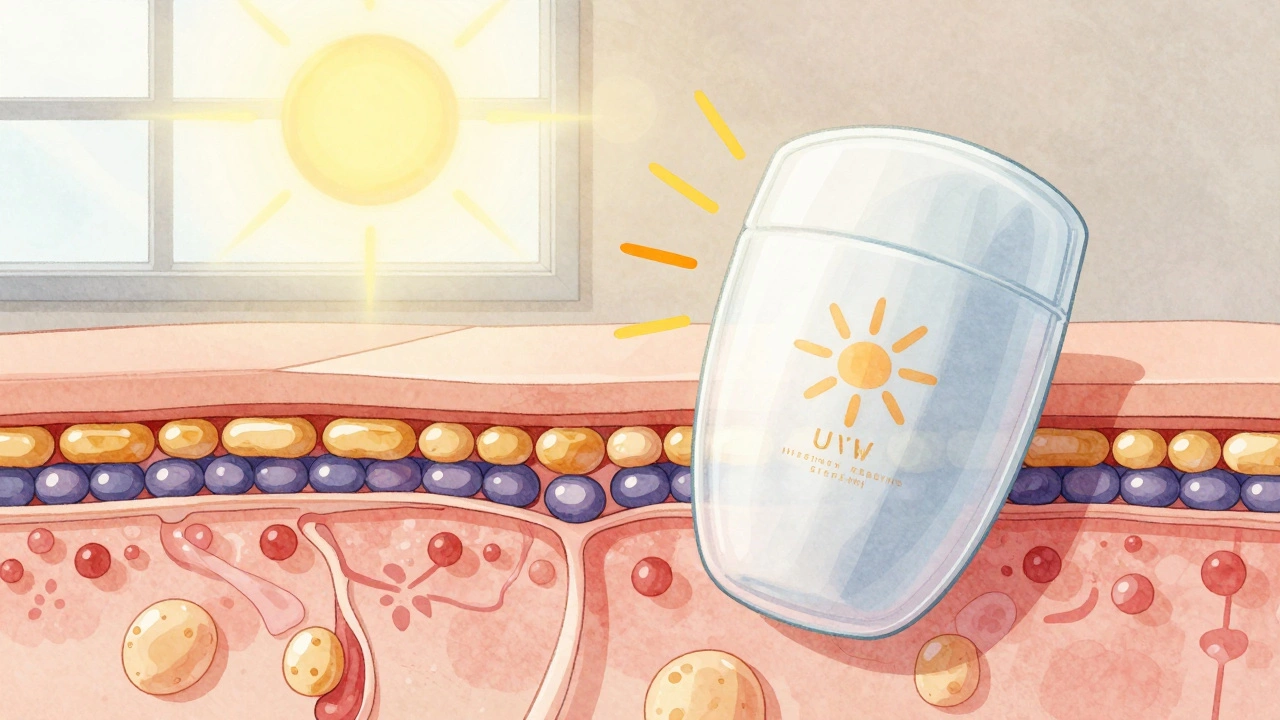
This is the one step that makes or breaks your skin’s future. UV rays don’t care if it’s cloudy, cold, or you’re inside near a window. UVA rays penetrate glass and cause aging, dark spots, and DNA damage. They’re silent. They’re constant.
Use SPF 30 or higher, broad-spectrum, every morning. Reapply if you’re outside for more than four hours, but most people don’t need to reapply indoors. The key is daily use-not just beach days. Studies show people who wear sunscreen daily have 24% less skin aging over five years compared to those who don’t.
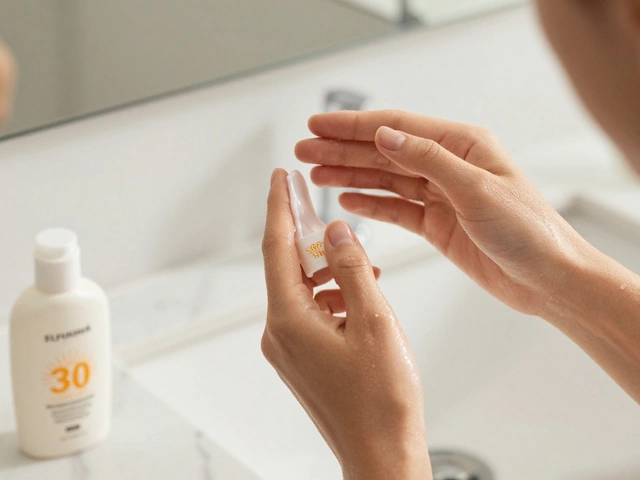
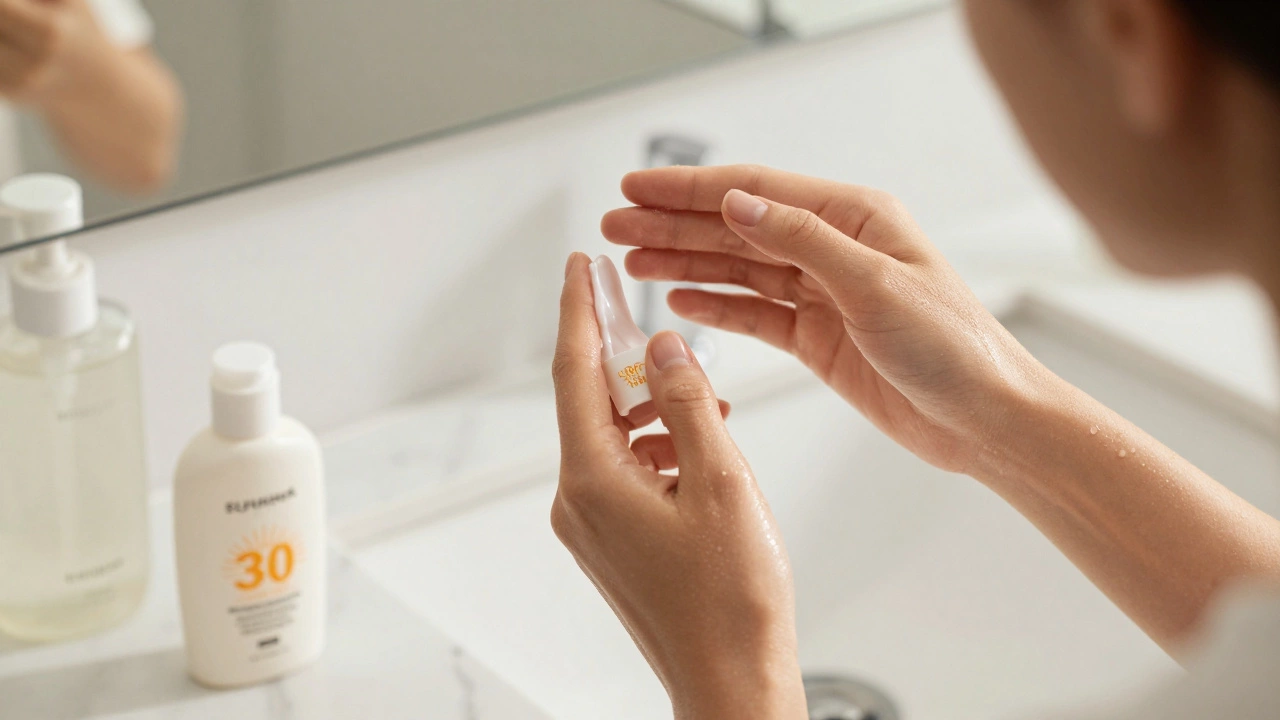
Find one you like. If it feels greasy, try a gel or fluid formula. If it leaves a white cast, look for micronized zinc or tinted versions. Some moisturizers now come with SPF built in. That’s fine-if it’s SPF 30+ and you use enough. Most people use too little. You need about half a teaspoon for your face and neck.
What to Skip (Yes, Really)
You don’t need vitamin C every morning. You don’t need retinol every night. You don’t need a 10-step routine to have glowing skin. In fact, too many products can irritate your barrier, cause redness, and make your skin more sensitive.
Here’s what most people overuse:
- Exfoliating acids (AHAs/BHAs) more than 2-3 times a week
- Essential oils (they’re not natural and safe-they’re potent irritants)
- Alcohol-based toners (they dry out your skin, not tighten pores)
- Expensive serums with 15 ingredients you can’t pronounce
Start simple. Master the basics. Then, if you want to add something, pick one new product at a time. Wait four weeks. See how your skin reacts. No rush.
When to Add More
Once you’ve nailed the big three-cleanse, moisturize, sunscreen-you can think about adding targeted treatments. But only if you have a specific concern.
- Dark spots or uneven tone? Try a vitamin C serum in the morning, after cleansing and before moisturizer.
- Fine lines or texture? Add a low-dose retinoid (like adapalene) at night, 2-3 times a week. Start slow.
- Redness or sensitivity? Look for products with centella asiatica, allantoin, or colloidal oatmeal.
Never mix retinoids with acids on the same night. Don’t layer three actives at once. Your skin isn’t a lab. It’s a living barrier that needs rest.
Real People, Real Results
A 2024 study in the Journal of Clinical and Aesthetic Dermatology followed 1,200 people who stuck to just cleanse-moisturize-sunscreen for six months. 89% saw improved skin texture. 76% had fewer breakouts. 92% said their skin felt more comfortable.
One woman in Wellington, 42, told me she used to spend $200 a month on skincare. After switching to the three-step routine, her skin cleared up, her redness faded, and she now spends $30 a month. "I thought I needed more," she said. "Turns out, I just needed consistency."

What About Nighttime?
At night, you still do the same two things: cleanse and moisturize. That’s it. Unless you’re using a treatment like retinol or a hydrating mask, you don’t need extra steps.
Some people swear by overnight oils or sleeping masks. Fine-if they work for you. But they’re not necessary. Your skin repairs itself naturally while you sleep. All it needs is hydration and no irritants.
Don’t fall for the "skin renewal" hype. Your skin doesn’t need a 12-step nighttime ritual. It needs you to go to bed without leftover makeup, sunscreen, or pollution on it.
Seasonal Adjustments
Wellington’s weather changes fast. Winter means dry air and wind. Summer means sweat and stronger sun.
- Winter: Switch to a richer moisturizer. Consider adding a facial oil (like jojoba or rosehip) under your cream.
- Summer: Use a lighter moisturizer. Make sure your sunscreen is water-resistant if you’re outside.
Don’t change your routine every month. Stick to the core three. Adjust only what’s needed for comfort.
Final Rule: Less Is More
The best skincare routine is the one you’ll do every day. Not the one with the most products. Not the one your influencer swears by. The one that fits your life.
Three steps. Morning and night. Cleanse. Moisturize. Sunscreen. That’s it. No exceptions. No shortcuts. No magic potions.
Do that for 30 days. Then look in the mirror. Your skin will thank you-not with a viral post, but with a quiet glow that lasts.
Do I need to use toner every day?
No. Toner isn’t necessary for most people. If your cleanser is gentle and your moisturizer is hydrating, toner adds nothing. Some toners contain alcohol or fragrances that can irritate your skin. Skip it unless you have a specific reason, like using a medicated toner for acne under a dermatologist’s guidance.
Can I use the same moisturizer for morning and night?
Yes, absolutely. Most people don’t need two different moisturizers. If you’re using a good, hydrating cream with barrier-supporting ingredients like ceramides or squalane, it works fine day and night. Only consider a night-specific product if you’re using active treatments like retinoids that require a thicker base.
What if I have acne-prone skin?
Start with the same three steps: gentle cleanser, non-comedogenic moisturizer, and SPF 30+. For acne, look for cleansers with niacinamide or salicylic acid (no more than twice a day). Avoid harsh scrubs. If breakouts persist after 6-8 weeks, talk to a dermatologist. Over-the-counter retinoids like adapalene can help, but don’t start them without knowing how to use them safely.
Is expensive skincare better than drugstore brands?
Not usually. Many high-end products cost more because of packaging, branding, or marketing-not better ingredients. Brands like CeraVe, Vanicream, La Roche-Posay, and The Ordinary have proven, effective formulas at lower prices. Check the ingredient list. If it has the same active as a pricey brand, it’s just as good.
How long until I see results?
You’ll notice less dryness or redness in 1-2 weeks. Clearer skin and fewer breakouts usually show up in 4-6 weeks. Sun protection’s anti-aging effects take months to years, but you’ll feel your skin is more resilient sooner. Patience is part of the routine.