If you’ve ever stood in your backyard wondering where to start with a garden, you’re not alone. The most basic garden layout isn’t about fancy raised beds or intricate pathways-it’s about growing food or flowers in a way that actually works for you. The simplest, most reliable design for beginners is the row garden. It’s been used for centuries, requires no special tools, and lets you grow more in less space than you think.
Why Row Gardens Work for New Gardeners
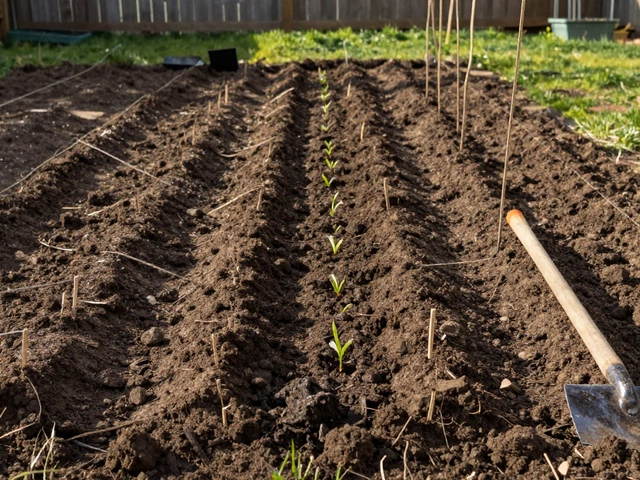
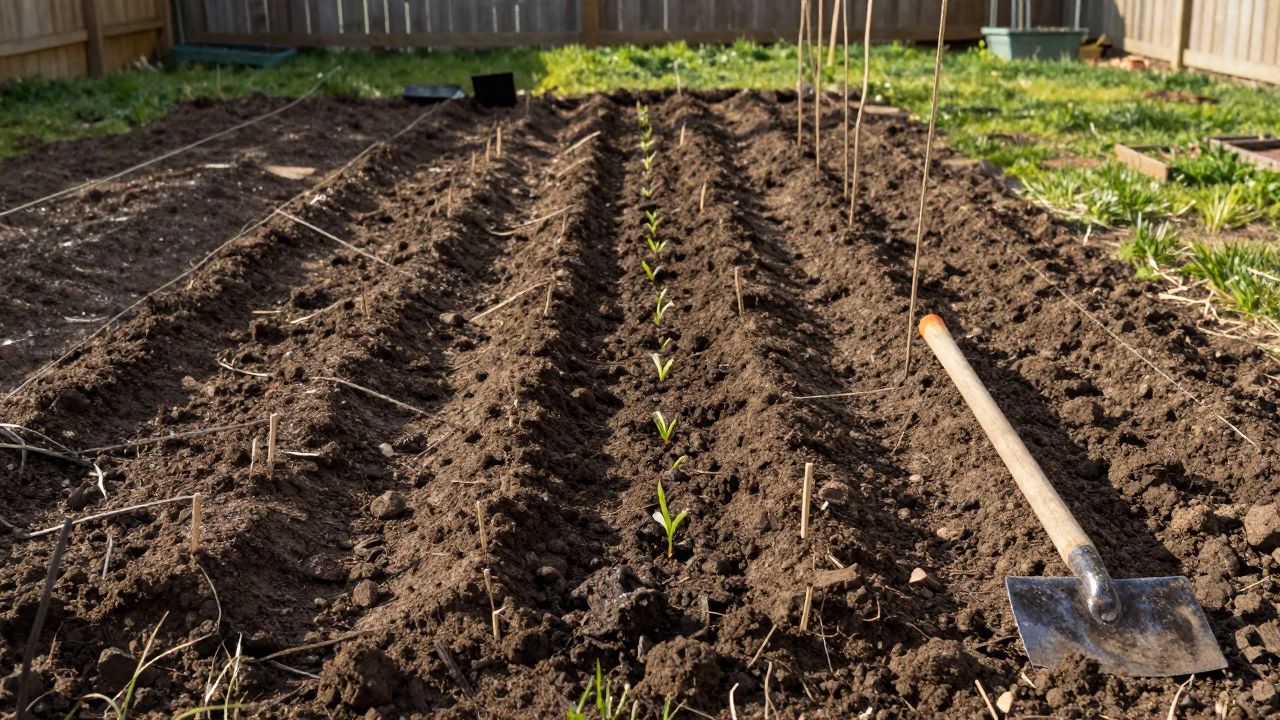
Row gardens are exactly what they sound like: straight lines of plants, spaced evenly, with walkways between them. You don’t need to build anything. No wood, no bricks, no soil mixing. Just mark out a strip of earth, dig a shallow trench, drop in seeds, and water. It’s intuitive. If you’ve ever seen a farm field, you’ve seen a row garden-just on a smaller scale.
Why does this work so well? Because it’s predictable. You know exactly where each plant is. You can easily weed between the rows. You can walk down the paths without stepping on the soil and compacting it. And when it’s time to harvest, you’re not tripping over vines or digging through tangled roots.
Most seed packets recommend spacing based on row planting. That’s not an accident. It’s the standard because it’s proven. Corn, beans, carrots, lettuce, tomatoes-all of them grow reliably in rows. Even if you’ve never planted a seed before, following the spacing on the packet will get you results.
How to Set Up a Simple Row Garden
Here’s how to start one in under an hour:
- Choose a sunny spot. At least six hours of direct sunlight a day. The more sun, the better.
- Clear the area of weeds, rocks, and grass. You don’t need to remove all the soil-just get rid of the stuff that’s competing with your plants.
- Use a string and two stakes to mark straight lines. Space rows 18 to 36 inches apart, depending on what you’re planting. Larger plants like squash or corn need more room. Smaller ones like lettuce or radishes can be closer.
- Use a hoe or the edge of a shovel to dig a shallow furrow along each string. About 1 inch deep for small seeds, 2 inches for beans or peas.
- Sow seeds according to the packet instructions. Don’t overcrowd. Thinning later is better than pulling out dead seedlings.
- Water gently but thoroughly. Keep the soil moist until the seeds sprout.
That’s it. No compost tea. No mulch layer. No trellises unless you’re growing peas or cucumbers. You’re not trying to win a garden show. You’re trying to grow food.
What to Plant in Your First Row Garden
Start small. Four or five types of plants is enough. Here’s what grows well in a basic row setup:
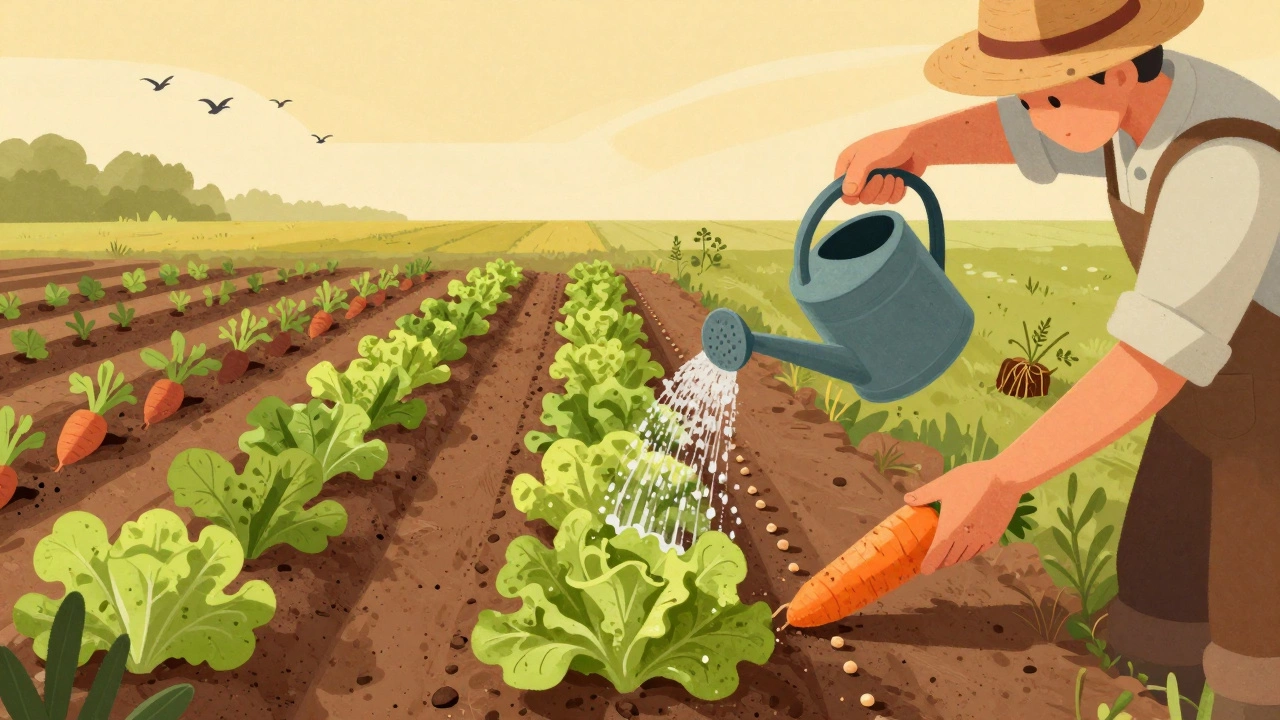
- Carrots - Plant in 12-inch rows, thin to 2 inches apart. They take a few weeks to emerge, so mark the row with radish seeds-they grow fast and show you where the carrots are.
- Green beans - Bush beans don’t need support. Plant them 4 inches apart in rows 18 inches apart. You’ll get a steady harvest for weeks.
- Lettuce - Sow seeds every two weeks for continuous harvest. Thin to 6 inches apart. They like cooler weather, so plant early spring or late summer.
- Tomatoes - Give them 24 to 36 inches between plants. Stake them early. One plant can feed a family for months.
- Zucchini - One plant is plenty. Space 3 feet apart. They take over, so put them at the edge of your garden.
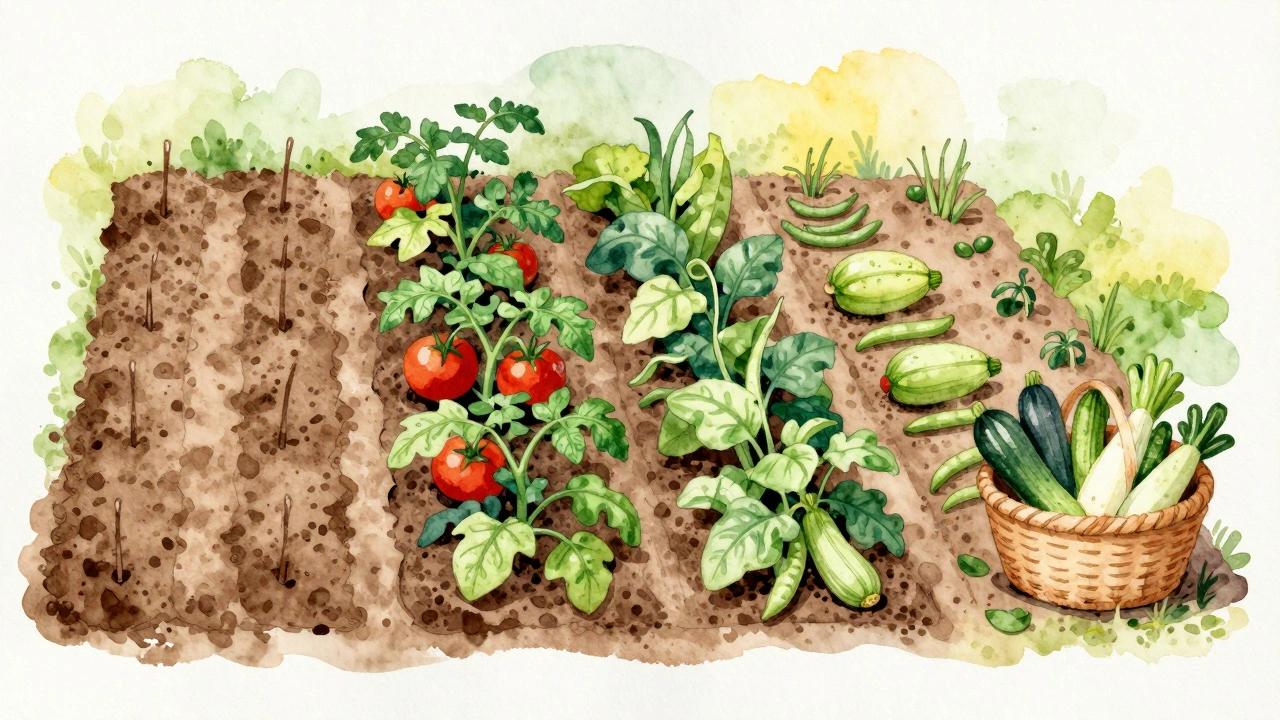
These five plants cover the basics: root veggies, legumes, leafy greens, fruiting plants, and a heavy producer. You’ll learn what works, what doesn’t, and how much you actually eat.
Row Garden vs. Square Foot Gardening
You’ve probably heard of square foot gardening. It’s popular online. You divide your bed into 1-foot squares and plant a set number of seeds in each. It looks neat. It’s great for small spaces.
But here’s the catch: it’s more work. You need to build a frame. You need special soil mix. You need to measure everything. And if you make one mistake-like planting too many carrots in one square-you’ll have a mess on your hands.
Row gardening doesn’t require any of that. You don’t need to buy special soil. You don’t need to build anything. You just dig and plant. It’s forgiving. If a row fails, you can always fill it in next week.
For someone who’s never gardened before, row gardening gives you room to learn. Square foot gardening feels like a test. Row gardening feels like a conversation with the soil.
Common Mistakes to Avoid
Even the simplest system can go wrong if you skip the basics. Here are the top three mistakes beginners make:
- Planting too close - Crowded plants don’t get air or sunlight. They get mold. They get pests. Always follow the spacing on the seed packet.
- Not marking your rows - If you plant carrots and forget where, you’ll pull up the weeds thinking they’re seedlings. Use a label or plant radishes alongside.
- Watering too hard - A strong stream of water washes away seeds. Use a gentle spray or a watering can with a rose attachment. Water in the morning so leaves dry before night.
These aren’t complex problems. They’re just things you don’t know until you’ve done them.
What Comes Next?
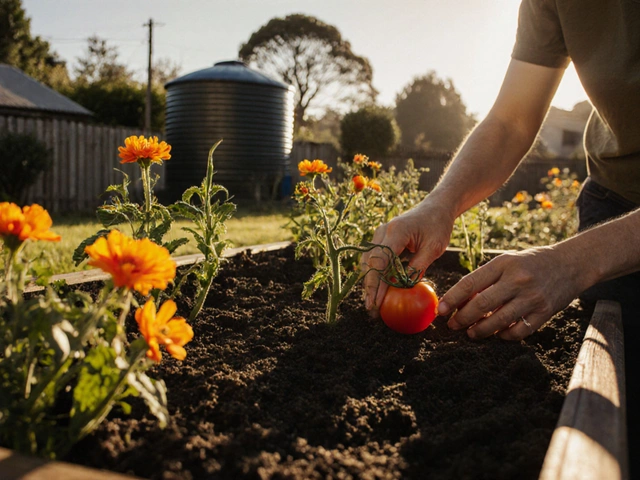
Once you’ve mastered row gardening, you’ll start seeing opportunities. Maybe you want to add a trellis for peas. Maybe you want to try companion planting-growing marigolds next to tomatoes to keep bugs away. Maybe you’ll start composting scraps to feed your soil.
But none of that matters yet. Right now, your only job is to get your hands in the dirt and grow something. One row. One harvest. One season. That’s all you need to become a gardener.
Don’t wait for perfect soil. Don’t wait for the right tools. Don’t wait for a plan that looks like a magazine spread. Just plant. The garden will teach you the rest.
What is the easiest garden layout for beginners?
The easiest garden layout for beginners is the row garden. It requires no special materials, just straight lines of plants with paths between them. You follow seed packet spacing, dig shallow furrows, and water. It’s how most food has been grown for centuries-simple, reliable, and forgiving.
Do I need raised beds for a basic garden?
No, you don’t need raised beds. Raised beds are helpful if your soil is poor or you have back problems, but they’re not required. A basic row garden works directly in the ground. Just clear weeds, loosen the soil a bit, and plant. Many successful gardens have been grown this way for generations.
How far apart should garden rows be?
Row spacing depends on what you’re growing. For small plants like carrots or lettuce, 18 inches is enough. For medium plants like beans or peppers, use 24 to 30 inches. For large plants like squash or corn, leave 36 inches or more. Always check the seed packet-it tells you exactly what to use.
Can I grow vegetables in a row garden if I have limited space?
Yes, but you’ll need to be smart about what you grow. Stick to high-yield plants like beans, tomatoes, and lettuce. Avoid sprawling crops like pumpkins unless you have room. You can also plant vertically-use trellises for peas or cucumbers to save ground space. Even a 4x8-foot row garden can feed one person.
When is the best time to start a row garden?
Start after your last frost date, when the soil is warm enough to work. In most areas, that’s late April to early May. But you can plant cool-season crops like lettuce and peas earlier, as soon as the ground isn’t frozen. Check your local planting calendar for exact dates.
Final Tip: Keep It Simple, Keep Going
The best garden isn’t the one with the most plants. It’s the one you actually tend. A few rows of healthy vegetables, harvested and eaten, beat a perfect-looking garden that sits untouched. Start small. Make mistakes. Learn. Repeat. Gardening isn’t about perfection-it’s about showing up.