Clean Makeup Ingredient Checker
Select the ingredients found in your product to see its potential safety score.
Safety Rating
You walk into a drugstore, grab a tube of mascara, and head to the register. It feels harmless, right? But here is the kicker: the US FDA has not updated its list of prohibited cosmetic ingredients since 1938. That means over 12,000 chemicals are still allowed in your lipstick, foundation, and eyeliner. If you are hunting for the cleanest over-the-counter makeup, you are fighting against a system that prioritizes shelf life and cost over your skin’s long-term health.
Finding truly clean makeup at Target or CVS isn’t just about avoiding parabens anymore. It is about dodging hidden fragrances, microplastics, and endocrine disruptors that sneak onto ingredient lists under vague names like "fragrance" or "parfum." This guide cuts through the greenwashing to show you exactly which brands deliver high-performance products without the toxic baggage, based on rigorous safety standards and real-world performance.
Defining "Clean" in the Cosmetic World
Before you buy anything, you need to know what you are actually looking for. There is no legal definition of "clean beauty," which allows brands to slap the word on packaging even if they use questionable fillers. To find the safest options, we look for three specific criteria:
- Transparency: Full disclosure of every ingredient, including those inside fragrance blends.
- Safety Standards: Adherence to strict bans, such as the EU’s restriction of over 1,600 harmful substances (compared to the US’s ~11).
- Purity: Absence of heavy metals like lead and arsenic, which often contaminate pigments rather than being added intentionally.
The gold standard for verification includes certifications from organizations like the Environmental Working Group (EWG) or Made Safe. These third-party audits test products for contaminants that manufacturers might miss. When a brand claims to be "non-toxic," ask yourself: who verified that claim?
Top Drugstore Brands with Verified Clean Formulas
You do not need to shop at a boutique organic store to find safe makeup. Several major retailers now stock brands that meet high safety benchmarks. Here are the standout performers available on shelves today.
| Brand | Best For | Certification | Price Range |
|---|---|---|---|
| Ilia Beauty | Lipstick & Skin Tints | EWG Verified | $$ |
| Thrive Causemetics | Mascara & Brow Gel | Vegan & Cruelty-Free | $$$ |
| Mineral Fusion | Foundation & Blush | Leaping Bunny Certified | $$ |
| Burt's Bees | Tinted Lip Balm | Natural Standard | $ |
Ilia Beauty is a hybrid skincare-makeup brand known for using up to 85% skincare-grade ingredients in their formulas. Their Super Serum Skin Tint SPF 40 is a favorite because it replaces heavy foundations while providing sun protection without chemical filters like oxybenzone. You can find Ilia at Sephora and increasingly in larger department stores.
If you struggle with sensitive eyes, Thrive Causemetics offers mascaras formulated without carbon black or synthetic polymers that cause irritation. Their Liquid Lash Extensions Mascara uses plant-based waxes instead of petroleum-derived ingredients, reducing the risk of contact dermatitis.
The Dirty Dozen: Ingredients to Avoid in OTC Makeup
Reading an ingredient label can feel like decoding ancient hieroglyphics. However, a few specific culprits appear repeatedly in conventional makeup. If you see these near the top of the list, put the product back on the shelf.
- Parabens: Preservatives linked to hormone disruption. Look for alternatives like phenoxyethanol or potassium sorbate.
- Phthalates: Often hidden under "fragrance," these plasticizers help scent last longer but are known endocrine disruptors.
- Formaldehyde Releasers: Ingredients like DMDM hydantoin slowly release formaldehyde, a known carcinogen, to prevent bacterial growth.
- PFAS (Forever Chemicals): Used in waterproof mascaras and long-wear lipsticks for durability, these accumulate in the body and environment.
A common trap is "natural" fragrances. Just because a scent comes from plants does not mean it is safe for all skin types. Essential oils like lavender and citrus can trigger allergic reactions in sensitive individuals. If you have reactive skin, seek out "fragrance-free" labels rather than just "unscented," as unscented products often mask odors with additional chemicals.
How to Verify Claims Using Digital Tools
You cannot rely solely on marketing copy. Smart consumers use data-driven apps to scan barcodes before purchasing. Two tools stand out for their accuracy and database depth.
The EWG Skin Deep Database is a comprehensive resource rating products on a scale of 1 to 10 based on hazard levels. A score of 1 indicates low concern, while 10 signals high hazard. Always check the "data completeness" meter; some older entries may lack recent testing data.
Alternatively, the Yuka App provides instant visual feedback by scanning product barcodes, highlighting harmful ingredients and offering healthier alternatives. While Yuka is more consumer-friendly, EWG provides deeper scientific citations for each rating.
Pro tip: When scanning, ignore the overall star rating if the product contains fewer than five ingredients. Sometimes, simplicity equals safety. A simple castor oil-based brow gel will always outrank a complex polymer blend in terms of purity.
Performance vs. Purity: The Trade-Offs
Let’s be honest: clean makeup sometimes behaves differently than conventional counterparts. Without silicones like dimethicone, foundations may feel less slippery. Without synthetic dyes, eyeshadows might lack neon intensity. Understanding these differences helps manage expectations.
For example, mineral makeup relies on finely ground zinc oxide and titanium dioxide for coverage and UV protection. While excellent for acne-prone skin, it can oxidize on oily skin types, turning slightly orange after a few hours. Setting sprays with alcohol can fix this, but ensure the spray itself is alcohol-free if you have dry skin.
Longevity is another factor. Conventional waterproof mascaras use film-forming polymers that resist water but require harsh removers. Clean mascaras often wash off easily with warm water or gentle oils. This isn’t a flaw; it is a feature. Easier removal means less rubbing, which protects delicate eye skin from premature wrinkling.
Building a Minimalist Clean Kit
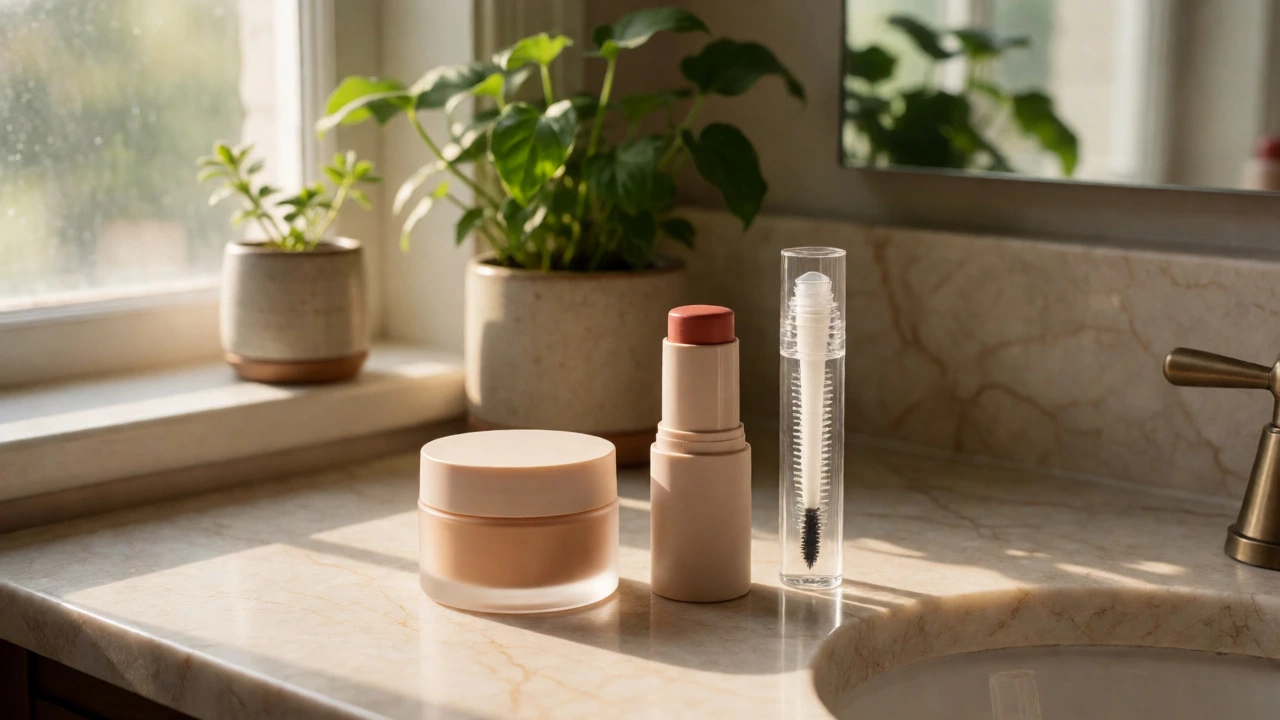
You don’t need twenty products to look polished. A streamlined routine reduces exposure to potential irritants and saves money. Start with these four essentials:
- Tinted Moisturizer: Provides light coverage and hydration. Look for SPF 30+ with mineral filters.
- Multi-Purpose Stick: A cream blush that doubles as lip color. Fewer ingredients mean fewer risks.
- Clear Brow Gel: Tames hairs without adding pigment that could clog follicles.
- Neutral Eyeshadow Palette: Choose matte shades derived from mica or iron oxides, avoiding glitter made from plastic.
This approach aligns with the "skin-first" trend dominating 2026. Consumers are moving away from full-face coverage toward enhancing natural features. By limiting your kit, you minimize the cumulative load of chemicals on your skin barrier.
Common Myths About Clean Makeup
Misinformation spreads faster than truth in the beauty industry. Let’s debunk three persistent myths.
Myth 1: Natural ingredients are always safer. Poison ivy is natural. So is arsenic. Safety depends on concentration and processing. Synthetic preservatives like sodium benzoate can be safer than poorly preserved botanical extracts that grow mold.
Myth 2: Clean makeup expires faster. Not necessarily. Many clean brands use robust antioxidant systems like vitamin E and rosemary extract to extend shelf life. Store products away from direct sunlight and humidity to maximize longevity.
Myth 3: Expensive equals cleaner. Price reflects branding, packaging, and distribution costs, not necessarily ingredient quality. Some budget-friendly brands in Europe adhere to stricter regulations than luxury US brands due to local laws.
Final Thoughts on Your Next Purchase
Switching to clean makeup is a journey, not a one-time overhaul. Start by replacing products that stay on your skin longest, like foundation and moisturizer. Leave short-contact items like cleansers for later. Prioritize transparency over trendy buzzwords. If a brand hides behind "proprietary blends," they likely have something to hide.
Your skin absorbs a significant portion of what you apply. Choosing cleaner options protects your health without sacrificing style. With better access to verified brands in mainstream stores, there is no excuse for settling for mystery chemicals in your daily routine.
Is all mineral makeup considered clean?
Not automatically. While many mineral makeup brands avoid synthetic dyes and parabens, some still use bismuth oxychloride, which can irritate sensitive skin. Always check the ingredient list for specific irritants, even within the mineral category.
Why does clean makeup cost more?
Clean brands often source higher-quality, ethically harvested raw materials and undergo costly third-party safety testing. Additionally, smaller production runs prevent economies of scale that mass-market brands enjoy. You are paying for purity and transparency.
Can I mix clean and conventional makeup?
Yes, but be cautious. Mixing formulations can sometimes cause pilling or separation. More importantly, if you use a conventional primer under a clean foundation, you may negate the benefits of the clean layer by introducing trapped chemicals closer to the skin.
Are organic makeup brands the same as clean brands?
No. "Organic" refers to how ingredients were grown (without pesticides), while "clean" refers to safety profiles. An organic product can still contain allergens or unstable compounds. Conversely, a clean brand might use safe synthetic preservatives that aren't certified organic.
How long does clean makeup last once opened?
Most clean makeup lasts 6 to 12 months after opening. Check the Period After Opening (PAO) symbol on the package, usually depicted as an open jar with a number (e.g., 6M). Because clean products use milder preservatives, keeping them cool and dry is crucial to prevent bacterial growth.