
12-3-30 Workout Impact Calculator
Your Parameters
Estimated Weekly Impact
The World Health Organization recommends 150 minutes of moderate-intensity aerobic activity per week. Each session is 30 minutes. You are currently logging 90 minutes.
You’ve probably seen it on your feed. Someone standing on a treadmill, looking effortlessly cool, while the caption reads: "12% incline, 3 mph speed, 30 minutes." It’s called the 12-3-30 workout. It went viral in 2023 and hasn’t really left our collective consciousness since. But here is the million-dollar question: does this specific routine actually deliver results, or is it just another social media fad that burns out faster than a New Year’s resolution?
The short answer is yes, it works-but not for the reasons most people think. It isn’t a magic bullet for spot-reducing belly fat, nor will it turn you into a marathon runner overnight. However, if done correctly, it is a highly efficient form of low-impact cardiovascular training that can significantly improve heart health, burn calories, and tone your lower body. The trick lies in understanding what it *is* and what it *isn’t*, so you don’t waste time expecting miracles.
Breaking Down the 12-3-30 Formula
To understand why this routine gained such traction, we need to look at the mechanics. The numbers represent three distinct variables on a standard motorized treadmill:
- 12: The incline setting, set to 12%. This is steep. Most commercial treadmills cap out around 15%, so 12% is near the upper limit of resistance without requiring manual hill climbing gear.
- 3: The speed, set to 3 miles per hour (mph). For context, 3 mph is a brisk walk. It’s fast enough that you can’t easily chat with someone next to you, but slow enough that you aren’t jogging.
- 30: The duration, set to 30 minutes. This is a manageable chunk of time that fits into most lunch breaks or post-work routines.
When you combine these elements, you are performing what exercise physiologists call incline walking. By raising the angle of the belt, you force your glutes, hamstrings, and calves to work harder against gravity. At 3 mph, you maintain a steady heart rate zone, typically between 60% and 70% of your maximum heart rate, depending on your age and fitness level. This zone is often referred to as the "fat-burning zone," though the reality of energy expenditure is more nuanced than that label suggests.
Why It Went Viral: The Psychology of Simplicity
In a world where fitness culture often demands expensive equipment, complex interval schedules, and hours of gym time, the 12-3-30 method offered something rare: simplicity. Created by Lauren Giraldo, a personal trainer from Miami, the routine was designed to be accessible. You don’t need to learn how to squat, deadlift, or box. You just need to walk.
This accessibility is its greatest strength and its biggest marketing hook. Social media algorithms love content that promises high rewards for low effort. The visual of someone casually scrolling through their phone while walking up a steep digital hill implies that you can get fit without sweating profusely or feeling exhausted. While it’s true that incline walking is less joint-stressful than running, calling it "easy" is misleading. Walking at a 12% incline for 30 minutes is physically demanding. Your legs will burn, your heart will pound, and you will likely finish needing a moment to catch your breath.
The Real Benefits: What Science Says
Let’s strip away the hype and look at the physiological effects. Research consistently shows that incline walking offers several distinct advantages over flat-ground walking or even light jogging.
Caloric Expenditure: Walking uphill requires more energy than walking on flat ground. According to data from the Compendium of Physical Activities, walking at 3.5 mph on a 10% grade burns approximately 8.0 METs (Metabolic Equivalents). For a person weighing 160 pounds, this translates to roughly 250-300 calories burned in 30 minutes. That is comparable to a moderate-intensity jog but with significantly less impact on your knees and ankles.
Muscle Activation: The primary muscles engaged during the 12-3-30 routine are the gluteus maximus, hamstrings, and gastrocnemius (calves). A study published in the Journal of Strength and Conditioning Research found that increasing treadmill inclination significantly increases electromyographic (EMG) activity in the posterior chain. In plain English: your butt and back of your thighs work much harder. This makes it an excellent toning exercise for the lower body, provided you have adequate protein intake and recovery.
Cardiovascular Health: Sustained aerobic activity improves endothelial function, lowers blood pressure, and enhances insulin sensitivity. Thirty minutes of continuous movement is well within the guidelines recommended by the World Health Organization for adults, which suggest 150 minutes of moderate-intensity aerobic activity per week. If you do the 12-3-30 five days a week, you hit that target perfectly.
Who Should Try It (And Who Should Skip It)
While the 12-3-30 workout is effective for many, it is not a universal solution. Here is how to determine if it fits your lifestyle and goals.
| User Profile | Verdict | Reasoning |
|---|---|---|
| Sedentary Beginners | Caution Advised | Starting at 12% incline may be too intense. Begin with 5-8% incline and build up over weeks to avoid shin splints or excessive fatigue. |
| Weight Loss Seekers | Highly Effective | Burns significant calories with low injury risk. Sustainable long-term adherence is key for fat loss. |
| Runners/Joggers | Good Cross-Training | Provides active recovery while maintaining cardiovascular fitness without high-impact stress on joints. |
| People with Knee Issues | Mixed Results | Low impact is good, but the steep angle increases shear force on the knee joint. Consult a physiotherapist first. |
| Muscle Builders | Supplemental Only | Will not replace resistance training. Use it for conditioning, not hypertrophy (muscle growth). |
If you are looking to build massive muscle mass, this routine alone won’t cut it. Cardiovascular exercise preserves muscle but doesn’t stimulate the same degree of hypertrophy as heavy lifting. Think of the 12-3-30 as a complement to strength training, not a replacement.
Common Mistakes That Sabotage Results
Even if the routine works theoretically, execution matters. I’ve seen countless people fail to see results because they make subtle errors during the session. Avoid these pitfalls:
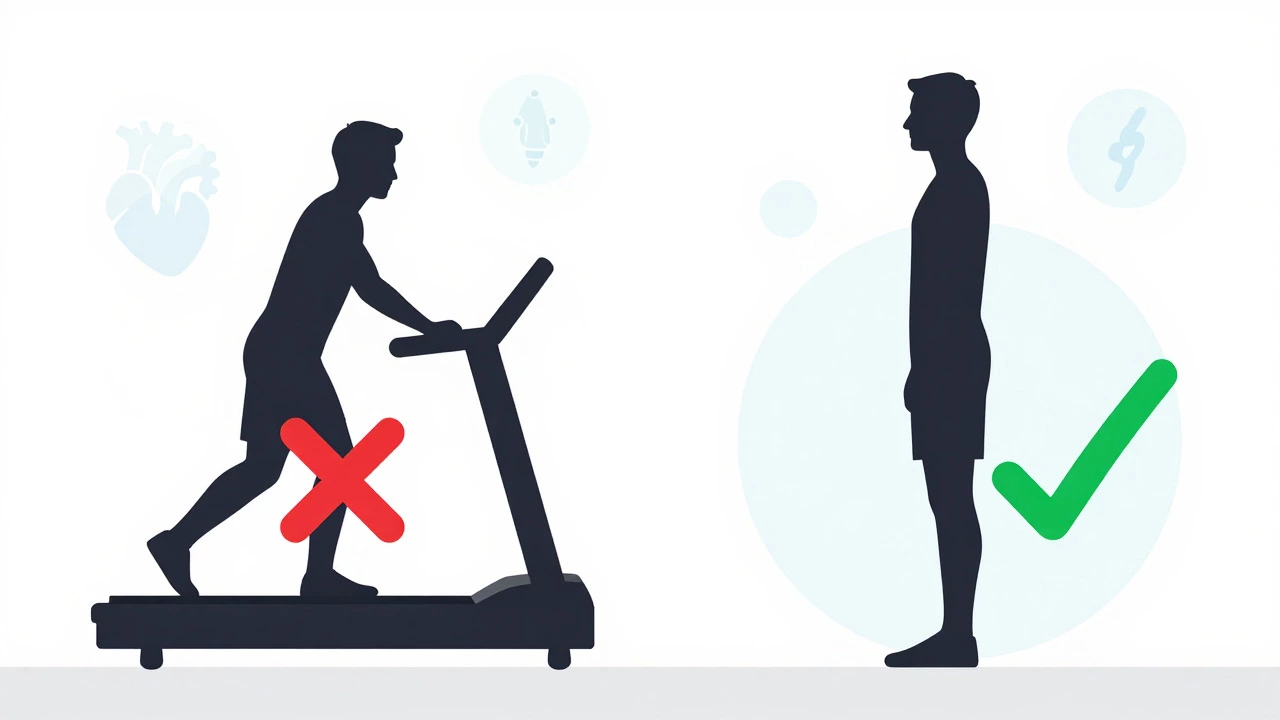
- Holding the Handrails: This is the cardinal sin of incline walking. When you hold the rails, you offload weight from your legs and core. You might reduce the calorie burn by up to 40%. Stand tall, engage your core, and let your arms swing naturally. If you feel like you’re going to fall, lower the incline.
- Leaning Forward: Don’t hike your torso forward to mimic hiking posture. On a treadmill, keep your shoulders back and chest up. Leaning forward puts unnecessary strain on your lower back.
- Ignoring Footwear: You need shoes with good cushioning and support. Walking on a steep incline increases the force through your forefoot. Cheap flip-flops or worn-out sneakers will lead to plantar fasciitis or shin splints quickly.
- Doing It Every Single Day: Recovery is when your body adapts. Doing high-intensity incline walking seven days a week can lead to overuse injuries. Aim for 3-5 days a week, allowing rest days or active recovery days with flat walking or yoga.

How to Make It Work for You
If you decide to give the 12-3-30 a shot, treat it like any other structured program. Start slow. If 12% feels impossible, start at 8% for two weeks. Then move to 10%. Gradually increase the intensity to allow your tendons and ligaments to adapt. This progressive overload principle is fundamental to all fitness gains.
Variety is also crucial. Once you master the 12-3-30, try varying the intervals. Do 5 minutes at 12% incline, followed by 2 minutes at 15% incline, then recover at 5% incline. This keeps your metabolism engaged and prevents boredom. Boredom is the number one reason people quit fitness routines. If you hate walking, don’t force yourself to do 30 minutes of it. Find an activity you enjoy-cycling, swimming, dancing-and apply the same consistency.
Finally, remember that fitness is holistic. The 12-3-30 workout is a tool, not a lifestyle. Pair it with a balanced diet rich in whole foods, adequate sleep, and stress management. No amount of treadmill walking will counteract a poor diet or chronic lack of sleep. Consistency beats intensity every time. Showing up for 30 minutes, four times a week, for six months will yield far better results than doing it intensely for two weeks and quitting.
Final Thoughts on the Hype
Does the 12-3-30 workout actually work? Yes, it is an effective, efficient way to improve cardiovascular health, burn calories, and tone your lower body. But it is not magic. It won’t reshape your life unless you pair it with consistent habits in nutrition and recovery. The real secret behind the success stories you see online isn’t the specific numbers on the treadmill; it’s the discipline to show up day after day. Whether you choose the 12-3-30, a brisk outdoor hike, or a dance class, the best workout is the one you will actually stick with.
Can I do the 12-3-30 workout on a non-incline treadmill?
No, the core benefit of this routine comes from the 12% incline. Without the elevation, you are simply walking at 3 mph, which burns significantly fewer calories and engages fewer muscle groups. If your treadmill doesn't have an incline feature, consider walking outdoors on hills or using a stair climber machine instead.
How many calories does the 12-3-30 workout burn?
Calorie burn varies based on weight, age, and gender. On average, a 160-pound person can expect to burn between 250 and 300 calories in 30 minutes. Heavier individuals will burn more, while lighter individuals will burn less. Use a heart rate monitor for a more accurate estimate tailored to your physiology.
Is the 12-3-30 workout safe for beginners?
It can be, but caution is advised. Beginners should start with a lower incline (5-8%) and shorter duration (10-15 minutes). Gradually increase the incline and time over several weeks to allow your joints and muscles to adapt. Sudden high-intensity workouts can lead to shin splints or knee pain.
Should I hold the handrails while doing 12-3-30?
No. Holding the handrails reduces the effectiveness of the workout by offloading weight from your legs and core. It can also skew your calorie burn estimates. Focus on maintaining proper posture with a straight back and swinging your arms naturally. If you need to hold on for balance, lower the incline until you feel stable.
Can I lose belly fat with the 12-3-30 workout?
You cannot spot-reduce fat from specific areas like the belly. Fat loss occurs systemically across the entire body. However, the 12-3-30 workout creates a calorie deficit, which leads to overall fat loss, including abdominal fat. Combine this routine with a healthy diet for the best results.
How often should I do the 12-3-30 workout?
Aim for 3 to 5 times per week. This frequency allows for sufficient cardiovascular stimulus while providing necessary rest days for muscle recovery. Overtraining can lead to burnout and injury. Listen to your body and take rest days when you feel excessive fatigue or soreness.
What shoes are best for incline walking?
Choose running or walking shoes with good cushioning and arch support. Since incline walking places more pressure on the balls of your feet, ample forefoot cushioning is essential to prevent discomfort and potential issues like plantar fasciitis. Avoid flat-soled shoes or worn-out sneakers.