12-3-30 Workout Estimator
Enter Your Details
Your Estimated Impact
Estimated Calorie Burn
Total Calories Burned
The American Heart Association recommends at least 150 minutes of moderate-intensity aerobic activity per week.
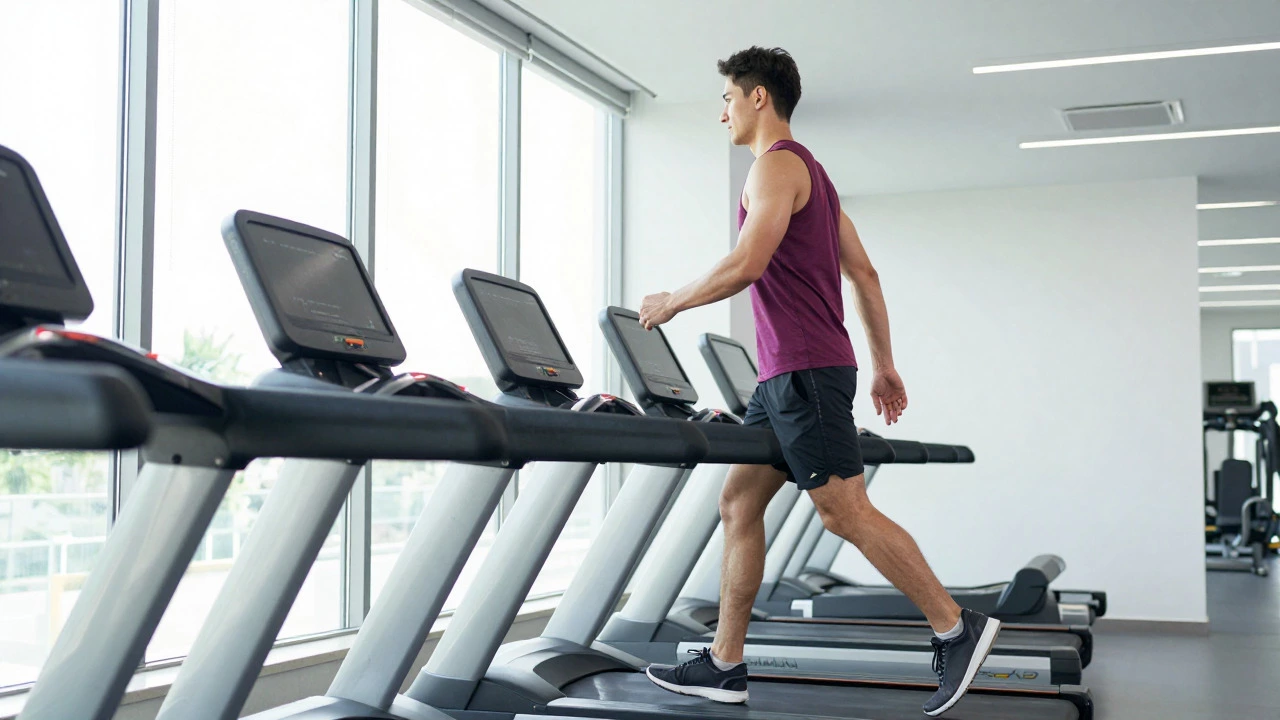
Have you ever seen someone walking on a treadmill at a steep angle, looking like they are hiking up a mountain without leaving the gym? That is likely the 12-3-30 workout. It blew up on social media platforms like TikTok in 2023, but it has stayed relevant because it actually works. The numbers represent the settings on your machine: a 12% incline, a speed of 3 miles per hour, for 30 minutes. It sounds simple, almost too easy to be effective. But there is real science behind why this specific combination of intensity and duration burns calories and builds endurance.
If you are tired of complicated HIIT routines or heavy lifting sessions that leave you exhausted, this low-impact method might be exactly what you need. Let’s break down exactly what happens to your body during these 30 minutes and how to do it safely.
How the 12-3-30 Method Actually Works
The magic of the 12-3-30 workout lies in its simplicity and its impact on your heart rate. By setting the incline to 12%, you are forcing your legs to work significantly harder than they would on a flat surface. At 3 miles per hour, you are moving at a brisk pace-faster than a casual stroll but slower than a jog. This keeps you in what trainers call "Zone 2" training territory for most people. Zone 2 is the sweet spot where your body primarily uses fat as fuel rather than carbohydrates.
When you add the time element-30 minutes-you ensure that your cardiovascular system gets a sustained challenge. Unlike high-intensity interval training (HIIT), which spikes your heart rate quickly and then drops it, the 12-3-30 maintains a steady, elevated heart rate. This consistency is key for building aerobic capacity. You aren't gasping for air, but you are definitely sweating. It is a form of steady-state cardio that is accessible to beginners yet challenging enough for intermediate users if they maintain good form.
| Parameter | Setting | Physiological Effect |
|---|---|---|
| Incline | 12% | Increases resistance, engages glutes and hamstrings more than flat walking |
| Speed | 3 mph (4.8 km/h) | Maintains moderate intensity; prevents joint impact associated with running |
| Duration | 30 minutes | Sufficient time to deplete glycogen stores and increase fat oxidation |
Which Muscles Are You Targeting?
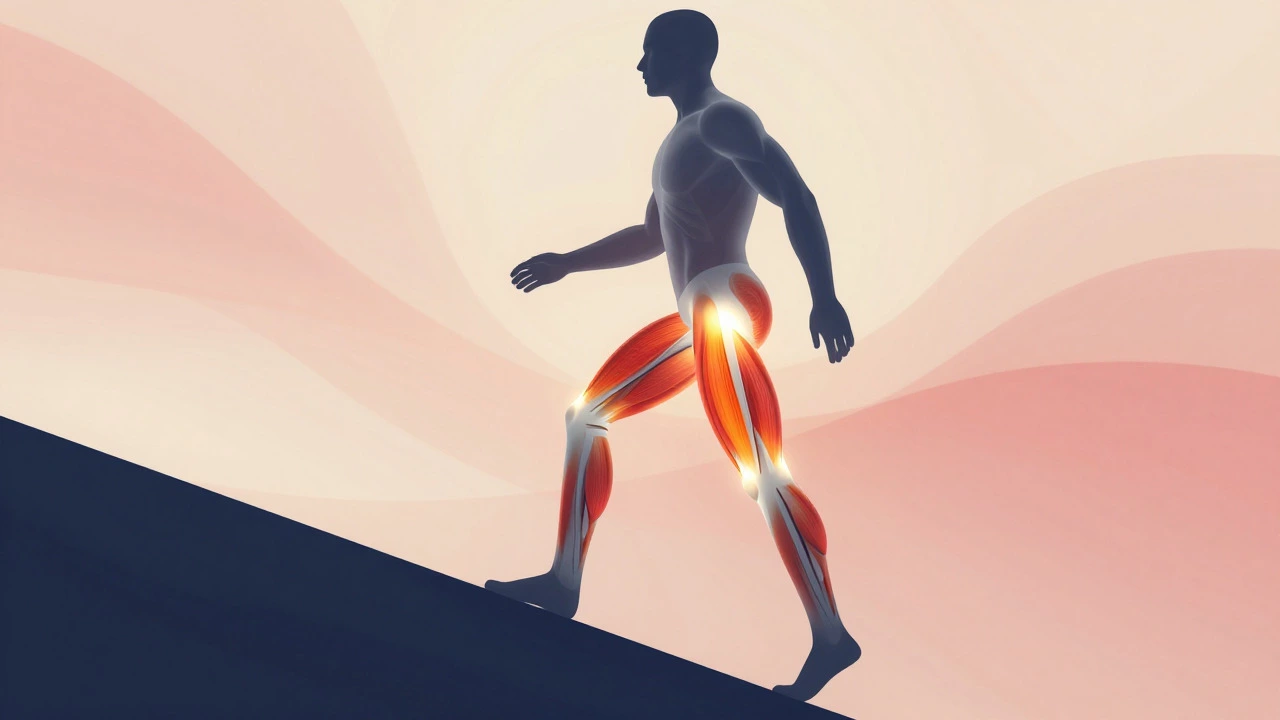
You might think walking only works your calves, but the incline changes everything. When you walk uphill, your body has to fight gravity. This shifts the workload from your lower legs to your larger muscle groups. Your glutes (buttocks) become the primary engine, propelling you upward. Your hamstrings (the back of your thighs) engage heavily to stabilize your knees and pull your body forward. Even your quadriceps (front of thighs) work hard to extend your leg against the slope.
Your core muscles also play a crucial role. To stay upright on a steep incline without leaning too far forward or backward, your abdominal and lower back muscles must remain engaged. This means you are getting a subtle core workout while you burn calories. Over time, consistent practice can lead to firmer glutes and stronger legs, which is why many women love this routine-it tones without bulking up excessively.
Benefits Beyond Weight Loss
While burning calories is the main draw, the 12-3-30 workout offers several other health benefits. First, it is low-impact. Running on concrete or even a treadmill belt can jar your joints, especially your knees and ankles. Walking, even at an incline, keeps one foot on the ground at all times, reducing the shock absorbed by your skeletal system. This makes it an excellent option for older adults or those recovering from minor injuries who still want an effective cardio session.
Secondly, it improves mental health. Thirty minutes of rhythmic movement releases endorphins, the body's natural mood lifters. Many people find the repetitive nature of treadmill walking meditative. It gives you time to listen to a podcast, catch up on audiobooks, or just clear your head. In a world where stress levels are high, having a 30-minute block dedicated to moving your body can significantly reduce anxiety and improve sleep quality later that night.
Finally, it boosts cardiovascular health. Regular aerobic exercise strengthens your heart muscle, allowing it to pump blood more efficiently. This lowers your resting heart rate and blood pressure over time, reducing the risk of heart disease and stroke. The American Heart Association recommends at least 150 minutes of moderate-intensity aerobic activity per week. Doing the 12-3-30 workout three times a week gets you halfway there.
Who Should Avoid This Routine?
Although the 12-3-30 workout is generally safe, it is not for everyone. If you have severe knee issues, particularly patellar tendonitis, the increased angle might aggravate your condition. Always consult a physical therapist before starting any new exercise regimen if you have existing joint problems. Similarly, if you have balance issues, walking on a steep incline could be risky. The treadmill belt moves beneath you, requiring constant micro-adjustments to stay stable.
Pregnant women should also proceed with caution. While walking is often recommended during pregnancy, the added incline increases the demand on your cardiovascular system and pelvic floor. A doctor's approval is essential. For most healthy individuals, however, the risks are minimal compared to the benefits.
How to Perform the 12-3-30 Correctly
To get the most out of this workout and avoid injury, form is everything. Here is a step-by-step guide to executing the routine properly:
- Warm Up: Never jump straight into a 12% incline. Start with 5 minutes of flat walking at a comfortable speed (around 2-2.5 mph). This prepares your muscles and joints for the upcoming strain.
- Set the Machine: Increase the incline to 12%. Set the speed to 3 mph. Make sure the safety clip is attached to your clothing in case you need to stop the belt quickly.
- Posture Check: Stand tall. Keep your shoulders back and down. Look straight ahead, not down at your feet. Engage your core by gently pulling your belly button toward your spine.
- Avoid Holding On: This is critical. Do not hold the handrails. Gripping the rails reduces the calorie burn and alters your posture, putting unnecessary strain on your lower back. Swing your arms naturally as you walk.
- Stride Length: Take shorter steps than you would on flat ground. Overstriding on an incline can cause your heels to strike hard, leading to calf tightness or shin splints. Aim for a quick, light step.
- Cool Down: After 30 minutes, gradually lower the incline to 0% and slow the speed to 2 mph for 5 minutes. This helps bring your heart rate down safely and prevents blood from pooling in your legs.
Modifications for Different Fitness Levels
Not every treadmill goes up to 12%, and not everyone can handle 30 minutes right away. That is okay. The beauty of this routine is that it is scalable. If you are a beginner, start with a 5% incline at 2.5 mph for 15 minutes. Gradually increase the incline by 1-2% each week until you reach your target. If your treadmill maxes out at 10%, use that instead. The principle remains the same: make it challenging enough that you can talk, but not sing.
If you don't have access to a treadmill, you can replicate this workout outdoors. Find a hill with a similar grade. Use a GPS watch or app to track your speed and distance. Alternatively, you can perform "incline walking" on a flat surface by exaggerating your hip extension-pushing off with your back leg forcefully. However, the controlled environment of a treadmill allows for precise monitoring of your effort, which is why it became so popular.
Frequently Asked Questions
Does the 12-3-30 workout really burn fat?
Yes, it can be an effective tool for fat loss when combined with a calorie-controlled diet. The combination of moderate intensity and sustained duration encourages your body to utilize stored fat for energy. On average, a person weighing 160 pounds might burn between 250 to 350 calories during a 30-minute session, depending on their metabolism and effort level. Consistency is key; doing it 3-4 times a week creates a significant caloric deficit over time.
Can I do the 12-3-30 workout every day?
While it is low-impact, doing it every day may lead to overuse injuries, particularly in the shins and calves. It is generally recommended to allow at least one rest day or active recovery day between sessions. Incorporating strength training or yoga on off-days can help balance your fitness routine and prevent muscle imbalances caused by repetitive motion.
What shoes should I wear for the 12-3-30?
Wear supportive athletic shoes designed for walking or running. Look for shoes with good cushioning in the heel and arch support. Since you are walking on an incline, your forefoot bears more pressure, so ensure the toe box has enough room for your toes to splay naturally. Avoid flat-soled shoes like Converse or Vans, as they lack the necessary shock absorption.
Is the 12-3-30 better than running?
It depends on your goals. Running typically burns more calories per minute due to higher intensity. However, the 12-3-30 is easier to sustain for longer periods and places less stress on your joints. For weight loss and general cardiovascular health, both are effective. The 12-3-30 is often preferred by those who find running painful or intimidating.
Will this workout make my calves bigger?
For most people, no. Cardiovascular exercise tends to tone muscles rather than build significant mass. Hypertrophy (muscle growth) requires heavy resistance and progressive overload, which walking does not provide. If anything, regular stretching after your workout will keep your calves flexible and lean. Genetic factors play a larger role in calf size than this specific routine.