Rule of 5 Decluttering Simulator
Experience the power of limited scope. Choose a zone, then sort exactly five items in under 30 seconds each.
Round Complete! 🎉
You sorted 5 items in 00:00.
Remember: One round is enough to build the habit. Consistency beats intensity.
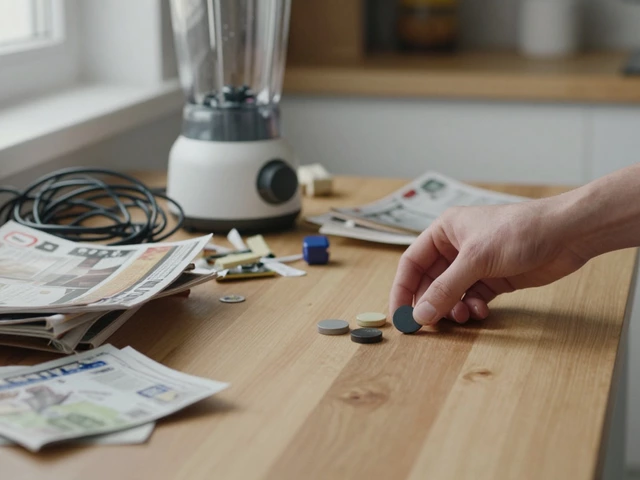
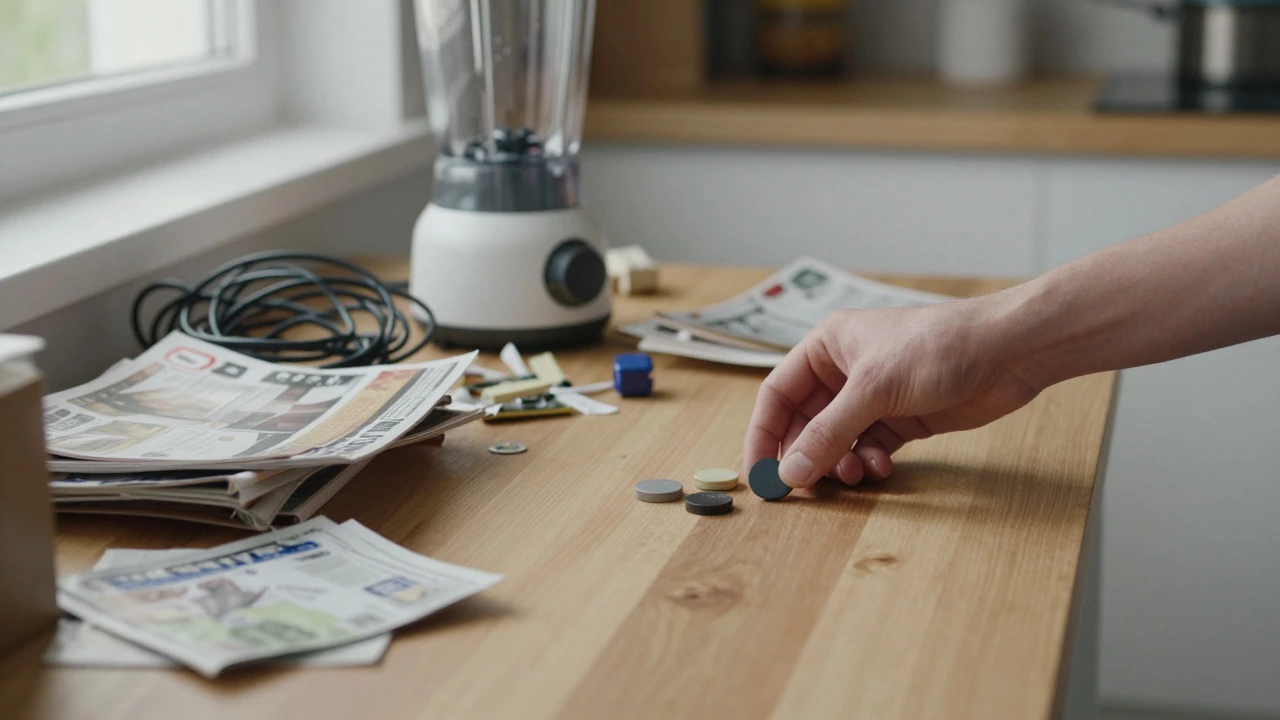
You know that feeling? You sit down to clean your kitchen counter, intending to spend just five minutes. Ten minutes pass. Then twenty. Suddenly, you’re sorting through old mailboxes, debating the fate of a broken blender, and wondering why your life feels heavier than it did an hour ago. This is the trap of open-ended tidying. It’s exhausting because there’s no finish line.
The Rule of 5 Decluttering is a rapid decision-making framework designed to break the paralysis of choice by limiting the number of items you must sort at any given time to exactly five. Instead of staring at a mountain of clutter, you focus on a tiny, manageable pile. It turns a daunting chore into a game with clear rules. If you’ve ever felt stuck in front of a drawer full of tangled cables or a closet overflowing with clothes you haven’t worn in years, this method might be the key to unlocking your space without burning out.
Why We Get Stuck: The Psychology of Clutter
Before we pick up the first item, let’s understand why decluttering feels so hard. It isn’t about laziness. It’s about cognitive load. When you look at a large collection of objects, your brain tries to process every single one simultaneously. Each object triggers memories, guilt, or future planning. "Do I need this for winter?" "What if I need this battery?" These questions multiply rapidly, leading to decision fatigue.
Decision Fatigue is the deteriorating quality of decisions made by an individual after a long session of decision making. By the time you reach the fifth item in a large pile, your willpower is often depleted. The Rule of 5 solves this by capping the workload. You only have to make five decisions. Once those are done, you can stop, take a breath, and start again if you want. This low barrier to entry makes it easy to start, which is the hardest part of any habit.
How the Rule of 5 Actually Works
The mechanics are simple. You choose a specific area-a desk, a shelf, a bag. You pull out exactly five items. No more, no less. For each item, you make one of three choices:
- Keep: It has a designated place and serves a current purpose.
- Donate/Sell: It is in good condition but not used anymore.
- Trash/Recycle: It is broken, expired, or useless.
Once all five items are sorted, you put them back in their respective boxes or bins. That’s it. You’ve completed a round. You can stop there, or you can do another round of five. The beauty of this system is that it removes the pressure of finishing the whole room in one go. You can do one round in the morning, one during lunch, and one before bed. Over a week, you’ll be amazed at how much space opens up.
Step-by-Step Guide to Your First Round
Ready to try it? Here is exactly how to execute your first Rule of 5 session. Keep it under ten minutes to maintain momentum.
- Pick a Zone: Choose a small, defined area. A nightstand is perfect for beginners. Avoid picking "the whole bedroom" as it’s too vague.
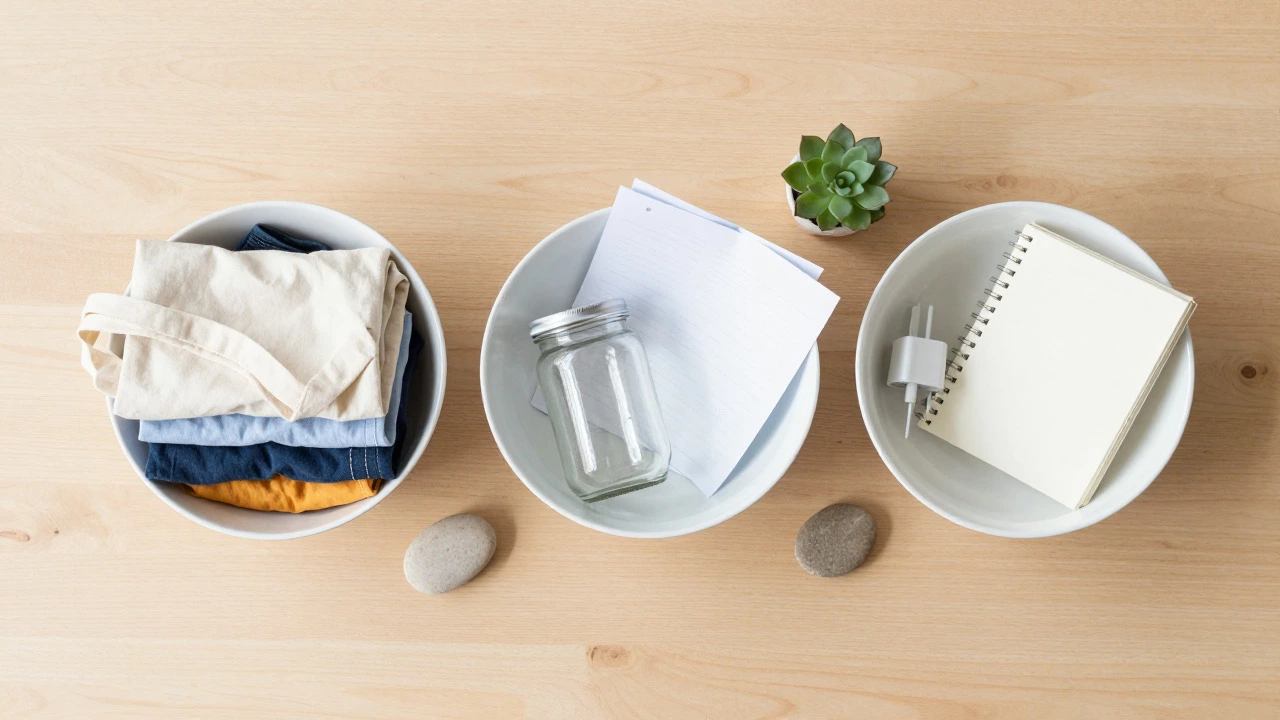
- Gather Supplies: Have three containers ready. One for keepers, one for donate/sell, and one for trash/recycle. Having these physically present prevents you from putting things back where they came from.
- Select Five Items: Pull out exactly five objects. Don’t overthink which ones. Just grab the first five you see.
- Make Decisions Fast: Give yourself 30 seconds per item. If you hesitate, ask: "Have I used this in the last 6 months?" If no, move it to donate or trash.
- Reset the Space: Wipe the surface if needed. Put the kept items back neatly. Take a photo of the progress. Visual proof motivates you to continue.
Notice that step four emphasizes speed. Slowing down invites doubt. Speed forces action. In the context of Minimalist Living, which is a lifestyle philosophy that focuses on simplifying possessions to reduce stress and increase focus, speed is a tool for clarity, not carelessness.
Common Pitfalls and How to Avoid Them
Even with a simple rule, people trip up. Here are the most common mistakes and how to fix them.
Mistake 1: Expanding the Scope. You start with five items on the desk, but then you see a bookshelf and think, "Might as well do that too." Stop. Finish the five. Close the lid. Come back tomorrow. Scope creep is the enemy of consistency.
Mistake 2: The "Maybe" Pile. Some people create a fourth category: "Maybe." This defeats the purpose. If you aren’t sure, assume you don’t need it. Put it in the donate box. If you truly need it later, you can buy it again or find it. Most "maybe" items end up forgotten in a storage unit for years.
Mistake 3: Doing It Alone Without Accountability. Decluttering can feel isolating. Try doing a live video call with a friend while you work. Or post a before-and-after photo on social media. External accountability keeps you honest when motivation dips.
Where to Start: Best Areas for Beginners
Not all areas are created equal when starting out. Some spots yield quick wins that boost confidence. Others are emotional minefields. Start here:
| Zone | Why It Works | Typical Time Per Round |
|---|---|---|
| Entryway Bag | High visibility, low sentiment value | 5-8 minutes |
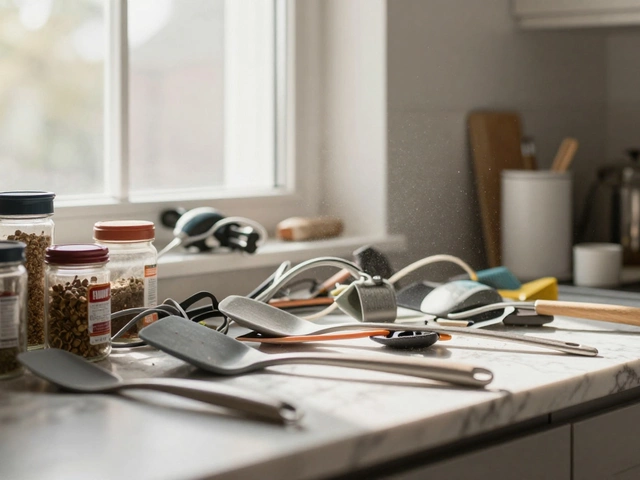
| Kitchen Countertop | Immediate visual impact, functional items | 10 minutes |
| Digital Desktop | Quick file sorting, no physical lifting | 5 minutes |
| Medicine Cabinet | Small space, high expiry risk | 7 minutes |
Avoid starting with sentimental items like family photos or heirlooms. Save those for when you’ve built your rhythm with neutral objects. Sentimental decluttering requires emotional energy that is best reserved for experienced users of the method.

Integrating Rule of 5 into Daily Life
Once you’ve mastered the basic rounds, you can weave this into your daily routine. Think of it as a mental reset button. Before you leave for work, do a two-minute scan of your car trunk. Do you have five random items? Sort them. Before bed, check your bedside table. Are there five things that don’t belong there? Move them.
This approach aligns with the concept of Habit Stacking, which is a behavior change technique where you attach a new habit to an existing one to build consistency. By attaching the Rule of 5 to existing triggers like leaving the house or brushing teeth, you ensure you declutter regularly without needing extra willpower. Consistency beats intensity. Five minutes a day adds up to 30 hours a year of organized living.
Frequently Asked Questions
Is the Rule of 5 only for physical objects?
No. It works perfectly for digital files, email inboxes, and even tasks. Pick five emails to archive, delete, or reply to. Pick five desktop icons to organize. The principle of limited scope applies to any type of clutter.
What if I find something valuable among the five items?
Great! That’s a win. But don’t let it derail the session. Note it down, put it in the "Keep" pile, and move on. Don’t start researching its value or history right now. That can wait until the round is finished.
How many rounds should I do per day?
One round is enough to build the habit. Two rounds if you have extra time. More than three often leads to burnout. Quality of attention matters more than quantity of items processed.
Does this work for shared spaces like a living room?
Yes, but coordinate with household members. Agree on what goes in the "Donation" bin. Sometimes, what looks like junk to you is essential to your partner. Communication prevents conflict in shared zones.
Can I use this method for kids' rooms?
Absolutely. Make it a game. Let the child pick five toys. They decide what stays. Parents can guide by asking, "Did you play with this last week?" This teaches decision-making skills early on.