UK Etiquette Scenario Simulator
Face real-world situations and see how a local Brit would react. Choose the most culturally appropriate response.
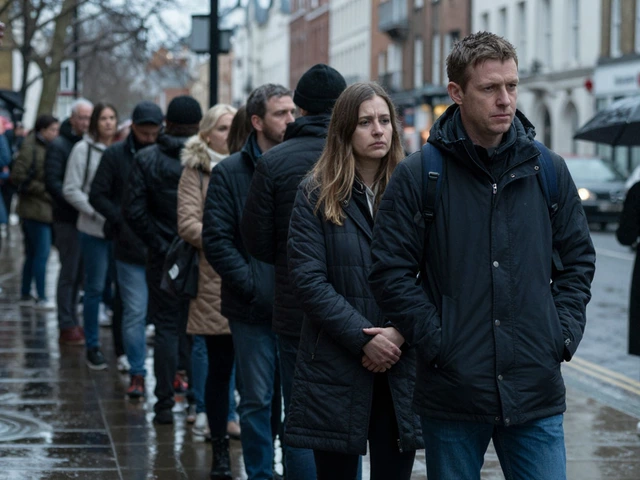
You’re standing in a queue at the post office. The person behind you steps slightly forward. You shift your weight. They step back. It’s silent, but the tension is palpable. In the UK, this isn’t just about waiting; it’s a social contract. Misunderstand these unspoken rules, and you might find yourself labeled as rude before you even order a pint.
British etiquette is a complex set of social codes governing behavior in public and private spaces. Unlike some cultures where warmth is expressed through loudness or physical touch, British politeness often looks like distance, silence, and precise timing. For travelers from more expressive cultures, this can feel cold. But once you decode the signals, you’ll realize it’s actually a system designed to minimize conflict and respect personal space.
The Sacred Queue: Why Order Matters
If there is one thing that defines British public behavior, it is the queue. To a Brit, the queue is a democratic equalizer. Everyone waits their turn, regardless of status. Cutting in line is considered a major social offense, worse than talking on the phone or eating loudly.
Here are the specific mechanics of queuing that visitors often miss:
- Single file only: Even if there are multiple lanes, stick to one line unless signs explicitly say otherwise. Merging into a shorter lane without looking is a surefire way to earn a glare.
- The 'Sorry' reflex: If you bump into someone while entering a shop, say "sorry" immediately. If they bump into you, they will also say "sorry." Neither party is admitting fault; it’s just a lubricant for social interaction.
- No mobile phones: Checking your phone while in a long queue is increasingly frowned upon, especially if it involves speaking. Keep it silent or put it away.
A common mistake for tourists is trying to be helpful by offering to let someone go ahead. While well-intentioned, this disrupts the established order. Let people manage their own position in the line.
Small Talk: The Art of Saying Nothing
Many visitors expect deep conversations with strangers on the London Underground or in a pub. In reality, British small talk is functional, not relational. It exists to fill awkward silences, not to build friendships.
The weather is the universal icebreaker. Commenting on the rain, the wind, or the sudden sunshine is safe ground. However, avoid asking personal questions too early. Questions about salary, age, or relationship status are considered intrusive until you know someone well.
In the workplace or at dinner parties, conversation follows a rhythm. If someone asks how you are, a simple "Good, thanks" is sufficient. Elaborating on your day is optional and usually reserved for closer acquaintances. Over-sharing can make others uncomfortable, as they may feel pressured to reciprocate with similar levels of detail.
Dining Out: Tipping and Table Manners
Eating in the UK has its own unwritten laws, particularly regarding tipping. Service charge is often included in the bill (usually 12.5%). If it is, you do not need to tip extra. If it is not, adding 10-15% for good service is standard. Leaving a few coins in a jar is acceptable for casual cafes, but slapping cash on the table after leaving feels abrupt.
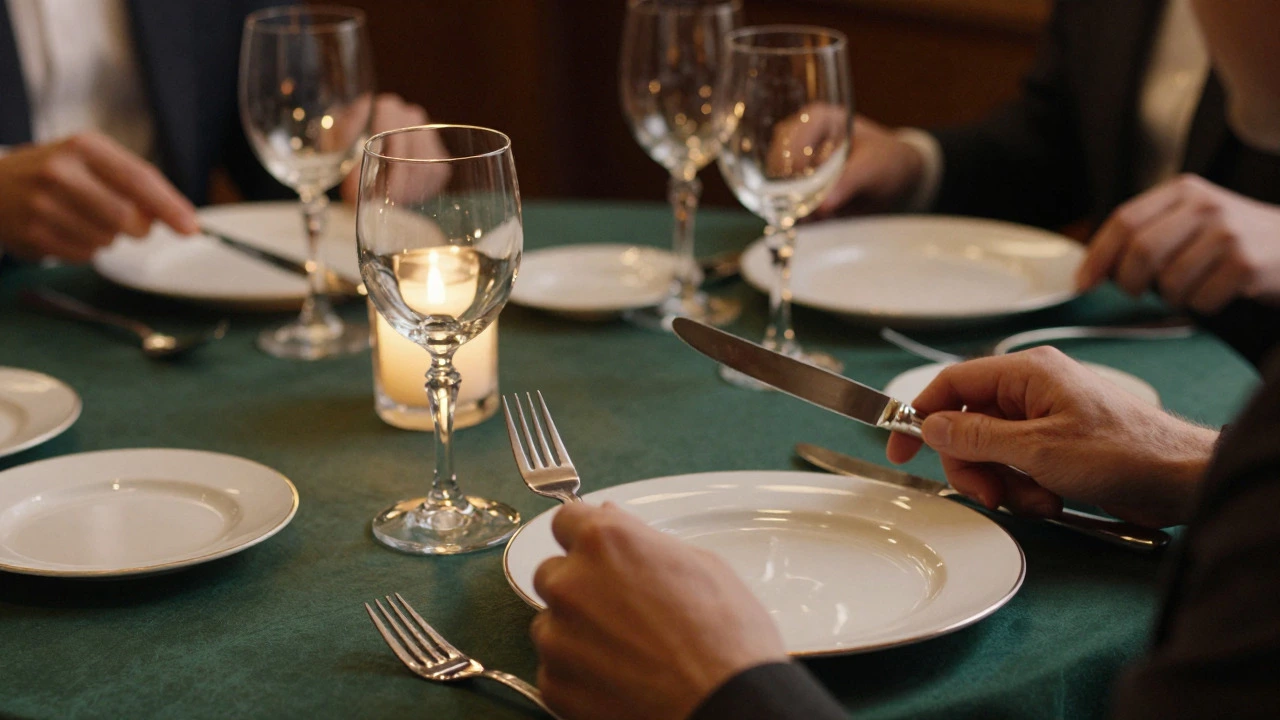
At the table, watch how locals handle cutlery. Fork in left hand, knife in right. Eat from the outside in. And please, keep elbows off the table. This rule is stricter in formal settings but generally observed in most restaurants. Another subtle point: when drinking beer, don’t clink glasses with everyone at the table. Clinking is usually done with the person directly across from you or the host. Clanking glasses with every single person can seem overly familiar or performative.
Public Spaces: Noise and Personal Space
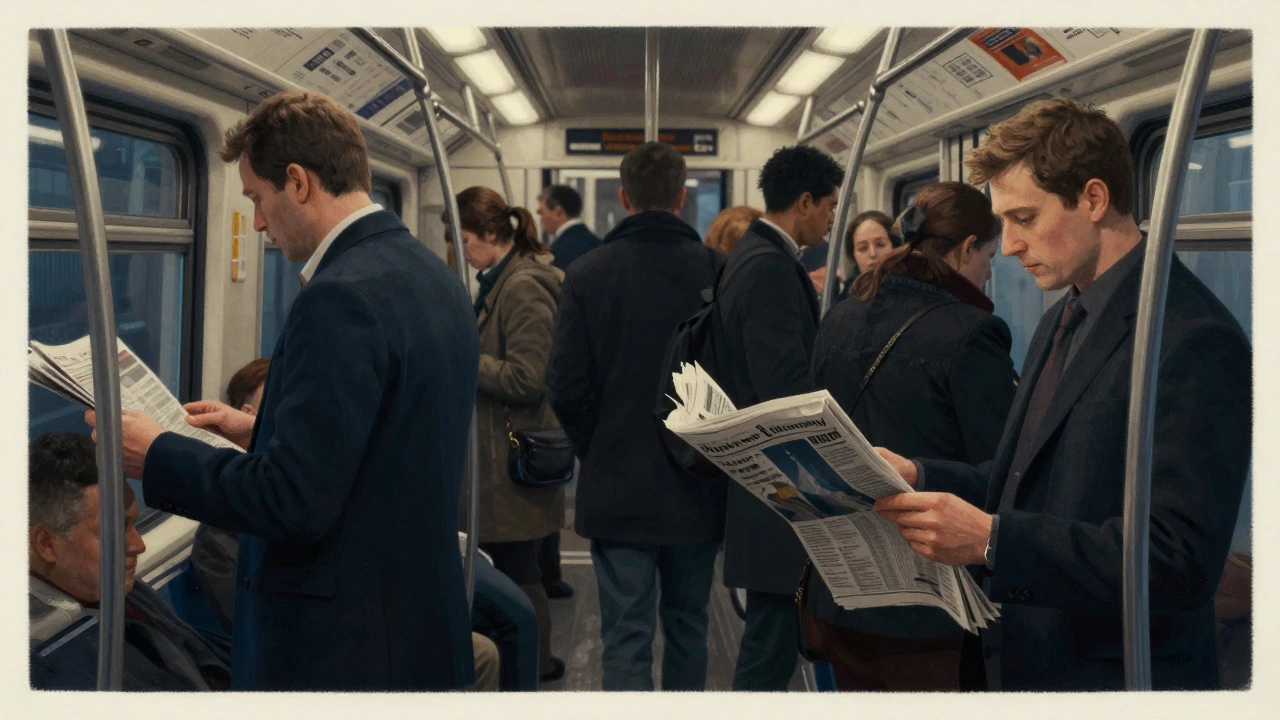
The UK is a densely populated country, yet personal space is fiercely guarded. On public transport, silence is golden. Speaking loudly on the phone is a pet peeve for commuters. If you must call, keep your voice low. Similarly, playing audio from your device without headphones is a cardinal sin. Earbuds are mandatory for any media consumption in shared spaces.
Door holding is another area of confusion. In the UK, you hold the door for the person immediately behind you, then release it. You do not hold it open indefinitely for the entire crowd. If you let go and the next person walks through, no one is offended. If you keep holding it while staring at the empty doorway, you look confused, not polite.
Clothing and Appearance: Dress Codes That Matter
While the UK is diverse, certain dress codes still apply. Jeans are acceptable almost everywhere, except for high-end fine dining or corporate offices. Sneakers are fine, but flip-flops are generally reserved for beaches or pools, not town centers. Wearing beachwear in urban areas can draw stares.
Color choice also plays a role. Bright, neon colors are less common in daily wear compared to the US or Australia. Neutral tones, dark blues, greys, and blacks dominate. This doesn’t mean you can’t wear color, but blending in slightly helps you navigate social situations without standing out unnecessarily.
Comparing Cultural Norms: UK vs. Other Regions
To better understand what constitutes bad etiquette in the UK, it helps to compare it with other regions. The following table highlights key differences that trip up visitors.
| Aspect | United Kingdom | United States | Japan |
|---|---|---|---|
| Tipping | Optional if service charge included; 10-15% if not | Expected 18-20% always | Rarely expected; can be confusing for staff |
| Volume Level | Low to moderate; quiet is polite | Moderate to high; friendly banter is normal | Very low; silence is respected |
| Personal Space | Large; avoid touching strangers | Moderate; light touch (handshake) is common | Large; bowing replaces touch |
| Small Talk Topics | Weather, local news | Work, family, hobbies | Minimal; direct communication preferred |
| Queue Behavior | Sacred; strict single file | Flexible; side-by-side entry sometimes accepted | Sacred; extremely orderly |
This comparison shows why a visitor from the US might accidentally offend a Brit by being too loud or touching them casually, while a visitor from Japan might feel overly formal but rarely cause issues due to shared values around silence and order.
Common Mistakes to Avoid in 2026
Social norms evolve. By 2026, digital etiquette has become as important as face-to-face interaction. Here are the current pitfalls:
- Posting location tags in real-time: While social media is ubiquitous, tagging your exact location at a restaurant or event can feel invasive to locals who value privacy. Wait until you leave to post.
- Ignoring 'Please' and 'Thank You': These words are non-negotiable. Omitting them makes you seem entitled. Use them even when dealing with automated systems or service staff.
- Misreading sarcasm: British humor relies heavily on understatement and dry wit. A comment like "Oh, brilliant, another delay" is likely sarcastic. Taking it literally can lead to awkward misunderstandings.
- Over-apologizing: While saying sorry is common, apologizing for existing (e.g., "Sorry I’m taking up space") can seem insecure. Save apologies for actual mistakes.
Understanding these nuances doesn’t require memorizing a rulebook. It requires observation. Watch how the people around you behave. Are they quiet? Do they stand far apart? Mimic their energy. The goal isn’t to become a Brit overnight, but to show respect for the local culture.
Frequently Asked Questions
Is it rude to eat on the train in the UK?
Generally, yes, unless it is a dedicated dining car or a long-distance journey. On short commutes within cities like London or Manchester, eating can smell and distract others. Stick to water or mints for short trips. On longer trains, food is acceptable, but keep packaging tidy and avoid strong-smelling foods like fish.
How much should I tip in a UK restaurant?
First, check your bill. If a service charge of 12.5% is already added, no extra tip is needed. If not, add 10-15% for good service. For exceptional service, 15-20% is appreciated but not required. Rounding up the bill is a casual alternative for smaller amounts.
Do I need to remove my shoes when visiting a home?
It depends on the household. Some families have a "no shoes" policy, especially if they have carpets or young children. Others are more relaxed. The best approach is to wait and see what your host does. If they take theirs off, follow suit. If they don’t, ask politely: "Shoes on or off?" This shows consideration without assuming.
Is it okay to speak English loudly in rural areas?
Rural areas tend to be quieter and more conservative. Loud voices can attract unwanted attention or seem aggressive. Keep your volume conversational. Also, be aware that accents vary significantly by region. Don’t assume everyone speaks with a standard London accent; listen carefully and repeat phrases if necessary.
What is the proper way to greet someone in the UK?
A handshake is the standard professional greeting. For friends, a hug or cheek kiss is common, but observe the other person’s body language first. If they lean in, hug. If they extend a hand, shake it. Avoid double-cheek kissing unless you are certain it is expected in that specific social circle, as it can feel intimate to some.