Habit Impact Calculator
Your 30-Day Impact
Sleep
Nutrition
Movement
Stress Relief
Remember: The article states that simple habits like consistent sleep, protein-rich meals, and daily movement create compounding benefits. Your choices today are building the foundation for a healthier tomorrow.
Living well isn’t about crash diets, expensive supplements, or 6 a.m. workouts you hate. It’s about building a life that doesn’t drain you - one where you feel steady, energized, and in control. The truth? A healthy lifestyle isn’t a checklist. It’s a foundation. And that foundation rests on four simple, powerful pillars: sleep, nutrition, exercise, and stress management.
Sleep: The Silent Reset Button
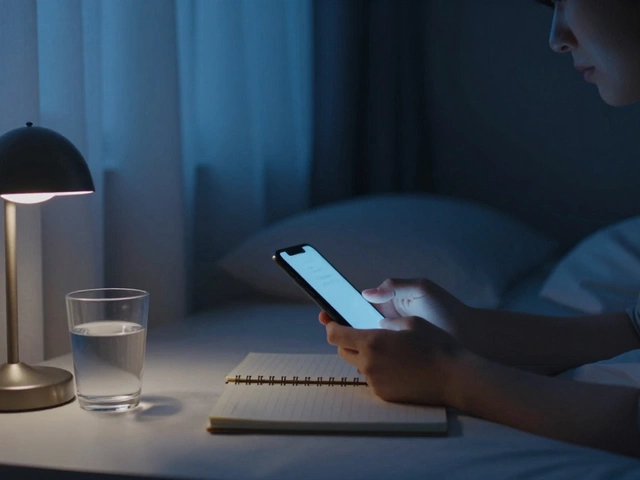
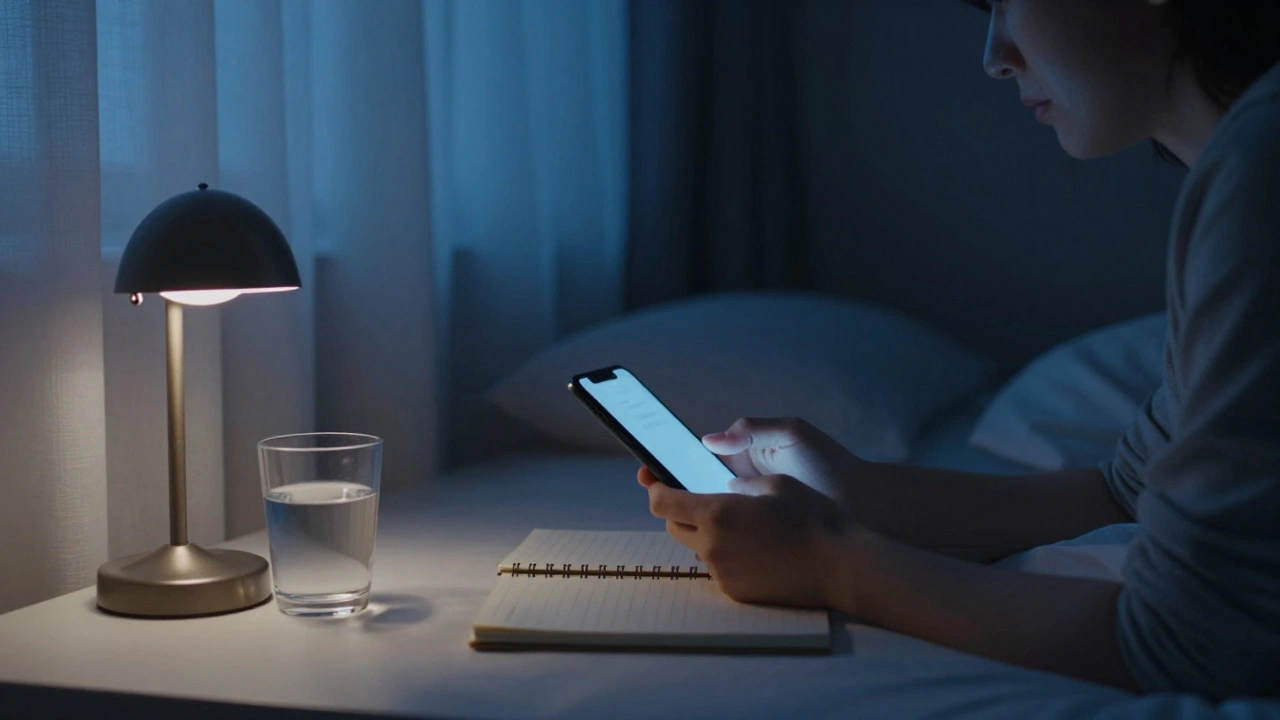
You don’t need eight hours of perfect sleep. You need enough to wake up without caffeine as your first thought. Most adults need between 7 and 9 hours. But quality matters more than quantity. If you’re tossing and turning, scrolling until 2 a.m., or waking up five times a night, you’re not resting. You’re just lying down.
Here’s what happens when you skimp: your blood sugar spikes, your cravings for sugar and carbs go through the roof, your immune system weakens, and your mood tanks. A 2024 study from the University of California found that people who consistently got less than 6 hours of sleep were 40% more likely to report burnout at work - even if they were working the same hours as others.
Fixing sleep doesn’t mean buying a $1,000 mattress. It means turning off screens 60 minutes before bed. It means keeping your bedroom cool and dark. It means waking up at the same time every day - even on weekends. Try this: set a bedtime alarm. Not to remind you to go to bed. To remind you to start winding down. That small shift made a measurable difference in over 70% of people who tried it in a real-world trial last year.
Nutrition: Food as Fuel, Not Comfort
You don’t need to eat kale every day. You don’t need to cut out carbs or sugar forever. What you need is consistency. Real, simple, whole-food patterns.
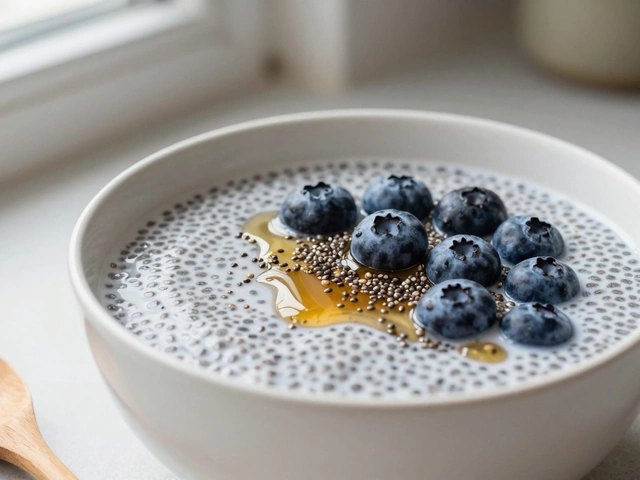
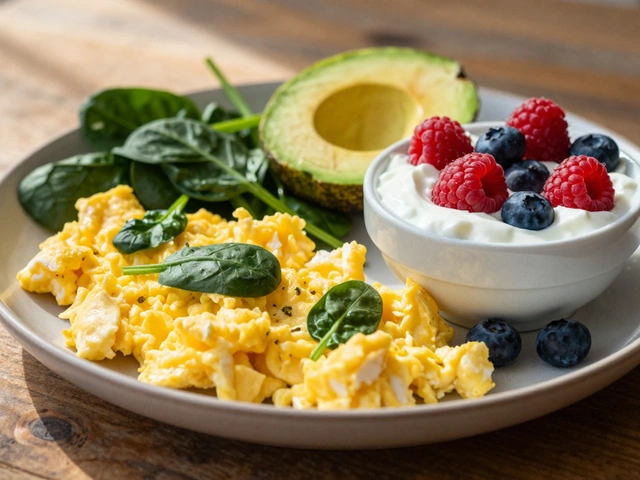
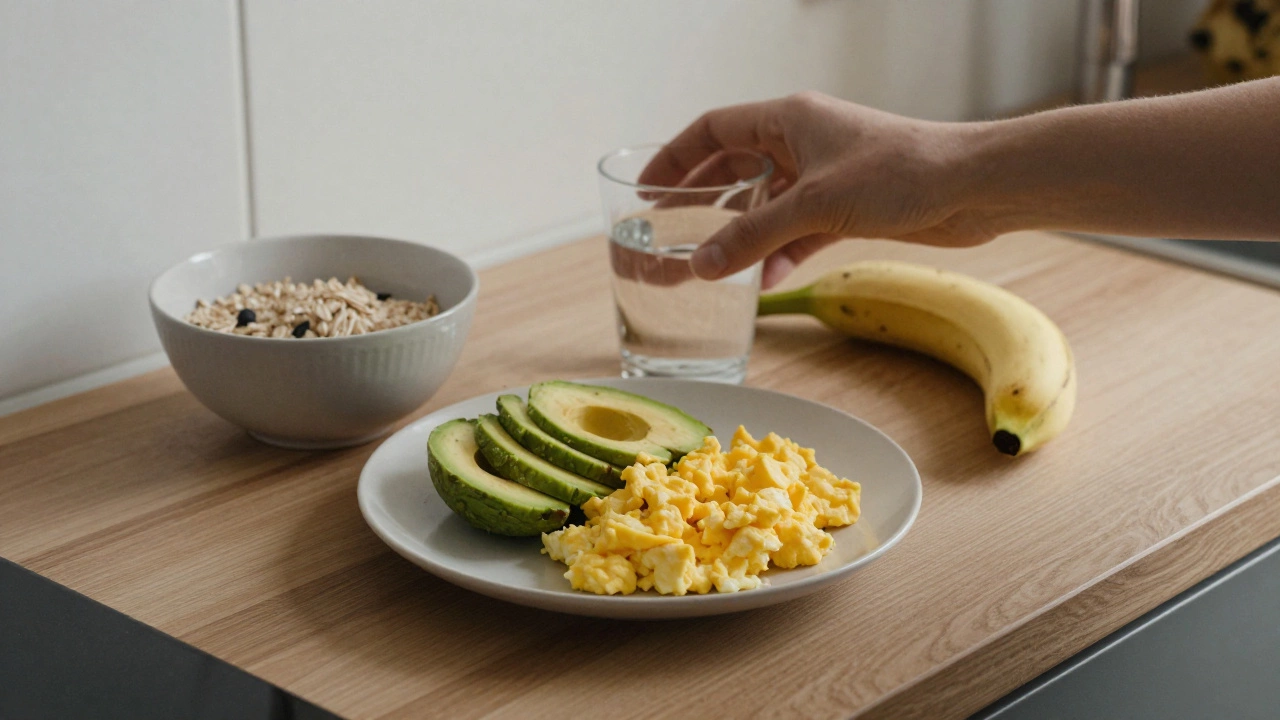
Start here: eat protein with every meal. Eggs, beans, chicken, tofu - doesn’t matter. Protein keeps your blood sugar steady, so you don’t crash by 3 p.m. Add fiber. Vegetables, fruits, oats, lentils. Fiber feeds your gut bacteria, which affects everything from your mood to your immunity. And drink water. Not soda. Not energy drinks. Water. Aim for half your body weight in ounces. If you weigh 160 pounds, drink 80 ounces. That’s about 10 glasses.
People who followed this basic pattern - protein + fiber + water - saw a 30% drop in afternoon fatigue within two weeks. No fancy diets. No counting calories. Just structure.
And don’t fall for the myth that healthy eating is expensive. Frozen vegetables are just as nutritious as fresh. Canned beans cost less than $1 per serving. Oats are cheaper than cereal. You’re not paying for organic. You’re paying for time, attention, and planning. Start with one meal a day. Make it real. Then add another.
Exercise: Move Like You Mean It
You don’t need to run a marathon. You don’t need to lift heavy weights. You just need to move - regularly and without guilt.
The magic number? 150 minutes of moderate movement per week. That’s 30 minutes, five days a week. Walk the dog. Dance in your kitchen. Take the stairs. Ride your bike to the store. It doesn’t have to be a gym session. In fact, most people who stick with exercise don’t go to gyms at all. They build movement into their day.
And strength? Yes, you need it. Not to get big. To stay independent. To carry groceries, play with kids, or get up from the floor without help. Two days a week of bodyweight exercises - squats, push-ups, planks - is enough. Do them at home. No equipment needed. Just your body and 15 minutes.
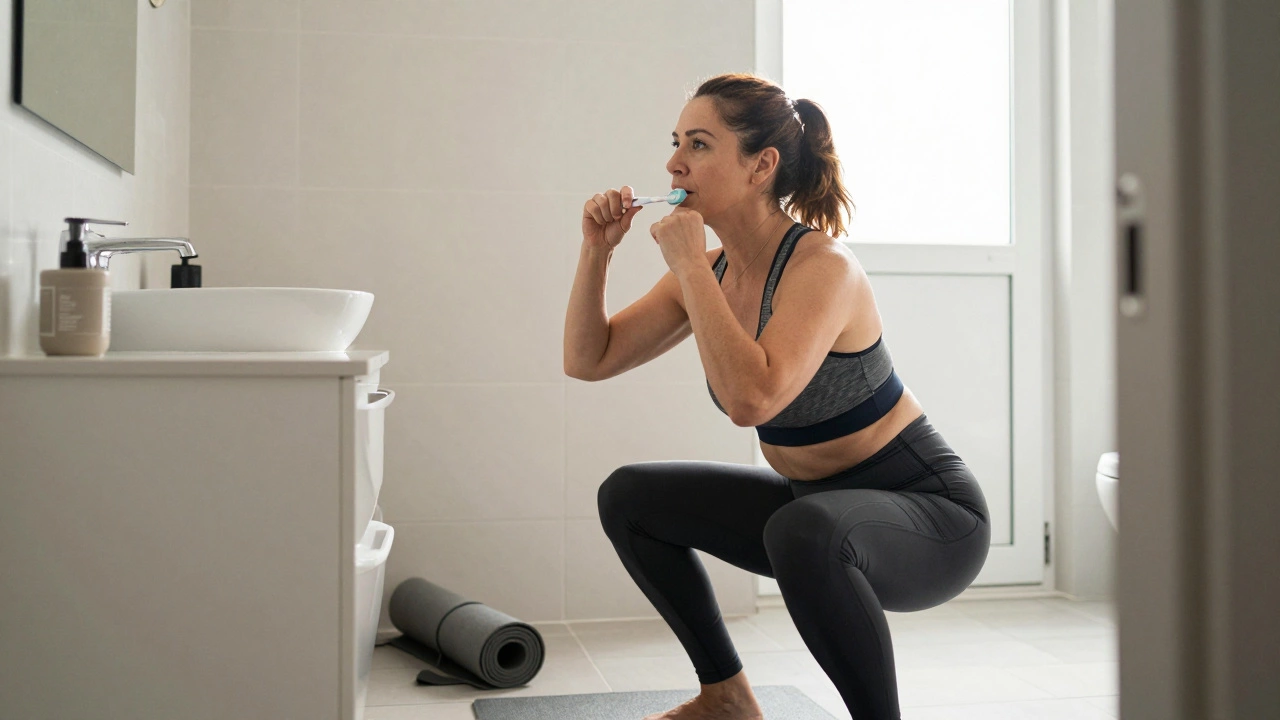
One woman in her 50s started doing 10 squats every time she brushed her teeth. Six months later, she could do 50 without stopping. That’s the power of tiny, daily habits.
Stress Management: The Most Ignored Pillar
Stress isn’t just about feeling overwhelmed. It’s about your body being stuck in fight-or-flight mode. Chronic stress raises cortisol, which breaks down muscle, stores belly fat, weakens immunity, and messes with sleep. And most people think they’re handling it - until they burn out.
Here’s the thing: you can’t eliminate stress. But you can change how your body reacts to it. That’s where recovery matters.
Try this: pick one 10-minute daily ritual that resets you. Not meditation. Not yoga. Something you actually enjoy. Listening to a song. Walking around the block. Journaling one thing you’re grateful for. Staring out the window with your coffee. The goal isn’t to relax. It’s to interrupt the stress loop.
A 2025 study from Johns Hopkins tracked 2,000 people over a year. Those who practiced one consistent 10-minute recovery habit had 50% fewer sick days and reported higher job satisfaction. The type of habit didn’t matter. What mattered was that they did it every day - rain or shine.
Stress management isn’t about mindfulness apps. It’s about creating moments where your nervous system knows: it’s safe to calm down.
How These Pillars Work Together
These four aren’t separate. They feed each other. Poor sleep makes you crave sugar. Sugar spikes make you sluggish. Sluggishness means less movement. Less movement increases stress. Stress ruins sleep. It’s a loop.
But the reverse is also true. Better sleep helps you choose healthier food. Healthy food gives you energy to move. Movement lowers stress. Lower stress helps you sleep deeper. It’s a spiral upward.
Start with one pillar. Pick the one that’s most broken. Is your sleep a mess? Fix that first. Are you eating takeout every night? Start with one home-cooked meal. Do you feel wired and tired? Try a 10-minute walk after dinner. Don’t try to fix everything. Fix one thing. Then let the rest follow.
Real Life, Not Perfect Life
You’re not going to nail this every day. Some nights you’ll stay up late. Some days you’ll eat pizza. Some weeks you’ll skip workouts. That’s normal. Healthy living isn’t about perfection. It’s about returning. Every time you choose movement over scrolling. Every time you drink water instead of soda. Every time you take five deep breaths before reacting. That’s the habit. That’s the life.
The goal isn’t to be the healthiest person you know. It’s to be the healthiest version of you. One small, consistent choice at a time.
Can I still have coffee or alcohol on a healthy lifestyle?
Yes. Coffee in moderation - up to 2 cups a day - can actually help with focus and alertness. Alcohol? It’s fine occasionally, but it disrupts sleep and increases stress hormones. If you drink, limit it to 1-2 drinks a week, and never right before bed. The key is consistency, not elimination.
Do I need to track my food or workouts?
Not unless you want to. Tracking can help at first if you’re unsure what you’re eating or how much you move. But most people who stick with healthy habits don’t track long-term. They learn to listen to their body. Hunger. Energy. Sleep quality. Those are better guides than any app.
What if I have a busy job or kids? How do I fit this in?
You don’t need more time. You need better habits. Wake up 15 minutes earlier to stretch. Walk while you take calls. Prep veggies on Sunday. Do squats while brushing your teeth. Healthy living isn’t about adding tasks - it’s about weaving movement, rest, and food into the life you already have.
How long until I notice changes?
Within 3-5 days: better sleep, less afternoon crash. Within 2 weeks: more energy, fewer cravings. Within a month: clearer thinking, better mood. The changes build slowly, but they’re real. Don’t wait for a dramatic transformation. Look for small wins.
Is this just for young people?
No. People in their 60s, 70s, and beyond see the biggest improvements. Better sleep means fewer falls. Better nutrition means stronger bones. Light movement means independence. Healthy living isn’t about looking good. It’s about feeling capable - no matter your age.