Bedtime Reading Selector
Is This Book Good for Bedtime?
Test if your book creates the right conditions for sleep by analyzing key characteristics:
How to Choose
Most people know they should avoid screens before bed, but few realize that what you read matters just as much as how long you read it. The wrong book can turn your wind-down routine into a mental workout, leaving you tossing and turning instead of drifting off. The best type of reading before bed isn’t about page count or genre alone-it’s about how your brain responds to the words on the page.
Why Your Bedtime Book Choice Makes a Difference
Your brain doesn’t shut off when you turn off the light. If you’re reading something intense, stressful, or full of decisions, your mind keeps processing it-like running a slow-motion replay of a work email or a thriller’s final twist. A 2023 study from the University of Oxford tracked 500 adults who read for 30 minutes before bed for four weeks. Those who chose calm, non-stimulating material fell asleep 22 minutes faster on average than those who read action novels, financial news, or self-help books filled with to-do lists.
The key isn’t just avoiding stress-it’s inviting relaxation. Your nervous system needs to shift from ‘fight or flight’ to ‘rest and digest.’ That happens when your reading pulls your attention gently away from daily worries and into a quiet, immersive space.
The Best Types of Reading Before Bed
Not all books are created equal for sleep. Here’s what actually works:
- Quiet fiction with gentle pacing - Think authors like Anne Tyler, Haruki Murakami, or Elizabeth Strout. Their stories unfold slowly, with everyday moments that feel like a warm blanket. No cliffhangers. No high stakes. Just human beings living, thinking, and breathing.
- Poetry - Short, rhythmic, and often meditative. Mary Oliver’s Devotions or Rumi’s poems work well because they don’t demand plot retention. You can read one stanza and let it settle.
- Observational nature writing - Books like The Hidden Life of Trees by Peter Wohlleben or A Walk in the Woods by Bill Bryson. These books anchor you in the physical world-the rustle of leaves, the slow turn of seasons-pulling you out of your own thoughts.
- Non-stressful self-help - Not the kind that tells you to ‘hack your productivity’ or ‘wake up at 5 a.m.’ Instead, look for books focused on acceptance, presence, or letting go. The Subtle Art of Not Giving a F*ck by Mark Manson is one example-it’s blunt, but in a calming way. Wherever You Go, There You Are by Jon Kabat-Zinn is another. These don’t push you to change. They invite you to be.
What’s missing from this list? Thrillers, business strategy guides, political commentary, and anything with a ‘5-step plan’ to transform your life. These books activate the prefrontal cortex-the part of your brain that solves problems and plans ahead. That’s the last thing you want before sleep.
What About Self-Help Books?
Self-help books get a bad rap for bedtime, and for good reason. Most are designed to motivate, fix, or improve-and that’s the opposite of what sleep needs.
But not all self-help is created equal. If you love the genre, pick books that feel like a conversation, not a lecture. Avoid anything with titles like:
- “How to Master Your Morning”
- “The 7 Habits of Highly Effective People”
- “Get Rich or Die Trying”
Instead, choose books that say things like:
- “You’re Already Enough”
- “The Art of Stillness”
- “Letting Go of the Need to Be Perfect”
Authors like Pema Chödrön, Julia Cameron, and Kristin Neff write in a way that doesn’t pressure you. Their words feel like a quiet nod, not a checklist.

How to Pick Your Perfect Bedtime Book
Here’s a simple test you can use before you open any book at night:
- Read the first page aloud. If your voice naturally slows down, it’s a good sign.
- Ask yourself: Does this make me want to think harder-or let go?
- Check the chapter titles. Are they about progress, results, or action? If yes, put it down.
- Look for sentences that feel like a sigh. If you find one, you’ve found your book.
Keep two books on your nightstand: one for nights when you’re tired but still a little wired, and one for nights when you’re ready to fully unwind. Rotate them. Don’t force yourself to finish a book just because you started it.
Real Examples That Actually Work
Here are a few books that people in Wellington, London, and Toronto have told me consistently help them sleep:
- The Comfort Book by Matt Haig - Short, comforting, and full of gentle truths. No pressure. Just warmth.
- Walden by Henry David Thoreau - Slow, reflective, and deeply calm. Read one paragraph at a time.
- Notes from a Small Island by Bill Bryson - Funny, tender, and full of quiet observations about everyday life.
- When Things Fall Apart by Pema Chödrön - For nights when you need to be reminded that it’s okay to not be okay.
- Lost in Translation by Eva Hoffman - A quiet memoir about identity and belonging. No plot twists. Just presence.
None of these books will change your life overnight. And that’s the point. They don’t need to. They just need to help you stop trying to change anything at all.
What to Avoid at Night
Even if a book is popular or highly rated, it might be the worst thing for your sleep. Here’s what to skip:
- Atomic Habits - Great book. Terrible before bed. It’s full of action steps.
- The 4-Hour Workweek - Too much planning, too many ideas.
- Thinking, Fast and Slow - Your brain is already tired. Don’t ask it to analyze cognitive biases.
- News articles or newsletters - Even ‘calm’ ones like The Morning News or The Skimm. They still carry the weight of the day.
- Self-help audiobooks - Hearing someone else’s voice telling you what to do is more stimulating than reading it quietly.
It’s not about the book’s quality. It’s about its effect on your nervous system.
Make It a Ritual, Not a Chore
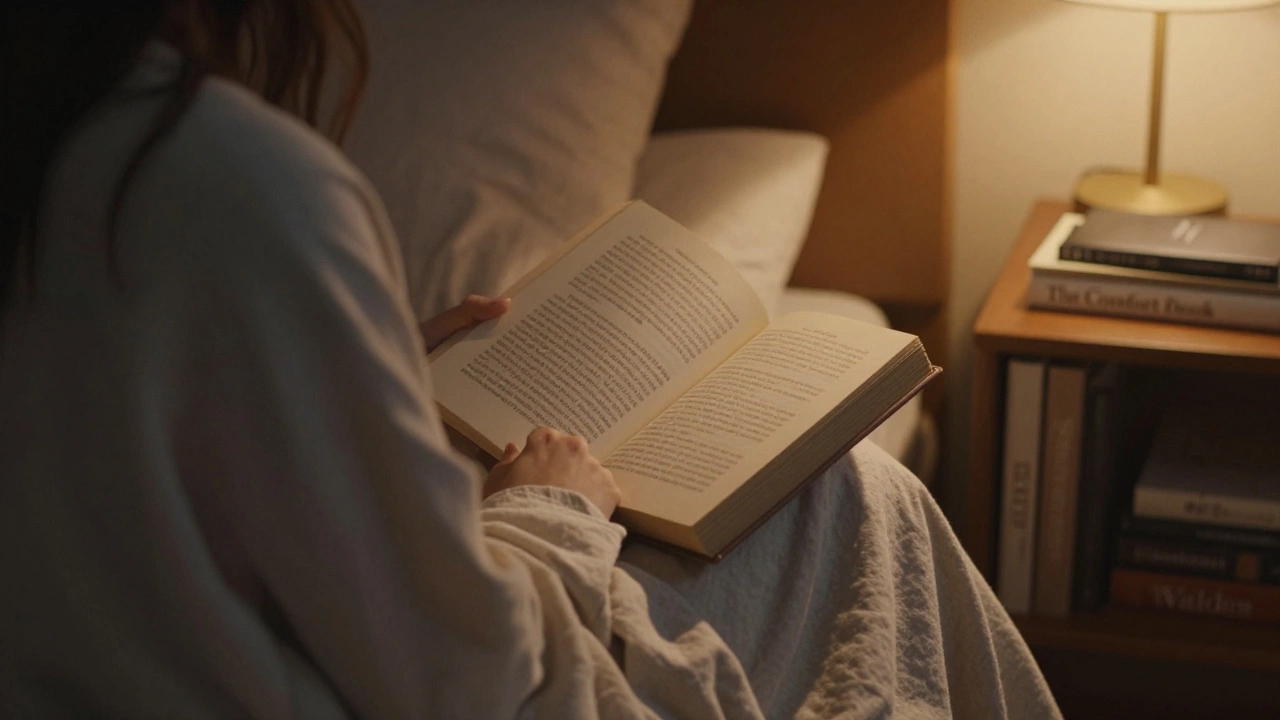
The best bedtime reading isn’t about reading more. It’s about reading differently. Set a timer for 20 minutes. Use a warm, dim lamp-not your phone’s flashlight. Keep the book in your hand, not your lap. Let the weight of the pages ground you.
Some nights, you’ll read three pages and fall asleep. That’s not failure. That’s success.
Other nights, you’ll finish a chapter. That’s fine too. But if you find yourself rereading the same paragraph because you’re too tired to follow it? That’s your brain telling you it’s time to close the book.
Sleep doesn’t come from reading more. It comes from reading less-less pressure, less urgency, less need to get something done.
The right book before bed doesn’t ask you to be better. It reminds you that you already are.
Can I read self-help books before bed?
Yes-but only certain kinds. Avoid self-help books that focus on productivity, habits, or improvement. Instead, choose ones that focus on acceptance, stillness, or letting go. Books like The Comfort Book by Matt Haig or Wherever You Go, There You Are by Jon Kabat-Zinn are safe choices. If the book makes you feel like you need to do something, put it down.
Is reading on a Kindle okay before bed?
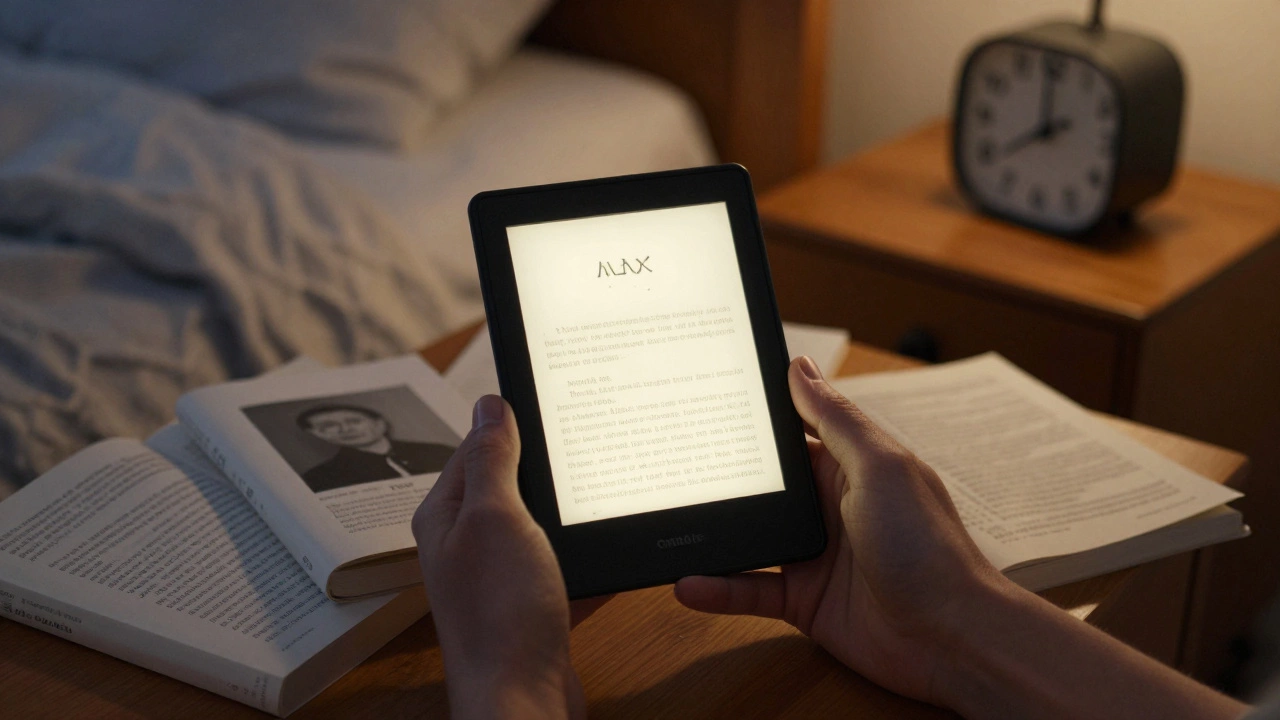
Yes, if it’s a basic Kindle without a backlight or blue light. E-ink screens are fine because they reflect light like paper, not emit it. Avoid tablets, phones, or Kindles with front lights turned on. If you’re using a Kindle with a warm light setting, keep it dim and use it only for reading-not scrolling.
How long should I read before bed?
Twenty to thirty minutes is ideal. That’s enough time to shift your brain into a calm state without turning reading into a chore. If you’re still wide awake after 30 minutes, try closing the book and just breathing for five minutes. Sometimes, the best thing you can do is stop trying to sleep.
Should I read the same book every night?
No. Your brain gets used to the rhythm of a book. Switching between two or three calming books helps keep your mind from over-focusing on plot or details. Try one for when you’re tired, another for when you’re anxious. Rotating keeps it fresh and relaxing.
What if I don’t like fiction?
You don’t need to like fiction to sleep better. Try nature writing, poetry, or quiet memoirs. Books like The Hidden Life of Trees or Lost in Translation are non-fiction but feel like a slow walk through a forest. They don’t demand your attention-they invite it gently.
Final Thought: Sleep Is a Practice, Not a Goal
You can’t force sleep. You can only create the conditions for it. Your bedtime reading is one of the most powerful tools you have-not because it’s exciting or enlightening, but because it’s quiet. It doesn’t ask you to be more. It just asks you to be.
So tonight, pick up a book that feels like a sigh. Not a pep talk. Not a checklist. Just a quiet voice saying, ‘It’s okay. You’re safe. You can rest now.’