Staple Grain Calculator
Calculate Your Dinner's Impact
See how your dinner compares to global staples. Enter your serving size to analyze calories, cost, and fiber content.
Key Insight: As noted in the article, rice dominates globally because it offers the best balance of affordability, energy density, and adaptability to local ingredients.
"For families on tight budgets, rice gives you the most calories for the least money." - From the article
Ask ten people what they eat for dinner, and you’ll get ten different answers. But if you step back and look at the big picture-across cultures, income levels, and continents-there’s one meal that shows up more than any other: rice.
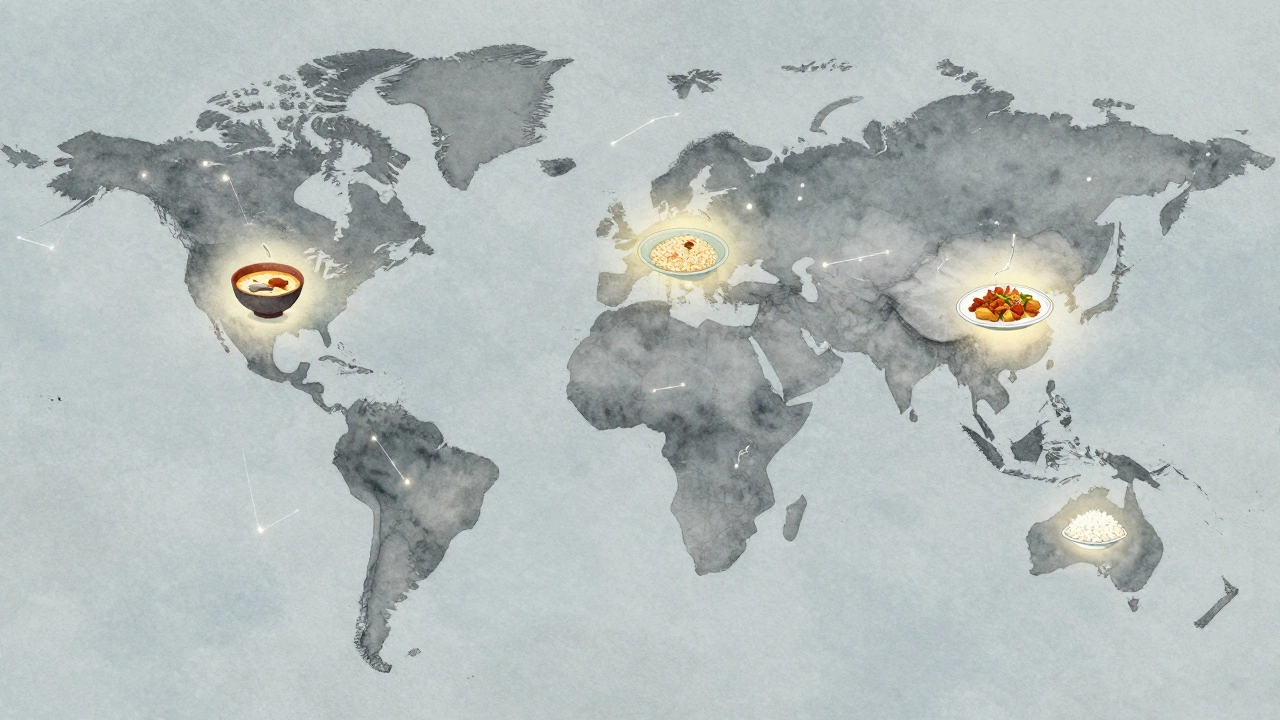
It’s not pasta. It’s not bread. It’s not burgers. Rice, in some form, is the foundation of dinner for over half the world’s population. In Asia, it’s steamed white rice with fish and vegetables. In Latin America, it’s seasoned with cumin and served alongside beans. In West Africa, it’s fried with tomatoes and peppers. Even in places where wheat dominates breakfast and lunch, rice often takes over at night.
Why rice? It’s cheap, stores well, fills you up, and pairs with almost anything. A handful of rice costs less than a dollar in most developing countries. It doesn’t spoil quickly. And when you add a bit of salt, oil, or leftover protein, it becomes a complete meal. That’s why it’s not just common-it’s practical.
What Does a Typical Dinner Look Like in Different Places?
Let’s break it down by region. In Japan, dinner often means a small bowl of rice, miso soup, grilled fish, and pickled vegetables. In India, it’s rice or roti with dal, curry, and yogurt. In Mexico, it’s rice and beans with a side of tortillas and salsa. In Italy, pasta might be the star-but it’s usually a light portion, followed by a small salad and maybe a piece of fruit.
In the U.S., dinner is more varied. Chicken, pasta, or tacos are popular, but a 2024 USDA survey found that 41% of households serve rice at least once a week. That’s more than quinoa, farro, or barley. And when you add potatoes-another staple that’s eaten in over 60% of American homes-the picture becomes clearer: simple, starchy carbs form the base of most dinners.
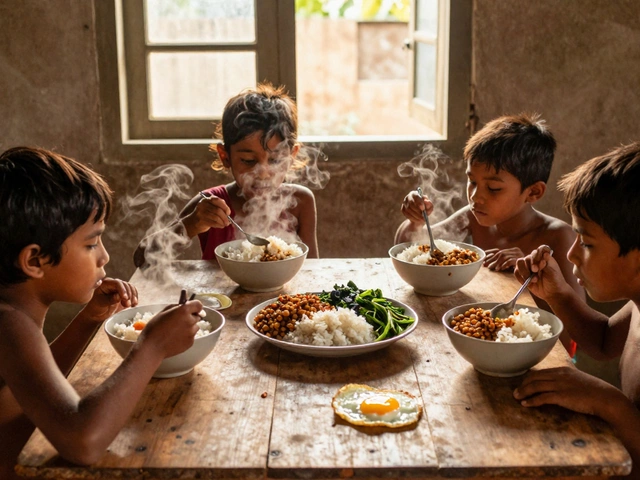
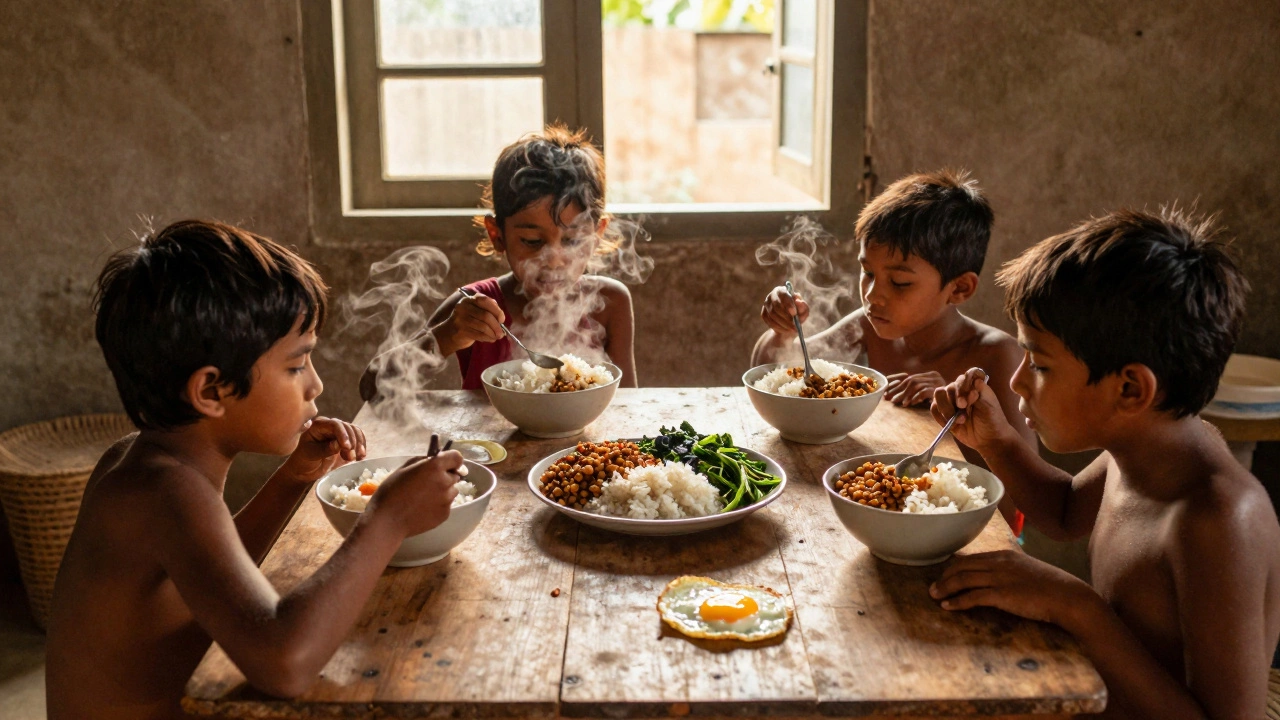
Even in places where meat is expensive or scarce, like rural Bangladesh or parts of Kenya, dinner still centers around carbs. In Bangladesh, it’s rice with lentils and greens. In Kenya, it’s ugali (cornmeal porridge) with sukuma wiki (collard greens). The protein? Often just a spoonful of beans or a fried egg.
Why Rice Dominates Over Other Foods
Let’s compare rice to other common dinner staples. Bread needs an oven, yeast, and time to rise. Pasta requires wheat, which doesn’t grow everywhere. Potatoes need cool climates and good soil. Rice, on the other hand, grows in flooded fields, on hillsides, even in urban containers. It thrives in tropical and subtropical zones where most of the world’s population lives.
It’s also energy-dense. One cup of cooked white rice has about 200 calories. That’s more than a cup of broccoli (30 calories) or even a cup of lentils (230 calories, but with more fiber and slower digestion). For families on tight budgets, rice gives you the most calories for the least money.
And culturally, it’s deeply tied to evening meals. In many Asian languages, the word for “eat” and “rice” are the same. In Mandarin, “吃饭” (chīfàn) literally means “eat rice.” In Thai, “ข้าว” (khao) means both rice and meal. This isn’t coincidence-it’s a reflection of how central rice is to daily life.
What About Healthier Options?
If you’re looking for a healthier dinner, rice still fits-but the type matters. Brown rice has more fiber, magnesium, and antioxidants than white rice. In countries like Japan and Korea, brown rice is common in home cooking, even if it’s less popular in restaurants. In the U.S., brown rice sales rose 18% between 2020 and 2024, according to the Whole Grains Council.
But health isn’t just about the grain. It’s about what’s on top of it. A plate of white rice with fried chicken and gravy isn’t healthier than brown rice with steamed salmon and broccoli. The problem isn’t rice-it’s the way we dress it up.
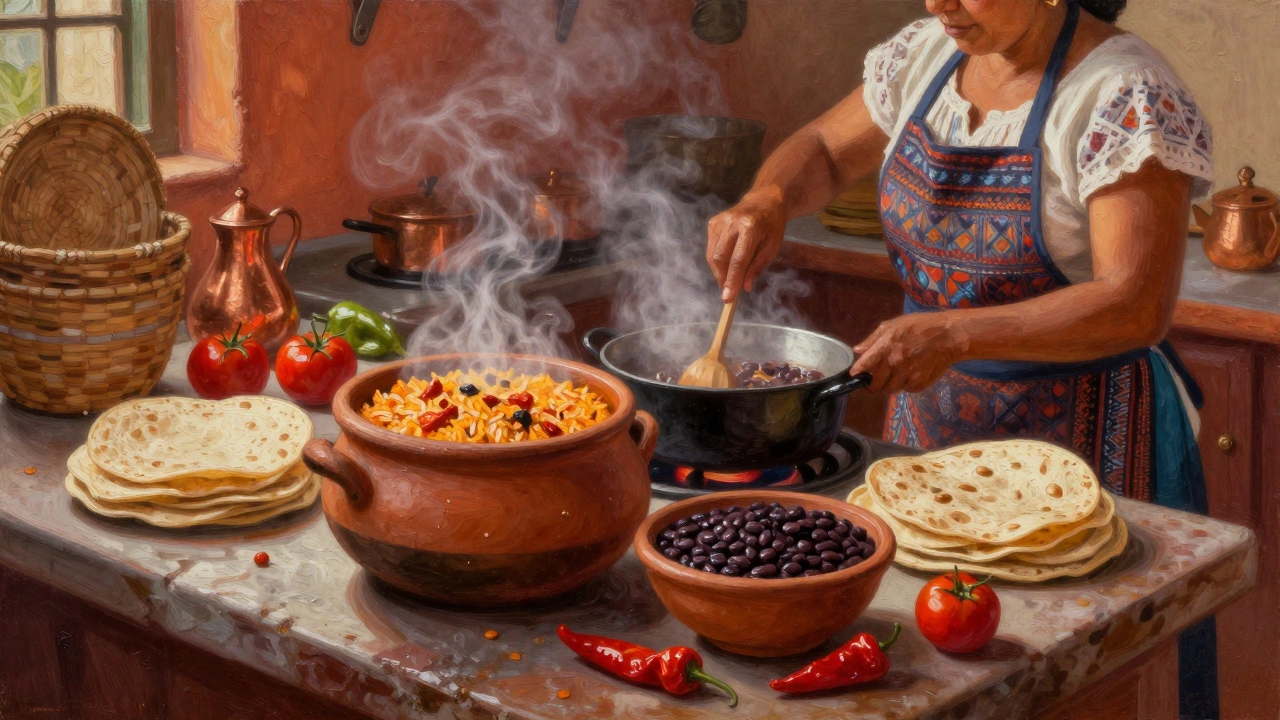
One of the simplest, most nutritious dinners you can make is: brown rice, black beans, sautéed spinach, and a squeeze of lime. That’s what millions of people in Central America eat every night. It’s cheap, filling, and packed with protein, fiber, iron, and vitamins.
The Role of Leftovers and Simplicity
Most people don’t cook dinner from scratch every night. They use leftovers. And leftovers often mean rice. Leftover chicken? Toss it with rice. Stale bread? Turn it into croutons for a rice bowl. A bit of cooked veg? Mix it in.
In New Zealand, where I live, many families serve rice as a side to roast chicken or stir-fry. But if you look at households with limited income-especially those with kids-you’ll see rice as the main event. It’s the blank canvas that turns scraps into a meal.
That’s why the most common dinner isn’t fancy. It’s not Instagram-worthy. It’s not a gourmet dish. It’s the thing that fills the plate, warms the belly, and doesn’t break the bank. It’s the food that survives economic downturns, supply chain issues, and time crunches.
What You Can Learn From the World’s Most Common Dinner
If you’re trying to eat better, stop chasing trends. Start with the basics. Build your dinner around a starchy base-rice, potatoes, oats, or whole grain pasta. Then add a protein: beans, eggs, tofu, fish, or a small piece of meat. Finally, throw in some vegetables. That’s it.
You don’t need quinoa, kale, or almond milk. You need something that fills you up, costs less than $2 a serving, and doesn’t require a 30-minute prep time. That’s what the world already knows.
Try this tonight: Cook a cup of brown rice. Add a can of rinsed black beans. Sauté a handful of chopped cabbage with garlic and a splash of soy sauce. Top with a fried egg. That’s a complete, balanced, affordable dinner. It’s not new. But it’s been working for centuries.
What’s Missing From Your Dinner?
Most people don’t eat enough fiber. The average adult gets less than half the recommended 25-38 grams per day. Rice-especially white rice-is low in fiber. But swapping even half your white rice for brown rice, barley, or bulgur can double your intake.
Also, many dinners lack variety. If you eat the same thing every night-say, pasta with tomato sauce-you’re missing out on nutrients. Rotating your base grain helps. Try rice one night, quinoa the next, sweet potato the next. It’s simple, and it makes a difference.
And don’t forget the sauce. A little vinegar, lemon juice, or fermented food like kimchi or sauerkraut adds flavor and supports gut health. You don’t need a fancy dressing. Just a splash.
The most common dinner isn’t perfect. But it’s resilient. It’s adaptable. And it’s been feeding humanity for thousands of years. You don’t need to reinvent it. You just need to make it better.