Mindfulness Icebreaker Selector
Not sure which mindfulness icebreaker fits your meeting? Answer three quick questions to get a tailored recommendation with instructions.
Recommended Activity
Best FitEstimated Time:
--
Key Benefit:
--
Best For:
--
Instructions
You know that feeling when you walk into a room full of people-maybe it’s a corporate workshop, a yoga studio, or just a family gathering-and the air is thick with tension? Everyone is mentally rehearsing their next sentence, checking their phones, or worrying about what they left on the stove. It’s exhausting. Traditional icebreaker activities often make this worse by forcing small talk before anyone has actually settled in. But there is a better way. By using specific Mindfulness Icebreakers, you can shift the energy from anxious performance to genuine presence.
These aren't your typical "two truths and a lie" games. They are structured exercises designed to anchor participants in the here and now. Whether you are facilitating a team meeting in Wellington or leading a retreat, these techniques help lower cortisol levels and build trust faster than standard introductions ever could. Let’s look at how to do them right.
Why Standard Icebreakers Fail Mindful Groups
Most icebreakers rely on cognitive recall. You ask someone to remember a fun fact or a childhood memory. This pulls the brain out of the present moment and into the past or future. For groups focused on mental health or high-stress environments, this is counterproductive. You want to activate the parasympathetic nervous system, not the analytical mind.
Mindfulness is defined as the practice of maintaining a nonjudgmental state of heightened or complete awareness of one's thoughts, emotions, or experiences on a moment-to-moment basis. When you combine this definition with social interaction, you get a tool that reduces social anxiety. Instead of performing, participants observe. This subtle shift changes the dynamic entirely. People feel safer because they aren't being judged on their wit; they are being welcomed into a shared experience of calm.
The Body Scan Introduction
This is my go-to for professional settings where people might be resistant to "woo-woo" practices. It feels scientific and grounded. The goal is simple: reconnect with physical sensations before speaking.
Ask everyone to sit comfortably. Close eyes if comfortable. Guide them through a quick scan:
- Notice the weight of your feet on the floor.
- Feel the contact point between your back and the chair.
- Take three deep breaths, focusing only on the air entering and leaving the nostrils.
Once the room is quiet, ask each person to introduce themselves by stating their name and one physical sensation they are noticing right now. Not an emotion, but a sensation. Examples include "I feel warmth in my hands," or "I notice a tingling in my shoulders." This forces the brain to focus on immediate sensory input rather than social performance. It creates a collective pause that lowers the group's baseline stress level immediately.
The Five Senses Grounding Circle
If you need something more interactive, try the Five Senses method. This works exceptionally well for creative teams or educational workshops where engagement needs to be high but low-pressure.
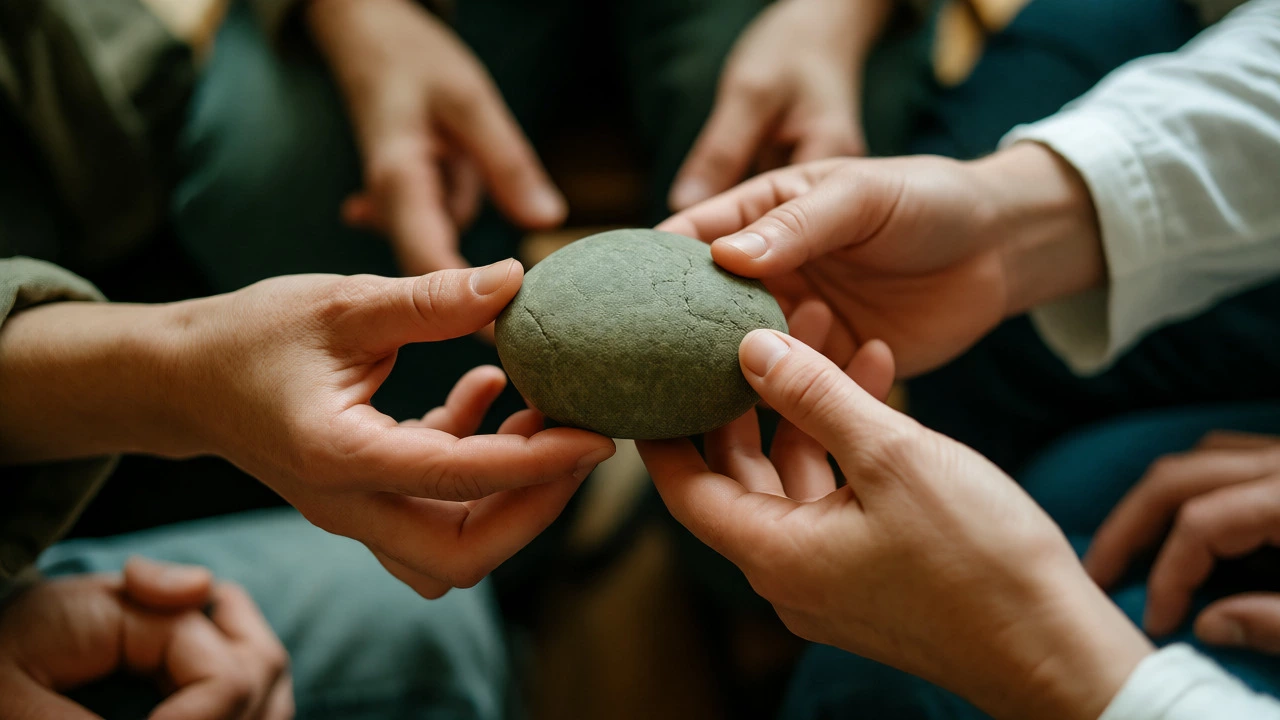
Pass around a random object-a stone, a pen, a leaf. Whoever holds the object must identify one thing they can see, hear, smell, touch, or taste in the current environment. Then they pass it on. No judgment, no right answers. Just observation.
Here is why this works: Sensory Awareness acts as an anchor. It prevents the mind from wandering into rumination about past mistakes or future anxieties. By focusing on external stimuli, participants disengage from internal chatter. In a recent session I led in Auckland, this activity turned a tense merger meeting into a collaborative space within ten minutes. People started laughing at the absurdity of trying to smell the fluorescent lights, breaking the ice naturally.
Comparison of Common Mindfulness Icebreakers
Not every group is the same. Choosing the wrong activity can create awkwardness instead of connection. Here is a breakdown to help you decide which fits your scenario best.
| Activity Name | Best For | Time Required | Key Benefit | Potential Pitfall |
|---|---|---|---|---|
| Body Scan Intro | Corporate meetings, skeptical groups | 5-10 mins | Lowers physiological arousal | Can feel too slow for fast-paced teams |
| Five Senses Circle | Creative workshops, students | 10-15 mins | Enhances observational skills | Requires careful facilitation to avoid repetition |
| Breathing Buddy | Small groups (pairs), intimate settings | 3-5 mins | Builds immediate rapport | Can be uncomfortable for strangers |
| Walking Meditation | Large conferences, outdoor events | 15-20 mins | Combines movement with stillness | Logistically difficult in small rooms |
Facilitating Without Being Awkward
The biggest fear facilitators have is silence. In mindfulness, silence is not empty; it is full of potential. Do not rush to fill gaps. If someone takes ten seconds to find the right word for their sensation, let them. That pause is part of the practice.
Use clear, inviting language. Avoid commands like "You must relax." Instead, use invitations: "If you’d like, you can close your eyes," or "Notice what happens when..." This respects autonomy, which is crucial for psychological safety. When people feel safe, they open up. When they open up, the Group Cohesion strengthens significantly.
Also, model the behavior yourself. If you seem rushed or anxious, the group will mirror that energy. Take your time. Speak slowly. Your pace sets the container for their experience.

Tailoring for Remote Teams
Doing mindfulness icebreakers over Zoom or Teams requires adjustments. You lose the shared physical space, so you must compensate with auditory cues. Background noise becomes part of the exercise. Ask participants to listen to the sounds in their own room-the hum of a computer, traffic outside, a clock ticking. Share those sounds briefly.
This validates their individual environments while connecting them through a shared human experience of listening. It turns the isolation of remote work into a point of connection. Many remote workers report feeling more seen after these sessions because the facilitator acknowledged their reality, not just their job title.
Next Steps and Troubleshooting
If an activity falls flat, don’t panic. Sometimes the group isn’t ready for deep introspection yet. Pivot to something simpler, like a single mindful breath together. Consistency matters more than complexity. Try integrating these micro-practices regularly rather than saving them for special occasions.
Start small. Pick one technique from this guide and use it in your next meeting. Observe how the energy shifts. You’ll likely find that the conversation afterwards flows more naturally, with less interruption and more active listening. That is the real payoff of mindfulness-it doesn’t just start the meeting; it transforms how people interact throughout the entire day.
How long should a mindfulness icebreaker last?
Ideally, keep it between 5 and 15 minutes. Anything shorter may not allow participants to settle, while anything longer can cause restlessness, especially in corporate settings. Start with 5 minutes and extend based on group comfort.
What if participants refuse to close their eyes?
Always offer alternatives. Suggest lowering their gaze to a spot on the floor or keeping eyes softly open. Never force eye closure, as it can trigger anxiety in some individuals. The goal is focus, not a specific posture.
Are mindfulness icebreakers suitable for children?
Yes, but they need to be playful. Use animals or nature themes. For example, "Breathe like a bear waking up" or "Listen like an owl." Keep instructions short and visual. Children respond well to imaginative framing of sensory exercises.
How do I handle laughter during serious moments?
Embrace it. Nervous laughter is common when people first try mindfulness. Acknowledge it warmly without judgment. Say something like, "It’s okay to laugh; notice the feeling behind it." This maintains the safe container while validating their reaction.
Can I use these activities in large groups?
For large groups (over 20 people), avoid round-robin sharing as it takes too long. Use paired breakouts for the sharing portion, then reconvene. Or, use a silent acknowledgment method where participants raise a hand or use a digital poll to indicate completion.