Personalized Meal Timing Planner
Select your goal and framework, then click "Generate My Schedule" to see your personalized plan.
Most people treat meal times as a rigid clockwork routine, but your body doesn't actually care about the hour on the wall. It cares about when you last ate and how much energy you have left to burn. The ideal meal schedule isn't a one-size-fits-all rule; it's a flexible framework that aligns with your circadian rhythm, daily activity levels, and specific health goals. If you've been struggling with afternoon crashes or late-night snacking, the problem likely isn't what you're eating-it's when you're eating it.
Why Timing Matters More Than You Think
Your digestive system operates on a biological timer known as the circadian rhythm. This internal clock regulates hormone release, metabolism, and blood sugar stability throughout the day. When you eat in sync with this rhythm, your body processes nutrients more efficiently. For example, insulin sensitivity is naturally higher in the morning and early afternoon, meaning your body handles carbohydrates better during these windows than at night. Conversely, cortisol levels peak in the early hours, which can suppress appetite for some people but increase alertness for others.
Ignoring these biological cues often leads to metabolic confusion. Eating a heavy meal right before bed can disrupt sleep quality because digestion requires significant energy. On the other hand, skipping meals can cause blood sugar dips, leading to irritability and fatigue. The goal isn't to become a slave to the clock, but to use time as a guide for optimizing energy and recovery.
The Three Main Scheduling Frameworks
There are three primary ways to structure your daily intake, each with distinct pros and cons depending on your lifestyle.
- Traditional Tri-Meal Plan: Breakfast, lunch, and dinner. This is the most common approach, typically spaced 4-5 hours apart. It suits individuals with steady energy needs and those who prefer regular social dining experiences.
- Intermittent Fasting (IF): Involves cycling between periods of eating and fasting. Popular methods include 16:8 (fasting for 16 hours, eating within an 8-hour window) or 5:2 (eating normally five days a week and restricting calories two days). This can simplify decision-making and may aid weight management for some.
- Grazing/Snacking Approach: Involves smaller, more frequent meals every 2-3 hours. This is often recommended for athletes or individuals with high caloric needs who struggle to consume large amounts in single sittings.
Neither method is inherently superior. The best choice depends on your job, training schedule, and personal preference. A software developer working from home might thrive on a simple 16:8 window to reduce kitchen interruptions, while a construction worker burning 3,000+ calories a day might need four substantial meals to maintain strength.

Optimizing Your Daily Timeline
Regardless of which framework you choose, certain time slots offer specific advantages for nutrient absorption and performance.
| Time Slot | Physiological State | Recommended Focus |
|---|---|---|
| Morning (7 AM - 10 AM) | High Cortisol, High Insulin Sensitivity | Complex carbs, protein, healthy fats to fuel brain function |
| Midday (12 PM - 2 PM) | Peak Metabolic Activity | Balanced macronutrients, fiber-rich vegetables to prevent post-lunch slump |
| Afternoon (4 PM - 6 PM) | Natural Energy Dip | Light protein snack if needed; avoid heavy sugars |
| Evening (7 PM - 9 PM) | Winding Down, Lower Metabolism | Protein and vegetables; limit high-fat or spicy foods to aid sleep |
Notice the emphasis on protein in the evening. Consuming 30-40 grams of protein before bed has been shown to support muscle repair overnight without significantly disrupting sleep, provided the meal isn't too bulky. Meanwhile, loading up on refined carbs in the morning can lead to a sharp energy spike followed by a crash by mid-morning, making focus difficult.
Meal Prep Strategies for Consistency
Knowing *when* to eat is useless if you don't have *what* to eat ready. Meal prepping is the bridge between intention and execution. However, effective prep isn't just about cooking in bulk; it's about structuring your ingredients to fit your chosen schedule.
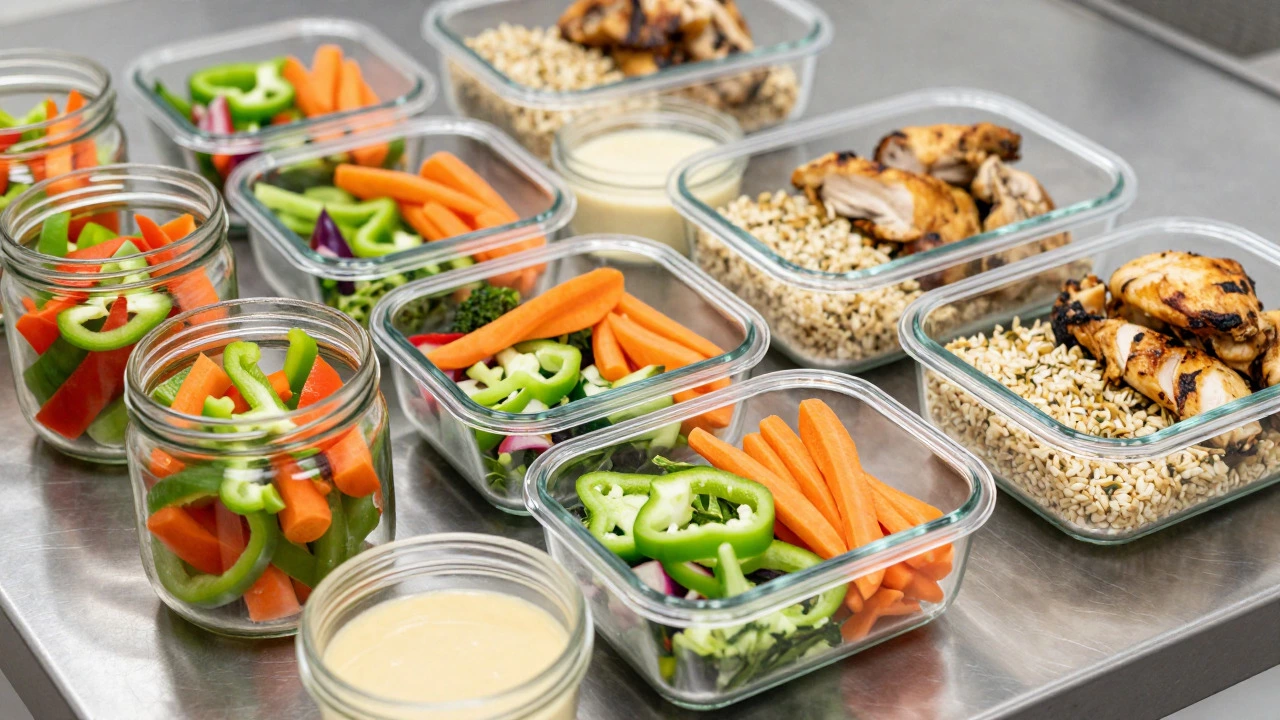
- Batch Cook Proteins is the foundation. Roast chicken thighs, bake salmon, or cook lentils once a week. These proteins keep well in the fridge for 3-4 days and can be mixed into salads, wraps, or grain bowls.
- Pre-Wash and Chop Vegetables removes the biggest barrier to healthy snacking. Having pre-cut peppers, carrots, and cherry tomatoes in clear containers makes it easy to grab a quick snack during your afternoon dip without reaching for chips.
- Use Separate Containers for Different Meals rather than one giant pot. Label them with breakfast, lunch, and dinner portions. This prevents overeating and ensures you get the right balance of macros for each time slot.
- Prepare Sauces Separately to keep textures crisp. Tossing dressing onto greens ahead of time leads to soggy salads. Keeping dressings in small jars allows you to add them fresh right before eating.
This approach saves time and reduces decision fatigue. When hunger strikes, you don't have to think; you just open the fridge and eat what was planned for that specific window.
Adjusting for Specific Goals
Your ideal schedule shifts slightly depending on whether you are trying to lose weight, build muscle, or simply maintain health.
For Weight Loss: Compressing your eating window (like 14:10 or 16:8) can help create a natural calorie deficit without strict counting. Skipping breakfast is safe for most healthy adults and may even improve insulin sensitivity. However, if you tend to overeat at dinner after skipping breakfast, this strategy may backfire. Listen to your hunger cues.
For Muscle Gain: Frequent protein distribution is key. Aim for 20-40 grams of protein per meal, spread across 3-5 feedings. This maximizes muscle protein synthesis. An extra snack around 4 PM can be beneficial here, especially if you train in the evening.
For General Health: Consistency beats perfection. Picking a sustainable pattern-whether it's three square meals or two larger ones-and sticking to it for weeks builds better habits than constantly switching strategies.
Common Mistakes to Avoid
Even with the best plan, small errors can derail progress. One major mistake is ignoring hydration. Thirst is often mistaken for hunger, leading to unnecessary snacking. Drink a glass of water before any meal or snack to gauge if you're truly hungry.
Another pitfall is rigid adherence. Life happens. If you miss a meal window, don't panic. Eat when you can, and resume your normal schedule at the next opportunity. Stressing over a missed lunch increases cortisol, which can actually hinder fat loss and recovery.
Finally, avoid relying solely on processed "meal replacement