The 5 Core Meals Builder
Struggling with what to put on your plate? Use this builder to visualize how to combine the 5 Core Meal categories for a balanced diet. Select options from each category to see your perfect plate.
1. Choose Your Components
Your Balanced Plate
Select ingredients above to visualize your meal balance.
You’re standing in front of your fridge at 6 PM, staring blankly at leftover spinach and a sad-looking apple. The question isn’t just "what’s for dinner?" It’s deeper: "How do I eat well without losing my mind?" We’ve all been there, drowning in conflicting advice about keto, paleo, or intermittent fasting. But what if the answer was simpler? What if you could strip away the noise and focus on just five foundational types of food that keep your body running smoothly?
This is where the concept of Core Meals comes in. These aren't specific recipes like "Spaghetti Bolognese." Instead, they are five essential categories of nutrition that form the backbone of any healthy diet. Think of them as the pillars holding up your energy levels, immune system, and long-term health. Once you understand these five groups, meal planning stops being a puzzle and starts becoming a simple assembly process.
The Protein Pillar: Building Blocks for Your Body
Protein is often the first thing people think of when they hear "healthy eating," but many get it wrong. They either eat too little or rely solely on processed shakes. In reality, protein is the structural material for your muscles, enzymes, and hormones. Without enough of it, you feel tired, hungry an hour after eating, and struggle to recover from workouts.
You don’t need to eat steak every night. Variety is key here. Lean meats like chicken breast and turkey offer high-quality amino acids with lower saturated fat. Fish, particularly oily varieties like salmon or mackerel, provides omega-3 fatty acids which fight inflammation. If you’re plant-based, lentils, chickpeas, and tofu are powerhouses. A good rule of thumb? Aim for a portion roughly the size of your palm at each main meal. This ensures you hit your daily requirements without overcomplicating things.
Complex Carbohydrates: The Steady Energy Source
Fear not, carbs! For years, we were told to avoid them, leading to low-energy crashes and brain fog. The trick isn’t eliminating carbohydrates; it’s choosing Complex Carbohydrates. Unlike white bread or sugary snacks that spike your blood sugar and drop it just as fast, complex carbs digest slowly. This provides a steady stream of glucose to your brain and muscles throughout the day.
Look for whole grains like oats, quinoa, brown rice, and barley. Sweet potatoes and legumes also fall into this category. Why does this matter? Because stable blood sugar means stable mood and sustained focus. If you find yourself reaching for coffee at 3 PM, check your lunch. Did it have enough fiber-rich carbs? Swapping white pasta for whole-wheat versions or adding a side of beans can make a massive difference in how you feel by evening.
Healthy Fats: More Than Just Calories
Many people still treat fat as the enemy, but Healthy Fats are crucial for nutrient absorption and brain health. You literally cannot absorb vitamins A, D, E, and K without dietary fat. Plus, fats keep you satiated longer than proteins or carbs alone. Ever eaten a salad with no dressing and felt hungry again in twenty minutes? That’s the missing fat factor.
Focus on monounsaturated and polyunsaturated fats. Avocados, nuts (like almonds and walnuts), seeds (chia, flax, pumpkin), and olive oil are top-tier sources. Fatty fish mentioned earlier also count here. Avoid trans fats found in many fried foods and baked goods. A tablespoon of olive oil drizzled over roasted veggies or a handful of walnuts as a snack adds flavor and functional benefits without blowing your calorie budget.
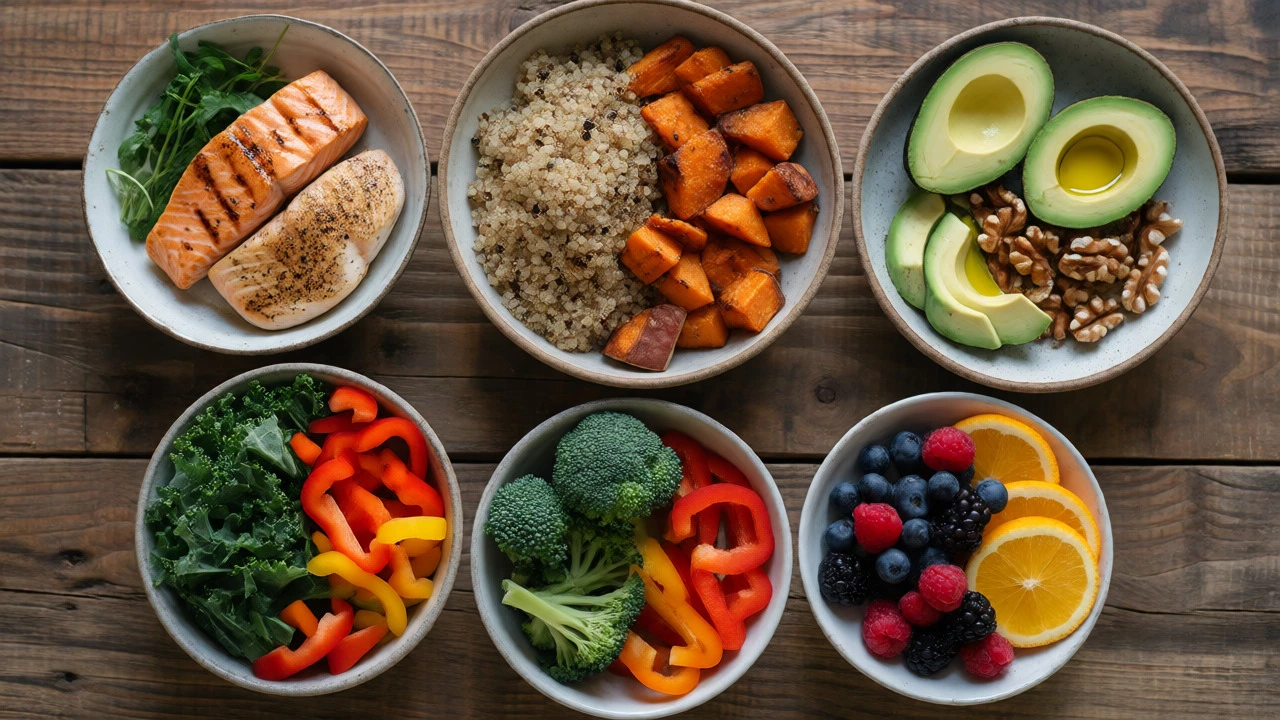
Vegetables and Fiber: The Gut Health Heroes
If there’s one area most of us fail in, it’s Vegetable Intake. We know we should eat more, but "eat your greens" feels vague. Vegetables provide fiber, which feeds the beneficial bacteria in your gut. Emerging research links gut health directly to mental health, immunity, and weight management. Fiber also physically slows digestion, preventing those dangerous blood sugar spikes.
Aim for color diversity. Dark leafy greens like kale and spinach are rich in iron and calcium. Cruciferous vegetables like broccoli and cauliflower contain compounds that support detoxification. Bell peppers add vitamin C. Try to fill half your plate with non-starchy vegetables at lunch and dinner. If raw salads feel unappealing, try roasting them. Roasted carrots, zucchini, or Brussels sprouts develop natural sweetness and become incredibly satisfying.
Fruit: Nature’s Candy with Benefits
While fruit contains natural sugars, it’s packaged with fiber, water, and antioxidants. Fruit satisfies sweet cravings without the crash associated with candy or soda. Berries, in particular, are low-glycemic and packed with antioxidants that combat oxidative stress caused by pollution and UV exposure.
Don’t be afraid of whole fruits. Juicing removes the fiber, turning fruit into a sugar delivery system. Stick to whole apples, bananas, oranges, or berries. If you’re watching your sugar intake, prioritize berries and citrus over tropical fruits like mangoes or grapes, which have higher sugar concentrations per serving. One piece of fruit as a dessert or snack is usually sufficient to curb cravings while delivering essential micronutrients.
| Component | Primary Function | Best Sources | Daily Goal Tip |
|---|---|---|---|
| Protein | Muscle repair, satiety | Chicken, fish, tofu, eggs | Palm-sized portion per meal |
| Complex Carbs | Sustained energy | Oats, quinoa, sweet potato | Cupped-hand portion |
| Healthy Fats | Nutrient absorption, brain health | Avocado, olive oil, nuts | Thumb-sized portion |
| Vegetables | Gut health, micronutrients | Spinach, broccoli, peppers | Fill half the plate |
| Fruit | Antioxidants, sweet craving | Berries, apples, oranges | 1-2 servings daily |
Putting It Together: The Plate Method
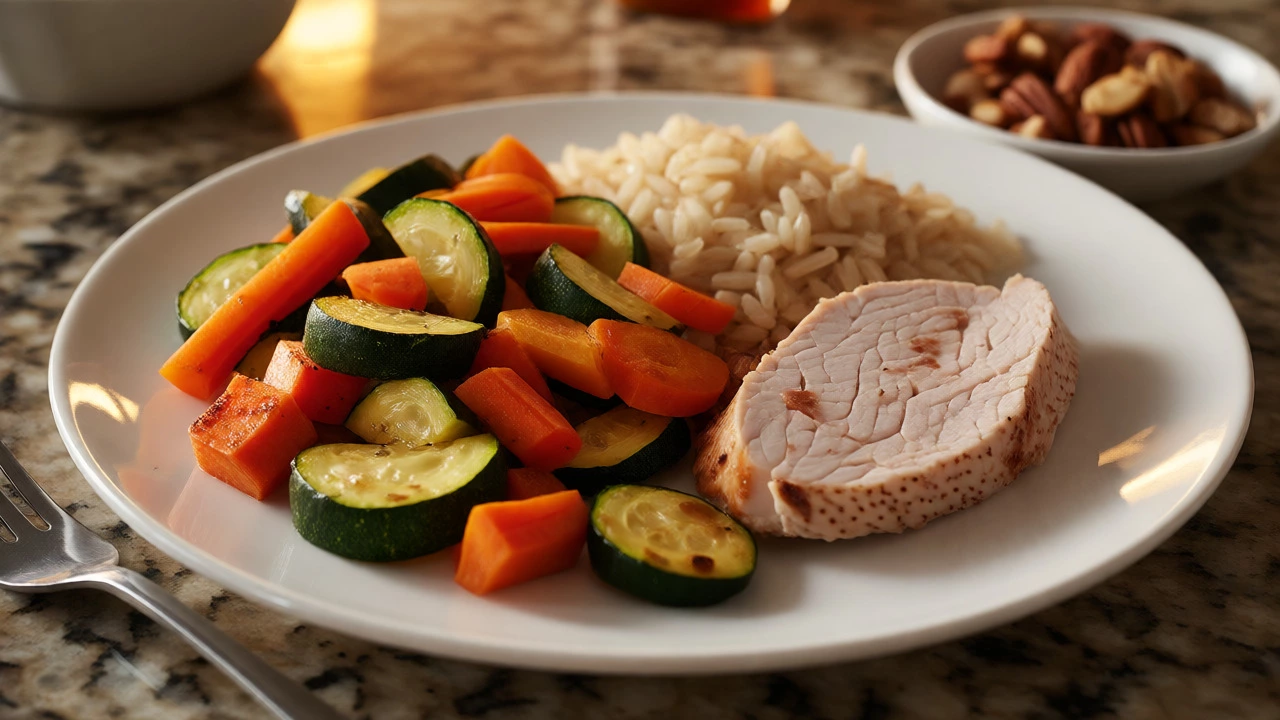
Knowing the five core components is great, but how do you build a meal quickly? Enter the Plate Method. It’s a visual guide that requires zero counting or weighing. Start with a standard 9-inch dinner plate. Fill half of it with non-starchy vegetables. Add a quarter portion of lean protein. Fill the remaining quarter with complex carbohydrates. Finally, add a small amount of healthy fat-maybe cook the veggies in olive oil or sprinkle nuts on top.
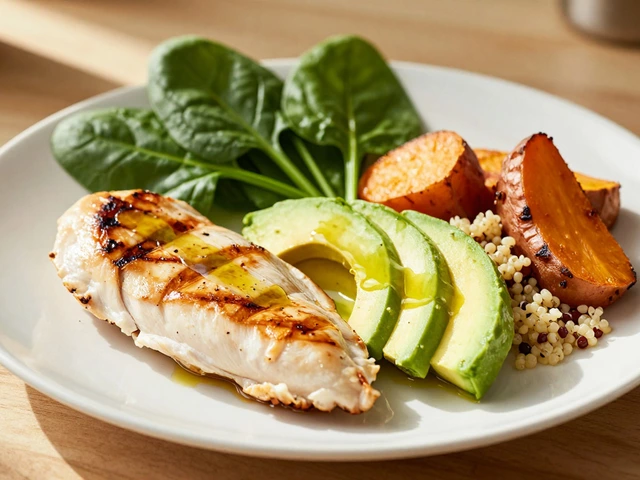
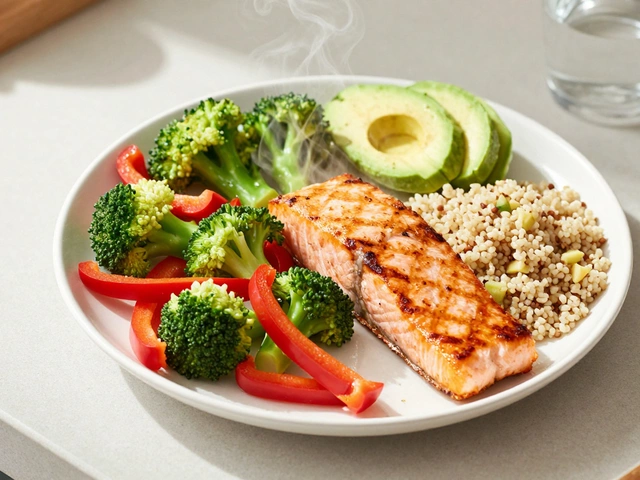
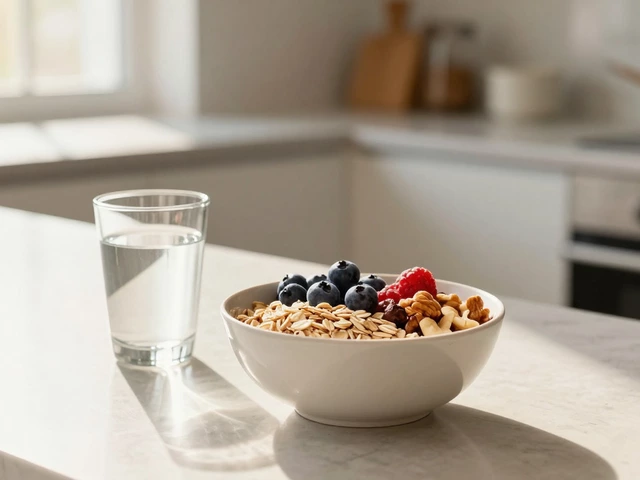
This structure automatically balances macronutrients. You’re getting fiber, protein, and slow-burning carbs in one go. It works for breakfast (eggs, avocado, spinach, oatmeal), lunch (chicken, salad, quinoa, olive oil), and dinner (salmon, roasted veg, sweet potato). Consistency beats perfection. If you miss a component occasionally, it’s fine. The goal is to make these five elements present in most of your meals.
Common Pitfalls to Avoid
Even with good intentions, mistakes happen. One common trap is hiding unhealthy ingredients in "healthy" dishes. A salad becomes a calorie bomb when drenched in creamy dressing loaded with sugar and soybean oil. Another pitfall is neglecting hydration. Sometimes thirst masquerades as hunger. Drink water before meals to help distinguish between the two.
Also, beware of ultra-processed "health" foods. Protein bars, gluten-free cookies, and flavored yogurts often contain additives that undermine their nutritional value. Read labels. If you can’t pronounce the ingredients, consider skipping it. Stick to whole foods whenever possible. They are generally more nutrient-dense and less likely to cause digestive issues.
Do I need to eat all 5 core meals in every single sitting?
Not necessarily. While aiming for balance at each meal is ideal, some people prefer larger lunches and lighter dinners. The key is hitting your total daily needs across all five categories. However, including protein and fiber in every meal helps stabilize blood sugar and keeps you full longer.
Can I get enough protein on a vegan diet using these core meals?
Absolutely. Plant-based proteins like lentils, chickpeas, black beans, tofu, tempeh, and seitan are excellent sources. Combining different plant proteins throughout the day ensures you get all essential amino acids. Nutritional yeast and fortified plant milks can also help cover gaps.
Is fruit too sugary for weight loss?
Whole fruit is generally safe and beneficial for weight loss due to its fiber content, which slows sugar absorption. Limit fruit juices and dried fruits, which concentrate sugar. Berries, melons, and citrus fruits are lower in calories and high in volume, making them great choices for weight management.
What if I hate cooking? How do I stick to this?
Embrace convenience. Rotisserie chickens, bagged salads, frozen vegetable mixes, canned beans, and pre-cooked grains are lifesavers. Assemble meals rather than cooking from scratch. A bowl of pre-cooked quinoa, canned tuna, and fresh spinach with olive oil takes five minutes and fits the core model perfectly.
How much water should I drink alongside these meals?
There’s no one-size-fits-all number, but aiming for 8-10 cups a day is a good baseline. Drinking a glass of water before meals can aid digestion and prevent overeating. Listen to your body’s thirst cues and monitor urine color-pale yellow indicates good hydration.