
The 50/50 Style Balancer
Adjust the slider to see how different ratios of Formal vs. Casual elements affect your overall vibe. Then, explore curated pairings that fit your selected balance.
Vibe Analysis
Balanced Harmony. You are aiming for a versatile look that works in most social settings.
You’ve probably scrolled past a dozen "rules" that promise to fix your wardrobe overnight. Some are rigid, some are vague, and most just make you feel like you’re doing it wrong. But there’s one guideline that actually sticks because it’s not about restriction-it’s about rhythm. It’s called the 50/50 rule a styling principle suggesting outfits should balance two opposing elements, such as casual with formal or masculine with feminine, to create visual harmony. If you’ve ever felt like your outfit was "too much" or "not enough," this rule is likely the missing piece of the puzzle.
Think about the last time you looked great. Was everything perfectly matched? Probably not. Usually, there was a tension between pieces-a leather jacket over a floral dress, or sneakers with a blazer. That tension is where the magic lives. The 50/50 rule isn’t a mathematical equation you solve with a calculator; it’s a gut check for equilibrium. It helps you mix high-end with low-street, structured with flowy, and serious with playful without looking like you tried too hard.
Understanding the Core Concept
At its heart, the 50/50 rule addresses the human eye’s desire for contrast. When an outfit is entirely uniform-say, head-to-toe denim or a monochrome suit in identical fabrics-it can feel flat or costume-like. By splitting your look into two distinct halves, you create interest. This doesn’t mean literally cutting your body in half. It means balancing two dominant energies within one ensemble.
For example, if you wear a tailored, structured blazer (the formal half), pairing it with relaxed, distressed jeans (the casual half) creates a perfect 50/50 split. Neither side overpowers the other. The blazer keeps things sharp, while the jeans keep things approachable. This balance makes the outfit feel intentional rather than accidental. It works because it mimics how we naturally exist: we’re professional yet relaxed, polished yet practical.
| Element A (Formal/Structured) | Element B (Casual/Soft) | Resulting Vibe |
|---|---|---|
| Tailored Blazer | Graphic Tee & Jeans | Effortless Chic |
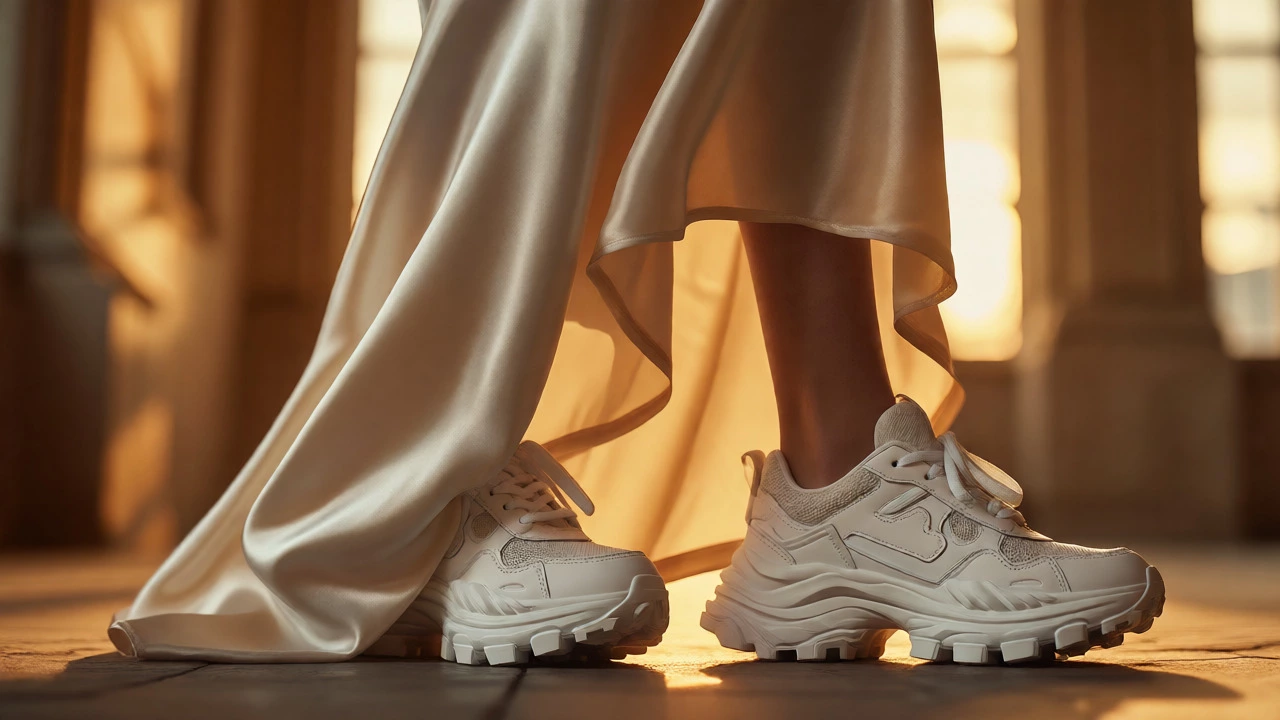
| Silk Slip Dress | Chunky Sneakers | Modern Edge |
| High-Waist Trousers | Cropped Hoodie | Streetwear Luxe |
| Leather Jacket | Flowy Maxi Skirt | Feminine Rebel |
Why Uniformity Often Fails
We often mistake coordination for matching. There’s a difference. Coordination means things work together despite their differences; matching means they are the same. When you match everything, you risk looking like a mannequin. Mannequins don’t have personalities, and neither do fully matched outfits. They lack the friction that makes people look twice.
Consider the classic business casual look. If you wear a crisp white shirt, grey trousers, and black loafers, it’s safe. But add a colorful scarf or swap the loafers for clean white sneakers, and suddenly it’s a statement. You’ve introduced a second element that contrasts with the first. This is the 50/50 rule in action. It prevents your outfit from becoming background noise. In a world saturated with visual information, standing out requires a bit of controlled chaos.
This approach also solves the "what do I wear today?" paralysis. Instead of agonizing over whether to be comfortable or stylish, you realize you can be both. You stop choosing sides and start curating a blend. This psychological shift is powerful. It frees you from the pressure of perfectionism and invites experimentation.
Applying the Rule to Your Wardrobe
So, how do you actually use this? Start by auditing your closet for opposites. Most wardrobes already contain these pairs; you just haven’t combined them yet. Look for:
- Texture: Pair rough materials like denim or wool with smooth ones like silk or satin.
- Silhouette: Balance tight fits with loose ones. If your top is fitted, go wide-legged on the bottom, and vice versa.
- Vibe: Mix sporty items with elegant ones. Think track pants with heels or a hoodie under a trench coat.
A common mistake is trying to apply the rule to every single item. You don’t need 50% of your clothes to be casual and 50% formal. You need the *overall impression* to feel balanced. Sometimes, a single accessory does the heavy lifting. A delicate gold necklace can soften a tough leather jacket. A pair of rugged boots can ground a floaty dress. The key is to identify which half of your outfit feels too strong and introduce a counterweight.
Let’s look at a real-world scenario. Imagine you have a vintage band tee. On its own, it’s very casual. Paired with sweatpants, it’s lazy. Paired with a midi skirt and ankle boots, it becomes cool. The skirt and boots provide the structure and polish (the 50%), while the tee provides the personality and ease (the other 50%). The result is an outfit that feels current but not try-hard.
Pitfalls to Avoid
The 50/50 rule can backfire if you force it. Don’t try to combine three conflicting styles at once. If you wear a tuxedo jacket, cargo shorts, and flip-flops, you’re not balancing-you’re confusing. Stick to two primary narratives per outfit. Let one element dominate slightly if needed; it doesn’t have to be a precise 50/50 split. A 60/40 ratio often looks more natural than a rigid half-and-half division.
Another trap is ignoring context. A 50/50 look that works for brunch might fail at a boardroom meeting. Know your audience. If the setting demands formality, lean into the structured side (70/30). If it’s a creative event, lean into the playful side. The rule is a tool, not a law. Use it to navigate social cues, not to ignore them.
Finally, beware of "trend fatigue." Fast fashion encourages buying new items constantly, but the 50/50 rule is best applied to what you already own. Mixing a five-year-old blazer with a new trend piece often yields better results than buying two brand-new trendy items. Sustainability meets style here. You’re extending the life of your garments by finding new combinations.
Beyond Clothing: Accessories and Attitude
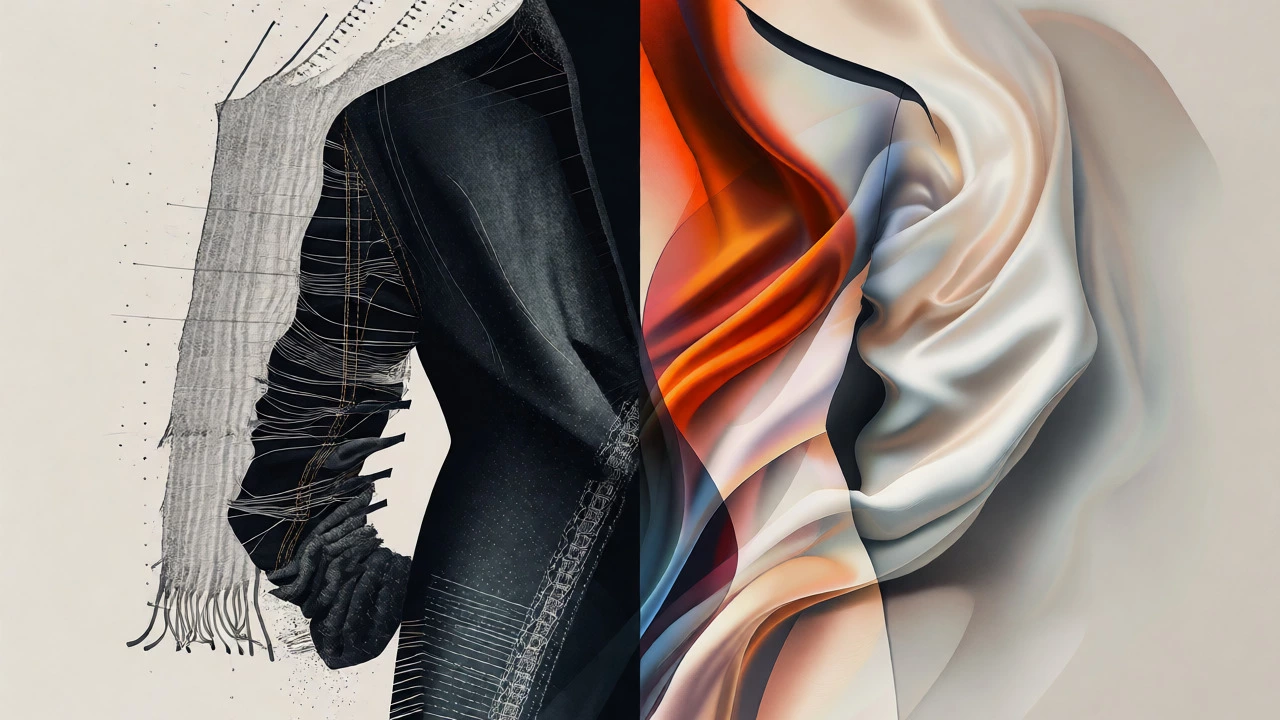
The 50/50 principle extends beyond clothes. Consider your accessories. If your outfit is minimalist, bold jewelry adds the necessary 50% of interest. If your outfit is loud, simple accessories provide breathing room. This applies to hair and makeup too. Sleek, severe hair balances wild prints; messy buns soften stiff collars.
Your attitude plays a role as well. Confidence bridges the gap between disparate pieces. If you walk with hesitation, the mismatched elements look like mistakes. If you wear them with conviction, they look like choices. Practice owning the contrast. Stand tall. Make eye contact. Your demeanor sells the outfit more than the labels do.
In Wellington, where weather changes hourly, this rule is practically essential. One minute you need layers for wind, the next you’re shedding jackets for sun. Layering allows you to toggle between your "formal" and "casual" halves throughout the day. A cardigan over a dress lets you adapt instantly. Flexibility is the ultimate form of style intelligence.
Key Takeaways
- Contrast Creates Interest: Uniformity can look flat; mixing opposites adds depth.
- Balance Energy: Pair structured items with relaxed ones to avoid looking costumed.
- Context Matters: Adjust the ratio based on the occasion (e.g., 70/30 for work).
- Use What You Have: The rule shines when mixing old staples with new pieces.
- Confidence Completes the Look: Wear the contrast with intention, not apology.
Does the 50/50 rule apply to colors?
Yes, color balance is a huge part of the rule. Pairing a neutral base (like beige or navy) with a pop of bright color creates a 50/50 visual weight. It prevents an outfit from being either too boring or too overwhelming. For instance, a all-black outfit softened by a red bag follows this principle.
Can I wear all casual clothes and still follow the rule?
Absolutely. You can balance textures and silhouettes within casual wear. Pairing oversized knits with fitted leggings, or denim-on-denim with contrasting washes, maintains the balance even without formal pieces. The rule is about harmony, not necessarily formality.
Is the 50/50 rule relevant for men's fashion?
Definitely. Men often fall into the trap of wearing identical fabrics (like all cotton or all wool). Mixing a wool blazer with cotton chinos, or leather shoes with denim, introduces the necessary contrast. It elevates basic menswear from functional to stylish.
How do I know if my outfit is unbalanced?
If you feel uncomfortable or self-conscious, it’s likely unbalanced. Another sign is if someone asks, "Where did you get that?" repeatedly about one item while ignoring the rest-that item might be overpowering the others. Take a mirror selfie; photos often reveal imbalance that mirrors hide.
Does this rule help with sustainable fashion?
Yes, because it encourages mixing old and new. Instead of buying a whole new outfit to match a trend, you integrate one trendy piece into existing staples. This reduces consumption and maximizes the utility of your current wardrobe.