Work-Life Balance Boundary Calculator
Measure Your Current Work-Life Balance
How many hours are you currently working each day? What's your ideal balance?
Ever feel like you’re always working, even when you’re not at your desk? You’re not alone. Millions of people around the world say they’re struggling to separate work from the rest of life - and it’s getting worse, not better. In 2025, a global survey by the World Health Organization found that 68% of full-time workers reported feeling constantly ‘on call,’ even during weekends and vacations. That’s not just tiredness. That’s a breakdown in boundaries.
Remote Work Didn’t Fix Anything - It Made It Worse
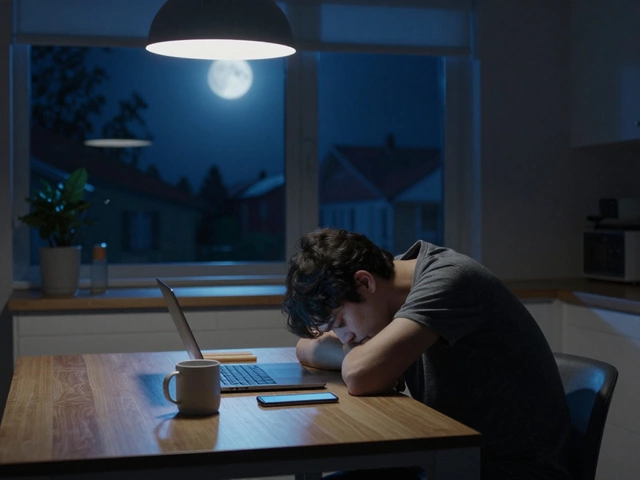
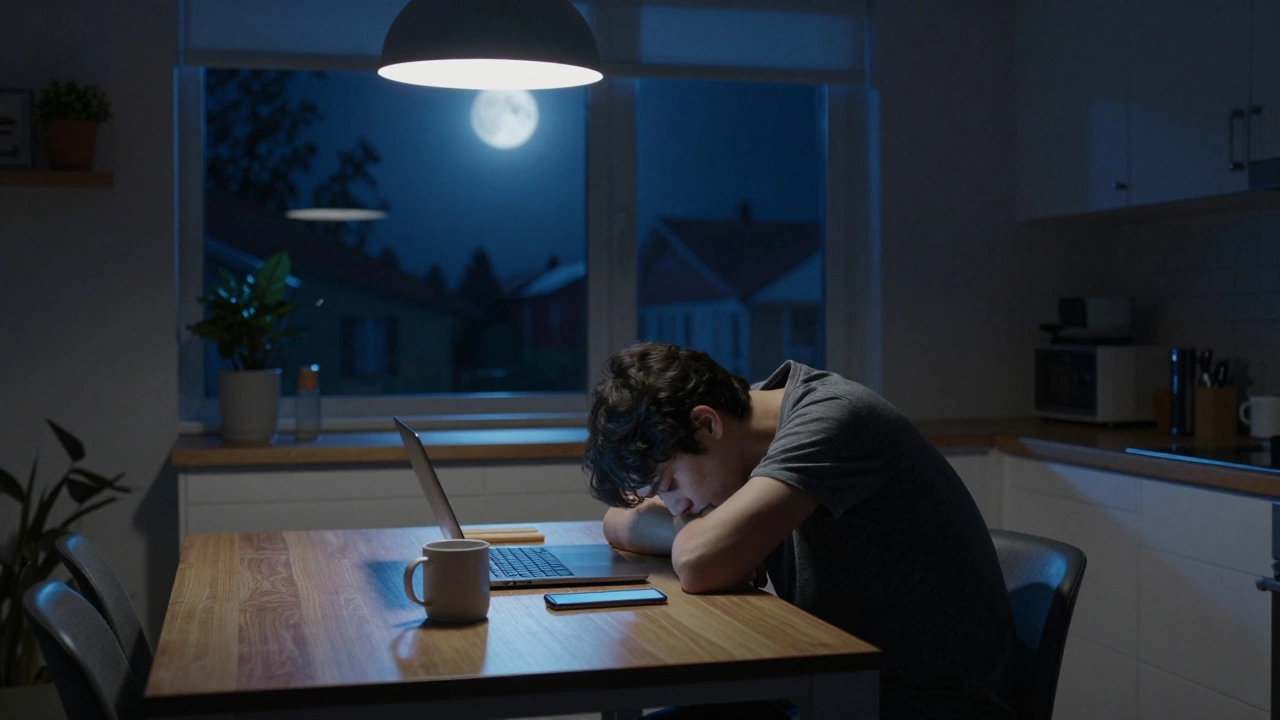
When the pandemic pushed most jobs online, people thought they’d finally gain freedom. No more commutes. More time with family. Flexible hours. But what actually happened? The line between office and home vanished. Your couch became your desk. Your kitchen table became your meeting room. Your phone started buzzing at 10 p.m. with Slack messages from your manager.
Without physical separation, work crept into every corner of life. A 2024 study from Stanford University tracked 12,000 remote workers and found they worked an average of 2.3 extra hours per day. Not because they were more productive - but because they never learned how to log off. The default setting became: always available.
The Myth of ‘Hustle Culture’
We’ve been sold a story: if you’re not working late, you’re not serious. If you’re not checking emails on vacation, you’re lazy. If you say no to one more task, you’re not committed. This idea - called hustle culture - tells us that burnout is a badge of honor.
But burnout isn’t proof of dedication. It’s a warning sign. The World Health Organization officially classified burnout as an occupational phenomenon in 2019. It’s not just stress. It’s exhaustion, cynicism, and reduced performance. And it’s not rare. In New Zealand, workplace mental health reports jumped 47% between 2020 and 2025. The biggest driver? People who couldn’t turn off work.
Think about it: when was the last time you took a real break? Not just scrolling on your phone while eating lunch. A full day without thinking about deadlines? For many, it’s been years.
Technology Never Sleeps - But You Should
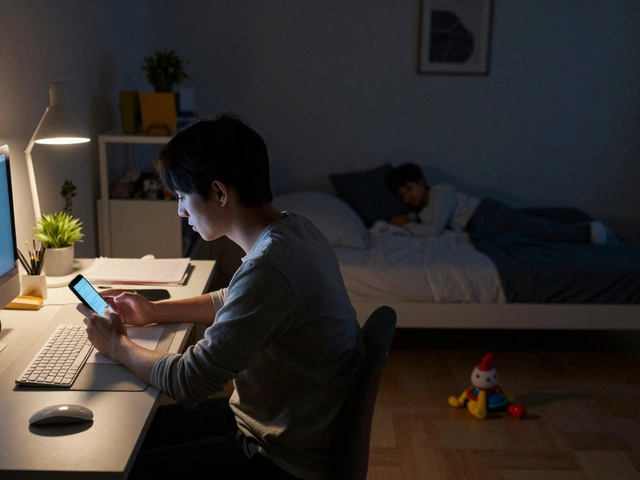
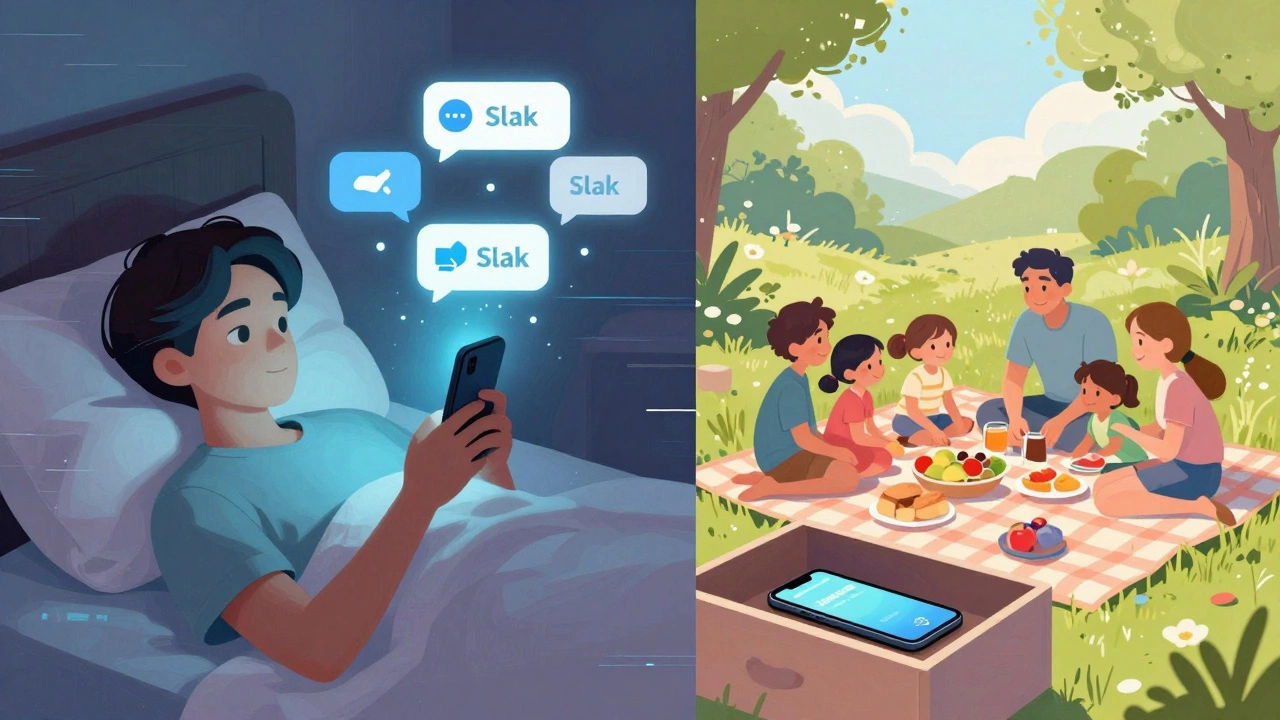
Your phone is the biggest thief of work-life balance. It’s always there. Always vibrating. Always demanding attention. A 2025 report from the University of Auckland found that 74% of people check work messages within 30 minutes of waking up - even on days off. And 61% admit they check emails before they even get out of bed.
This isn’t discipline. It’s addiction. Your brain has been trained to expect constant stimulation. Every ping creates a tiny dopamine hit. Over time, your brain starts to crave it. You feel anxious when your phone is silent. You start checking it in the middle of dinner. In the middle of a conversation. In the middle of trying to sleep.
There’s no app that fixes this. Only behavior does. Turning off notifications. Setting clear hours. Leaving your phone in another room. These aren’t luxuries - they’re survival tactics.
Unrealistic Expectations at Work
Many people don’t even realize they’re being asked to do the impossible. Managers expect 10-hour days but call it ‘flexible.’ Teams are told to ‘work smarter,’ not harder - but the workload keeps growing. Projects pile up. Deadlines move. Meetings multiply.
And when you say you’re overwhelmed? The response is often: ‘Everyone’s busy.’ Or worse: ‘If you can’t handle it, someone else can.’
This isn’t leadership. It’s neglect. Companies that don’t protect boundaries aren’t just losing employees - they’re losing their humanity. A 2024 Harvard Business Review analysis showed that teams with enforced ‘no meeting’ days had 32% higher retention and 28% higher productivity. Why? Because people had space to breathe.
Personal Guilt and the ‘I Should Be Doing More’ Trap
Even when you have the freedom to step away, you don’t. Why? Because of guilt.
You feel guilty for leaving work early. Guilty for saying no. Guilty for taking a lunch break. Guilty for not being ‘as productive’ as your colleague. This guilt is manufactured. It comes from a system that equates value with output - not rest, not recovery, not relationships.
But here’s the truth: your worth isn’t measured by how many emails you answer after hours. Your value isn’t tied to how fast you reply. You are not a machine. You are a human being with limits, needs, and emotions.
When you prioritize rest, you’re not being lazy. You’re being smart. Rest isn’t the opposite of work - it’s what makes work sustainable.

What Actually Helps? Real Fixes, Not Quick Tips
There’s no magic bullet. But there are real, proven changes that work - if you’re willing to stick with them.
- Set hard boundaries. Decide your work hours and protect them. No exceptions. Not even for ‘just one quick thing.’
- Use technology to protect your time. Turn off work notifications after hours. Use ‘Do Not Disturb’ like a shield.
- Start your day without screens. For the first 30 minutes after waking up, don’t touch your phone. Drink water. Stretch. Breathe.
- Track your time honestly. Use a simple app or notebook for one week. Write down everything you do. You’ll be shocked how much time disappears into meetings, emails, and mindless scrolling.
- Ask for help. If your workload is unsustainable, say so. Not in a passive-aggressive way. Say: ‘I can’t do all of this well. Can we reprioritize?’
These aren’t ‘hacks.’ They’re acts of self-respect.
It’s Not Just You - It’s the System
People don’t struggle with work-life balance because they’re bad at time management. They struggle because the system is broken. Employers demand constant availability. Technology makes disconnection impossible. Society glorifies overwork. And we’ve been taught to feel guilty for wanting more.
Fixing this isn’t about willpower. It’s about change - in how companies operate, how managers lead, and how we define success.
But change starts with you. Not tomorrow. Not next month. Today. Say no. Log off. Take the break. Your health, your relationships, and your future self will thank you.
Why is work-life balance harder now than 20 years ago?
Twenty years ago, work and home were physically separated. You left the office at 5 p.m., and your phone didn’t ring after hours. Now, your office is in your pocket. Constant connectivity means you’re always reachable - even during dinner, walks, or family time. Remote work removed physical boundaries, and companies didn’t replace them with clear policies. Technology moved faster than culture.
Can working from home ever improve work-life balance?
Yes - but only if boundaries are enforced. Working from home can save hours on commuting and give you more time for meals, exercise, or family. But without clear rules - like fixed work hours, a dedicated workspace, and no after-hours messages - it becomes a trap. The key isn’t location. It’s structure.
Is burnout the same as being tired?
No. Being tired means you need sleep. Burnout is deeper. It’s emotional exhaustion, feeling detached from your work, and believing nothing you do matters. It’s not solved by a vacation. It’s solved by changing your environment - reducing workload, reclaiming control, and rebuilding meaning. The World Health Organization recognizes it as a medical condition tied to chronic workplace stress.
What should I do if my boss expects me to be available 24/7?
Start by setting a clear, polite boundary. Say: ‘I’m available during work hours, Monday to Friday, 9 a.m. to 5 p.m. For urgent issues outside those times, I’ll respond as soon as possible the next business day.’ Then stick to it. If your boss reacts negatively, it’s not about your performance - it’s about their culture. You have the right to rest. If they don’t respect that, it’s a sign the job isn’t sustainable for you.
How long does it take to rebuild work-life balance?
It varies. For some, small changes - like turning off notifications after 7 p.m. - make a difference in days. For others, it takes weeks or months to undo years of overwork. The key isn’t speed. It’s consistency. Start with one boundary. Protect it. Then add another. Progress isn’t linear. But every step away from constant availability is a step toward reclaiming your life.