Self-Help Book Quality Evaluator
Is That Self-Help Book Actually Helpful?
Not all self-help books are created equal. Some offer science-backed tools that genuinely improve mental health, while others promote toxic positivity and unrealistic expectations. This interactive evaluator helps you determine if a book is worth your time.
Your Assessment Result
Key Indicators Found:
Recommendations:
Picture this: you're lying in bed at 2 a.m., staring at the ceiling, feeling like your brain is stuck on repeat. You grab your phone, scroll through endless threads of advice, and feel more overwhelmed than before. Then, you remember that dusty book on your nightstand-the one with the bright yellow cover promising to "fix" your life in thirty days. You pick it up. Does it help? Or does it just add another layer of guilt because you haven't finished chapter three?
The question of whether self-help books are good for mental health isn't a simple yes or no. It’s complicated by our culture's obsession with quick fixes and the sheer volume of mediocre advice flooding the market. Some books offer genuine, science-backed tools that can shift your perspective. Others are little more than expensive word salads that prey on your insecurity. The difference lies not in the genre itself, but in how you choose them, what you expect from them, and how you apply what you read.
The Science Behind Reading for Healing
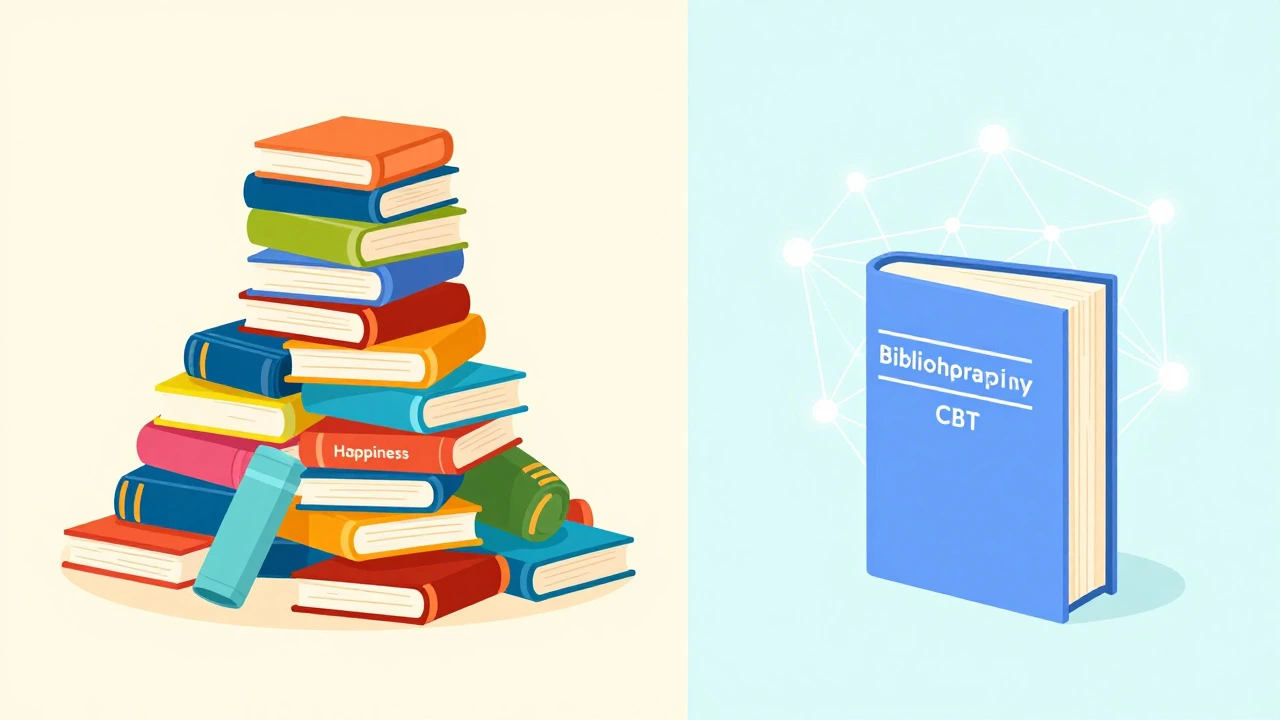
Reading isn't just a hobby; it's a neurological event. When you read fiction, your brain activates the same regions as if you were experiencing the events yourself. This builds empathy and helps you process emotions safely. But when it comes to non-fiction self-help, the mechanism is different. It’s about bibliotherapy, which is the use of reading materials as an adjunct to psychotherapy or counseling.
Research published in journals like BMC Psychiatry has shown that bibliotherapy can be effective, particularly for mild to moderate anxiety and depression. Why? Because these books often introduce concepts from established therapeutic frameworks, such as Cognitive Behavioral Therapy (CBT), which is a type of psychotherapy that focuses on identifying and changing negative thought patterns. When you read about CBT techniques, you’re essentially getting a low-cost introduction to the tools therapists use daily.
However, there’s a catch. The effectiveness drops significantly if the reader lacks the support system or the baseline stability to implement the changes. Think of a self-help book like a gym membership. Buying the membership doesn’t make you fit; lifting the weights does. If you buy a book on mindfulness but never practice sitting quietly for five minutes, the book hasn’t helped your mental health. It’s just paper.
When Self-Help Books Work: The Right Fit
Not all self-help books are created equal. The ones that actually improve mental health tend to share specific characteristics. They are grounded in psychology, neuroscience, or sociology rather than vague spiritual platitudes. They offer actionable steps, not just inspiration.
For example, books based on Acceptance and Commitment Therapy (ACT) teach you how to accept difficult thoughts rather than fighting them. This is a powerful tool for anyone struggling with rumination. Similarly, books focused on habit formation, like those discussing the Habit Loop, which is a neurological pattern consisting of a cue, a routine, and a reward, provide concrete mechanisms for change. These aren't magic bullets, but they are maps. And maps are useful if you know where you want to go.
The key is matching the book to your specific issue. If you’re dealing with grief, a book on productivity won’t help-it might even hurt by making you feel lazy. If you’re struggling with social anxiety, a book on assertiveness communication could be transformative. Precision matters. General advice is rarely helpful because human experience is deeply personal.
The Dark Side: Toxic Positivity and Victim Blaming
Here’s where things get tricky. A significant portion of the self-help industry promotes what psychologists call "toxic positivity." This is the belief that no matter how dire a situation is, people should maintain a positive mindset. Sounds nice, right? Wrong. It invalidates real pain.
If you’re going through a divorce, a job loss, or clinical depression, being told to "just think happy thoughts" is insulting. It suggests that your suffering is a choice, a failure of willpower. This can lead to increased shame and isolation. Many popular self-help authors rely on anecdotal evidence-"I did this, so I succeeded"-ignoring the countless variables like privilege, luck, and genetics that play a role in success.
This creates a dangerous narrative: if you’re still struggling, you’re not trying hard enough. This victim-blaming mentality can worsen mental health outcomes. It turns healing into a performance metric. So, how do you spot these books? Look out for absolute language ("always," "never," "guaranteed"), lack of citations, and a focus on external success over internal well-being.
Comparison: Therapeutic vs. Pop Psychology Books
| Feature | Evidence-Based (Therapeutic) | Pop Psychology (Motivational) |
|---|---|---|
| Basis | Clinical studies, peer-reviewed research | Anecdotes, personal stories, intuition |
| Tone | Empathetic, realistic, nuanced | Urgent, absolute, overly optimistic |
| Goal | Symptom management, coping skills | Rapid transformation, wealth, status |
| Complexity | Acknowledges complexity and setbacks | Presents linear, simple solutions |
| Author Credentials | Licensed therapists, PhDs, researchers | Coaches, influencers, former celebrities |
How to Choose the Right Book for Your Needs
So, you’ve decided to give it a shot. How do you navigate the aisles without wasting money on junk? Start by checking the author’s credentials. Are they a licensed clinician? A researcher? Or just someone who had a breakthrough moment and wrote a blog post? Look for books published by reputable academic presses or major publishers with rigorous editing standards.
Next, look for reviews from professionals, not just fans. Psychologists often recommend specific titles for their patients. For instance, Daring Greatly by Brené Brown is widely recommended for vulnerability and shame issues because it’s rooted in her qualitative research. The Body Keeps the Score by Bessel van der Kolk is essential for understanding trauma, though it’s dense and best read with some support.
Also, consider the format. Some people prefer workbooks with exercises. Others need narrative-driven books that explain concepts through story. There’s no wrong way, but knowing your learning style helps. If you have ADHD, a 300-page theoretical treatise might overwhelm you. Try something concise with bullet points and clear headings.

Integrating Books into a Holistic Mental Health Plan
A self-help book is a tool, not a cure. It works best when integrated into a broader mental health strategy. Think of it as part of a toolkit alongside therapy, medication (if prescribed), exercise, sleep hygiene, and social connection.
Don’t read passively. Highlight passages. Write down questions. Try the exercises immediately. If a book suggests journaling, do it that night. If it suggests a breathing technique, try it during your next stressful meeting. Application is where the magic happens. Without action, reading is just consumption.
And here’s a crucial tip: set boundaries. Don’t let reading become avoidance. If you’re spending hours reading about productivity while ignoring your actual work, you’re procrastinating. If you’re reading about relationships while avoiding calls to friends, you’re isolating. Use books to empower action, not replace it.
Common Pitfalls to Avoid
One of the biggest traps is the "shelf-ware" phenomenon. Buying a stack of books gives you a dopamine hit-the illusion of progress. But if they sit unread, they contribute to clutter and guilt. Buy one book at a time. Finish it. Apply it. Then move on.
Another pitfall is expecting immediate results. Mental health improvement is nonlinear. You might read a chapter on anger management and still snap at your partner the next day. That doesn’t mean the book failed. It means you’re human. Progress is measured in months and years, not days.
Finally, beware of guru worship. No single author has all the answers. Even brilliant thinkers have blind spots. Stay critical. Ask yourself: "Does this resonate with my experience? Is this practical?" If not, put the book down. Your time is valuable.
Can self-help books replace therapy?
Generally, no. While self-help books can provide valuable insights and coping strategies, they lack the personalized feedback and accountability of a licensed therapist. For mild anxiety or general self-improvement, books can be very effective. However, for clinical depression, PTSD, severe anxiety, or complex trauma, professional therapy is usually necessary. Books are best used as a supplement to therapy, not a replacement.
What are the best self-help books for beginners?
Good starting points include Atomic Habits by James Clear for building positive routines, The Power of Now by Eckhart Tolle for mindfulness, and Feeling Good by David Burns for basic Cognitive Behavioral Therapy techniques. These books are accessible, well-researched, and offer practical steps that don't require prior psychological knowledge.
Why do some self-help books make me feel worse?
This often happens with books that promote toxic positivity or unrealistic expectations. If a book makes you feel like you're failing because you haven't achieved a certain level of happiness or success, it may be counterproductive. Additionally, confronting deep-seated issues can initially increase discomfort. If the feeling persists, consider switching to a book with a more compassionate, evidence-based approach or consulting a therapist.
How long should I spend reading a self-help book?
There's no fixed rule, but consistency beats speed. Reading ten pages a day and applying one concept is more beneficial than binge-reading a whole book in a weekend. Give yourself time to reflect and integrate new ideas. If you find yourself rushing, slow down. The goal is internalization, not completion.
Are audiobooks as effective as physical books for self-help?
Yes, for many people. Audiobooks allow you to consume content during commutes or chores, making it easier to fit into a busy schedule. However, some readers find it harder to retain information or complete workbook exercises via audio. If you learn better visually or need to take notes, a physical or e-book version might be superior. Experiment to see what works for you.