Bag Impact Calculator
How many times you've used your bag
Calculate if your reusable bag has reduced environmental impact compared to single-use plastic bags
Environmental impact comparison
Using this bag than plastic bags
What this means
Based on data from U.S. EPA and UK Environment Agency studies
People reach for paper bags thinking they’re doing the planet a favor. You see them at grocery stores, coffee shops, and farmers markets - brown, sturdy, and labeled "100% recyclable." It feels right. But here’s the thing: paper bag isn’t automatically green. The truth is more complicated than the label suggests.
How paper bags are made - and what it costs
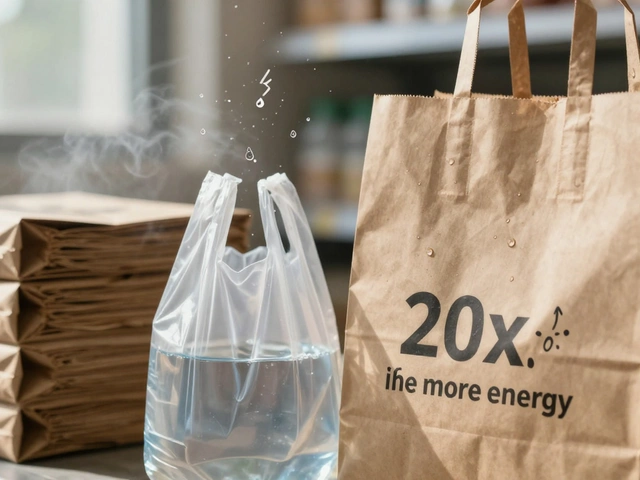
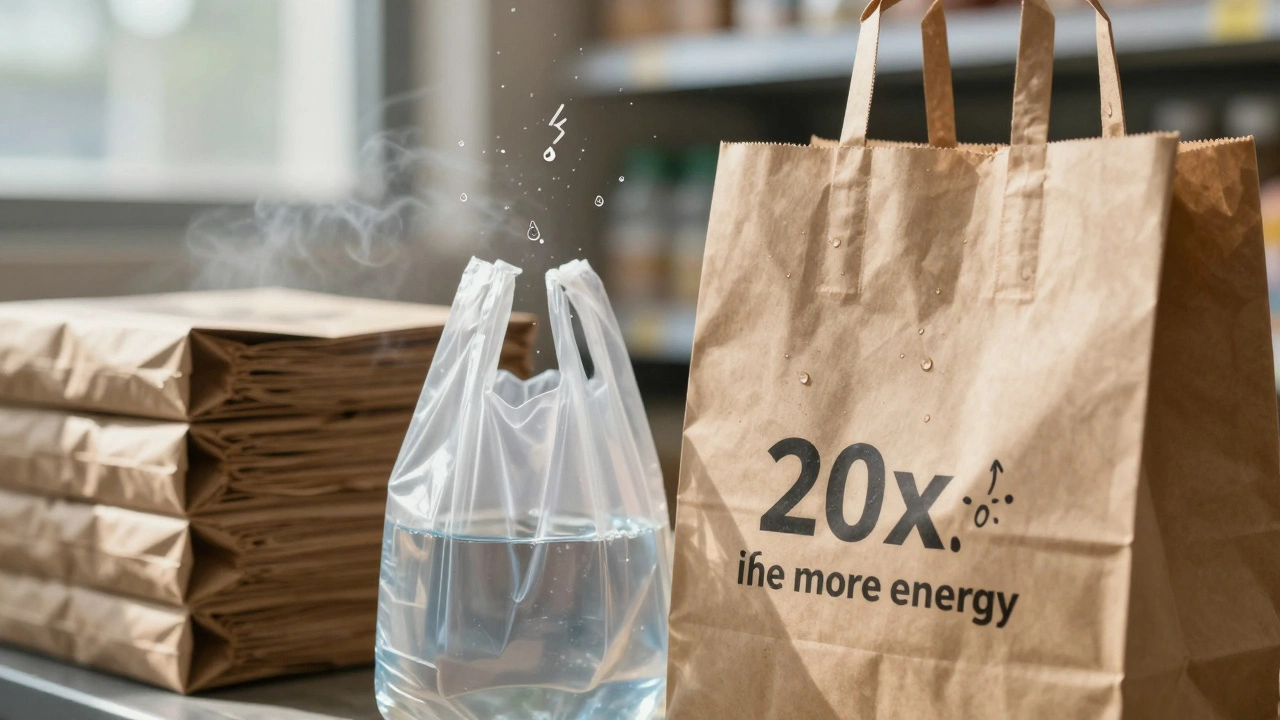
Every paper bag starts as a tree. On average, it takes about 20 liters of water to make a single paper bag. That’s more than a person drinks in two days. Then there’s the energy: manufacturing one paper bag uses 20 times more energy than making a plastic bag. Factories burn fossil fuels to pulp wood, bleach fibers, and press sheets into bags. The bleaching process alone releases toxic chemicals like chlorine dioxide into waterways, which can harm fish and aquatic plants.
According to the U.S. Environmental Protection Agency, producing one ton of paper bags generates 20 times more wastewater and 20 times more air pollutants than producing one ton of plastic bags. And while paper comes from trees - which are renewable - deforestation is still a real issue. Most paper bags in the U.S. come from virgin wood fiber, not recycled material. Only about 30% of paper bags contain post-consumer recycled content, and even those require fresh fibers to maintain strength.
Are paper bags biodegradable? Yes - but not always
Yes, paper breaks down. Unlike plastic, which can last 500 years, a paper bag will decompose in about two to five months under the right conditions. But here’s where it gets messy: most paper bags don’t end up in compost piles. They end up in landfills.
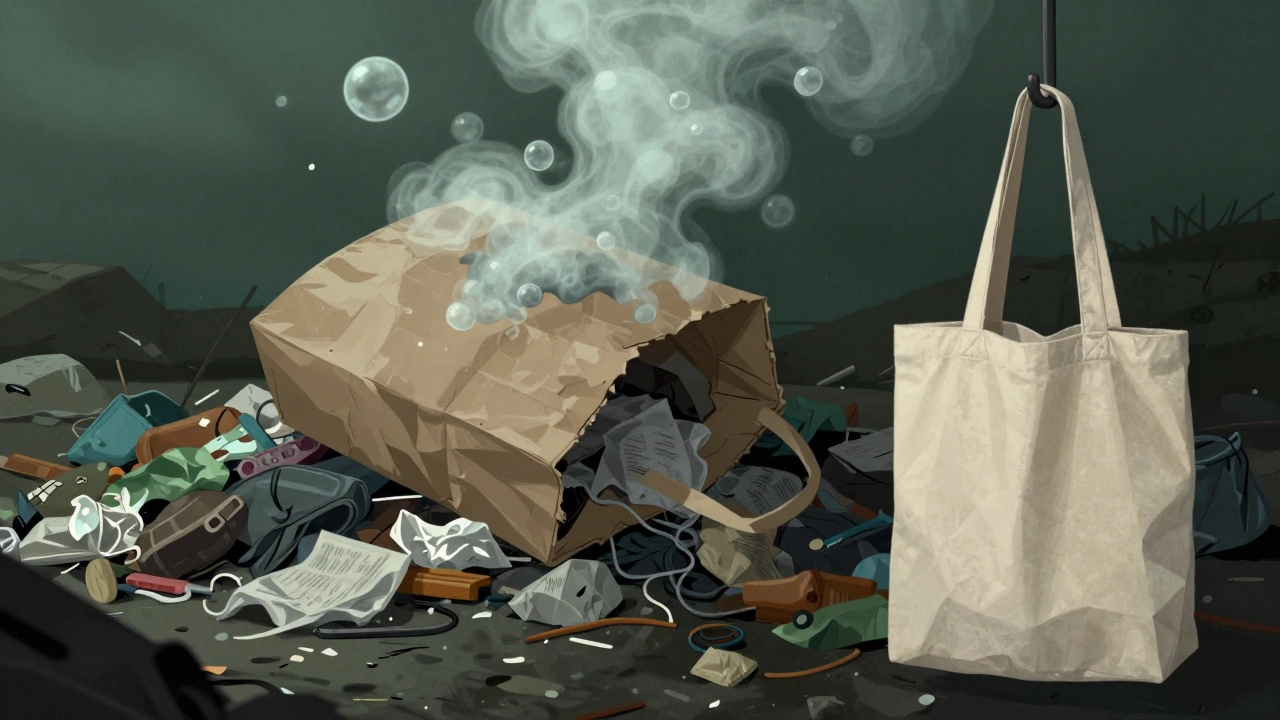
In landfills, paper bags don’t get the oxygen they need to break down properly. Instead, they get crushed under layers of trash and produce methane - a greenhouse gas 25 times more potent than carbon dioxide. The EPA estimates that organic waste in landfills is the third-largest source of methane emissions in the U.S. So while paper is biodegradable in theory, it’s not in practice.
Even when you recycle a paper bag, it’s not a clean win. Recycling paper uses water, chemicals, and energy. Each time paper is recycled, its fibers shorten. After five to seven cycles, the fibers become too weak to reuse. That means even recycled paper bags eventually become waste.
Plastic vs. paper: Which is worse?
It’s easy to blame plastic. And yes, plastic bags are a huge problem - they choke oceans, break into microplastics, and kill wildlife. But comparing plastic and paper isn’t about picking the lesser evil. It’s about understanding trade-offs.
Here’s what a 2018 study by the UK Environment Agency found: a paper bag needs to be reused at least three times to have a lower global warming potential than a single-use plastic bag. That’s because of the higher energy and water footprint. But how often do people actually reuse paper bags? Most use them once - to carry groceries home - then toss them. That makes them worse than plastic in terms of climate impact.
Plastic bags are lighter, so they take less fuel to transport. A truck can carry 10 times more plastic bags than paper bags. That means fewer trips, less emissions. But plastic doesn’t decompose. Paper does - if you compost it. So context matters. In a city with good composting? Paper might be better. In a rural area with no recycling? Plastic might be the lesser of two bad options.
What actually works: Reusable bags
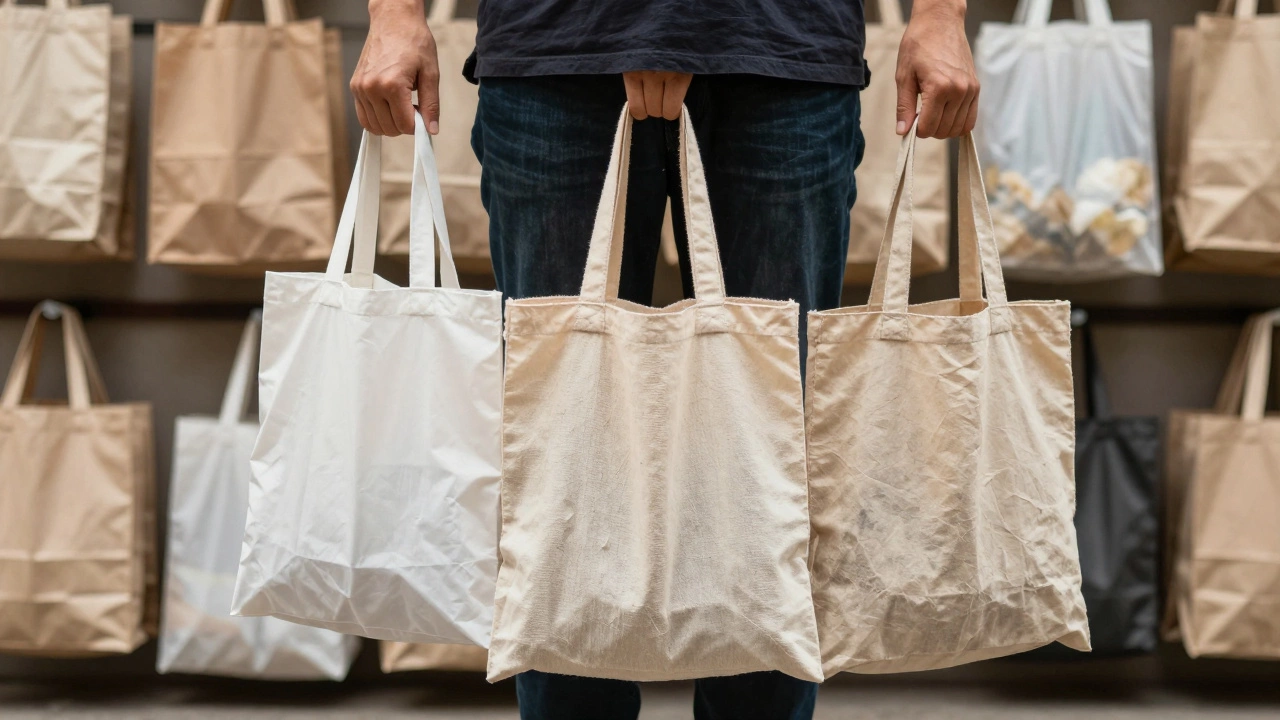
If you want to cut your environmental footprint, reusable bags are the only real solution. But not all reusable bags are created equal.
A cotton tote bag? It sounds ideal. But cotton is one of the most water-intensive crops on Earth. It takes about 2,700 liters of water to make one cotton shirt - and a tote bag uses even more. A 2011 study from Denmark’s Environmental Protection Agency found that a conventional cotton tote bag must be reused 7,100 times to offset its environmental impact compared to a single-use plastic bag. That’s over 19 years of daily grocery runs.
But here’s the twist: if you use a cotton bag just 10 times, it’s already better than 10 plastic bags. And if you use it 50 times? You’re ahead of paper too. The key isn’t the material - it’s consistency. The bag that sits unused in your closet doesn’t help anyone.
More practical options? Look for bags made from recycled polyester or hemp. A recycled PET bag (made from plastic bottles) needs only 14 uses to beat plastic. Hemp bags are durable, require little water to grow, and don’t need pesticides. Both are lightweight, washable, and last years.
The real eco-friendly habit
The most sustainable bag is the one you already own. That old backpack. The mesh produce bag you forgot to throw away. The tote you got from a conference in 2018. Don’t buy a new "eco-friendly" bag just because it’s trendy. The planet doesn’t need more stuff - it needs fewer disposables.
Start small. Keep a foldable bag in your purse, car, or work bag. Use it every time. If you forget it? Accept the plastic bag. Use it again for trash or pet waste. Then recycle it. No guilt. No perfection. Just consistency.
And if you do choose paper? Look for bags made with 100% post-consumer recycled content. Skip the glossy, dyed, or laminated ones - those can’t be recycled. Buy from local businesses that use minimal packaging. And never, ever leave a paper bag in the wind. It doesn’t biodegrade on the street. It becomes litter.
What to do with old paper bags
Don’t just throw them out. Get creative.
- Use them as trash can liners - especially for dry waste like paper or cardboard.
- Cut them into gift wrap. Add twine and dried flowers for a rustic look.
- Line your garden beds to suppress weeds before adding mulch.
- Donate them to schools for art projects or to animal shelters for bedding.
- Turn them into homemade notebooks by folding and stapling.
Every reused bag is one less tree cut, one less truck on the road, one less landfill item.
Bottom line: Paper isn’t the hero you think it is
Calling paper bags eco-friendly is misleading. They’re better than plastic in some ways - but worse in others. The real win isn’t switching from plastic to paper. It’s switching from single-use to reusable. Every time you carry your own bag, you’re voting for a system that values durability over disposability.
There’s no perfect bag. But there’s a better habit: bring your own. Always.
Are paper bags really better than plastic bags?
Not always. Paper bags use more water and energy to make, and they often end up in landfills where they release methane. They need to be reused at least three times to be better than plastic in terms of climate impact. The real solution is reusable bags used consistently.
Can I recycle paper bags?
Yes - if they’re plain and free of wax, plastic lining, or heavy ink. Most curbside programs accept clean paper bags. But glossy, laminated, or dyed bags often can’t be recycled. Check with your local waste service. If in doubt, reuse them instead.
How many times do I need to reuse a cotton tote to make it eco-friendly?
A conventional cotton tote needs to be reused about 7,100 times to offset its environmental cost compared to a single-use plastic bag. That’s unrealistic for most people. But if you use it just 50 times, you’re already ahead of both plastic and paper. The key is using it regularly - not buying a new one just because it’s "eco."
What’s the most eco-friendly bag option?
The most eco-friendly bag is the one you already own and use often. If you need a new one, choose recycled polyester or hemp. They use less water, last longer, and require fewer resources to produce than cotton or virgin paper. Reuse it every time you shop.
Should I avoid paper bags entirely?
Not necessarily. If you’re in a place with good composting, and you use the bag for compostable waste, paper can be fine. But don’t assume it’s automatically better. The best choice is always bringing your own reusable bag - no matter the material.
If you’re trying to live more sustainably, stop looking for the "greenest" product. Start building habits that reduce consumption. Your reusable bag isn’t a status symbol. It’s a tool. And the more you use it, the more it matters.