Personalized Skincare Routine Builder
Select your skin profile below to generate a simple, effective routine focused on the three pillars: Cleansing, Moisturizing, and Protecting.
☀️ Morning (Protect)
🌙 Night (Repair)
Key Ingredients to Look For:
Walk into any drugstore and you’ll be hit with a wall of bottles promising miracles. One promises to erase wrinkles in a week; another claims to banish acne overnight. It’s exhausting, right? You might feel like you’re throwing money down the drain because nothing seems to work quite like the ads say they will. The truth is simpler than the marketing suggests: there is no single "best" routine that works for every human on Earth. But there is a best routine for you, and it usually comes down to three non-negotiable steps done consistently.
If you’re looking for a quick fix, this might disappoint you. Skincare isn’t about magic potions; it’s about biology. Your skin barrier needs protection, hydration, and gentle maintenance. If you strip it too much or ignore it entirely, you’ll deal with breakouts, dryness, or premature aging. Let’s cut through the noise and build a routine that actually respects your skin’s physiology, regardless of whether you live in humid Wellington or arid Arizona.
The Core Pillars of Effective Skin Care
Before we talk about specific products, you need to understand what your skin actually does. It’s not just a wrapper; it’s an active organ. It regulates temperature, protects against pathogens, and repairs itself. When people ask what is the best skin care routine, they are often looking for a complex ten-step regimen. Dermatologists generally agree that simplicity wins. A solid foundation rests on three pillars: Cleansing, Moisturizing, and Protecting (Sunscreen). Everything else-serums, essences, masks-is optional garnish.
Why these three? Because they address the primary threats to skin health. Cleansing removes pollutants and excess oil that clog pores. Moisturizing supports the lipid barrier that keeps water in and irritants out. Sunscreen blocks UV radiation, which causes up to 80% of visible skin aging according to the American Academy of Dermatology. Miss one, and the others struggle to keep up.
Morning Routine: Protect and Prevent
Your morning routine should focus on defense. During the day, your skin faces environmental stressors: pollution, blue light from screens, and ultraviolet rays. You don’t need a heavy routine here; you need a shield.
- Cleanse Gently: Unless you have very oily skin, skip the harsh foaming cleanser in the morning. Splash with lukewarm water or use a mild, hydrating cleanser. Over-cleansing strips natural oils, triggering your skin to produce more oil as compensation-a classic rebound effect.
- Antioxidant Serum (Optional): Vitamin C serums are popular for a reason. They neutralize free radicals caused by UV exposure and pollution. Look for L-ascorbic acid at concentrations between 10% and 20%. If you have sensitive skin, start with derivatives like sodium ascorbyl phosphate.
- Moisturize: Apply a lightweight moisturizer while your skin is still damp from cleansing. This traps water in the upper layers. For oily skin, gel-based formulas work well. Dry skin types benefit from creams containing ceramides or hyaluronic acid.
- Sunscreen (Non-Negotiable): This is the most critical step. Use broad-spectrum SPF 30 or higher. Reapply if you’re outdoors for extended periods. Many people forget that UVA rays penetrate clouds and glass windows, meaning you’re exposed even when sitting in a car or office near a window.
Nighttime Routine: Repair and Restore
Night is when your skin goes into repair mode. Cell turnover peaks during sleep, making it the ideal time to introduce active ingredients that help with renewal. Think of your night routine as a reset button.
- Double Cleanse (If Wearing Makeup/Sunscreen): Start with an oil-based balm or micellar water to dissolve makeup and sunscreen. Follow with a water-based cleanser to remove sweat and dirt. This ensures your subsequent products can actually penetrate the skin rather than sitting on top of grime.
- Treat with Actives: This is where you target specific concerns. Retinoids (like retinol) are the gold standard for anti-aging and acne. They speed up cell turnover. Start low and slow-twice a week initially-to avoid irritation. Alternatives include niacinamide for redness or salicylic acid for congestion.
- Eye Cream (Optional): The skin around your eyes is thinner and more prone to showing fatigue. A basic peptide or caffeine eye cream can help with puffiness, but don’t expect it to erase deep wrinkles.
- Lock It In: Finish with a richer moisturizer or facial oil. Ingredients like squalane or jojoba oil mimic the skin’s natural sebum, helping to reinforce the barrier without feeling greasy.
Matching Ingredients to Skin Types
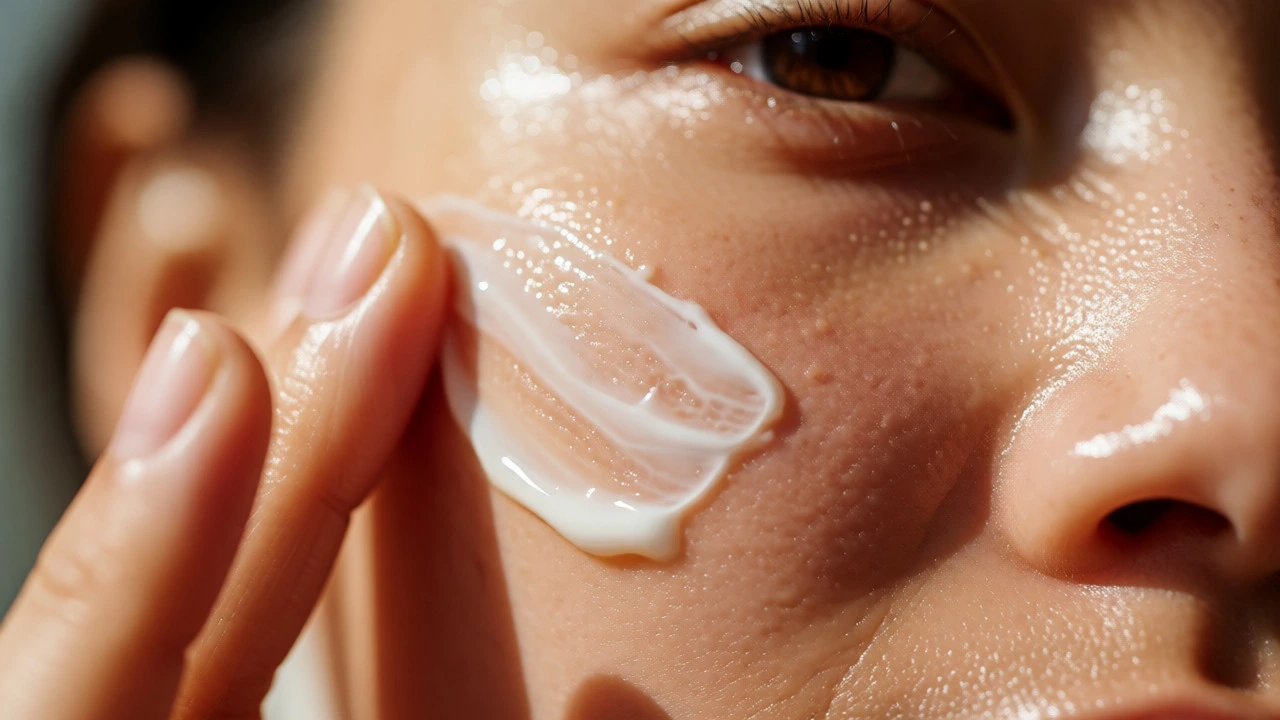
A routine fails if the ingredients clash with your skin type. What works for your friend with oily skin might leave you flaky and irritated. Here’s how to match actives to common conditions.
| Skin Type | Key Concerns | Recommended Actives | Avoid |
|---|---|---|---|
| Oily/Acne-Prone | Excess sebum, clogged pores | Salicylic Acid, Niacinamide, Clay | Heavy occlusives, coconut oil |
| Dry/Dehydrated | Tightness, flaking, fine lines | Hyaluronic Acid, Ceramides, Squalane | High-alcohol toners, sulfates |
| Sensitive | Redness, stinging, reactivity | Centella Asiatica, Oat Extract, Panthenol | Fragrance, essential oils, high-strength acids |
| Mature | Loss of elasticity, pigmentation | Retinoids, Peptides, Vitamin C | Over-exfoliation, harsh scrubs |
Notice the pattern? Hydration and barrier support are universal. Even oily skin needs moisture; otherwise, it overproduces oil. And sensitive skin thrives on simplicity. If you’re unsure of your type, observe how your skin feels two hours after washing. Tight? Dry. Shiny everywhere? Oily. T-zone shiny but cheeks tight? Combination.
The Exfoliation Trap
Many people think scrubbing harder means cleaner skin. It doesn’t. Physical scrubs with apricot pits or walnut shells create micro-tears in the skin barrier, leading to inflammation and infection risk. Chemical exfoliants-AHAs (glycolic, lactic) and BHAs (salicylic)-are far more effective and controlled.
AHAs work on the surface to brighten texture, while BHAs penetrate oil-filled pores to clear congestion. But here’s the catch: less is more. Exfoliating daily is rarely necessary. Once or twice a week is sufficient for most people. If your skin feels raw or looks shiny like plastic, you’ve overdone it. Stop all actives for a few days and focus solely on moisturizing until the barrier heals.

Common Mistakes That Sabotage Results
You can buy the most expensive serum in the world, but if you make these mistakes, you won’t see results.
- Inconsistent Application: Using a product sporadically yields sporadic results. Consistency beats intensity. Applying a retinoid three times a week for six months is better than using it every day for two weeks and quitting because of irritation.
- Ignoring Patch Tests: New products can cause allergic reactions. Apply a small amount behind your ear or on your inner arm for 48 hours before slathering it on your face.
- Changing Too Many Variables at Once: If you start a new cleanser, toner, and serum simultaneously and break out, you won’t know which product caused it. Introduce one new product at a time, waiting at least two weeks before adding another.
- Using Hot Water: Hot water strips natural oils and dilates capillaries. Lukewarm water is the sweet spot for cleansing.
When to See a Professional
A good routine manages general health and appearance. But some issues require medical intervention. If you have cystic acne that leaves scars, persistent rosacea, or sudden changes in moles, see a dermatologist. Over-the-counter products cannot cure hormonal acne or remove precancerous lesions. Also, if you experience severe burning, swelling, or rash that doesn’t subside after stopping a product, seek professional advice immediately.
Remember, skincare is personal. What works for a teenager in London might not suit a woman in her 50s in Sydney. Listen to your skin. Adjust based on seasons-winter air is drier, so you might need heavier creams; summer heat might call for lighter gels. The best routine is the one you stick with, because consistency is the only true secret ingredient.
Do I really need a separate eye cream?
Not necessarily. Most eye creams are just moisturizers in smaller, pricier jars. However, the skin around the eyes is thinner and has fewer oil glands. If you have specific concerns like dark circles or puffiness, a targeted formula with caffeine or peptides might help. Otherwise, gently patting your regular moisturizer around the orbital bone is often sufficient and cost-effective.
How long does it take to see results from a new routine?
Skin cell turnover takes approximately 28 to 40 days, depending on your age. Therefore, you should give any new product at least four to six weeks of consistent use before judging its effectiveness. Immediate effects like hydration are noticeable quickly, but structural changes like reduced pigmentation or fine lines take months.
Can I use vitamin C and retinol together?
It depends on your skin tolerance. Traditionally, experts recommended using vitamin C in the morning and retinol at night to maximize benefits and minimize irritation. However, newer formulations are stable enough to be used together. If you have sensitive skin, keep them separate. If your skin tolerates it, applying both is fine, but always follow with sunscreen during the day since retinoids increase sun sensitivity.
Is double cleansing necessary for everyone?
No. Double cleansing is primarily beneficial if you wear waterproof makeup, heavy sunscreen, or live in highly polluted areas. If you have dry or sensitive skin, double cleansing might strip too many natural oils. In those cases, a single gentle cleanser followed by thorough rinsing is usually adequate.
Does drinking water improve my skin?
Hydration is important for overall health, but drinking extra water won’t magically hydrate your skin if your body is already adequately hydrated. Topical moisturizers are more effective at trapping water in the skin barrier. However, chronic dehydration can make skin look dull and emphasize fine lines, so maintaining baseline fluid intake is wise.