
Cucumber Companion Checker
Select a plant below to see if it makes a good neighbor for your cucumber vines.
Plant Name
Nothing ruins a summer salad faster than discovering your cucumber vines are stunted, yellowing, or producing bitter fruit right next to your tomatoes. It’s frustrating when you’ve prepped the soil, bought healthy seedlings, and planned your beds, only to realize nature has its own strict rules about who sits where. If you’re asking what not to plant with cucumbers, you’re already ahead of most beginners who just toss seeds into any empty patch of dirt.
Cucumbers (Cucumis sativus is a warm-season vine in the gourd family, known for high water content and rapid growth) are heavy feeders and prone to specific pests like aphids and cucumber beetles. When you pair them with the wrong neighbors, you create a perfect storm for disease spread and nutrient competition. This guide breaks down exactly which plants clash with cucumbers, why they clash, and what you should plant instead to keep your harvest crisp and abundant.
The Heavy Feeders: Why Potatoes and Melons Fail
Let’s start with the biggest offenders: potatoes and other melons. Potatoes belong to the nightshade family, just like tomatoes and peppers. While cucumbers aren’t nightshades, they share a vulnerability to blight and certain fungal issues that thrive in dense, moist foliage. More importantly, both potatoes and cucumbers are voracious consumers of potassium and nitrogen. Planting them side-by-side turns their root zones into a battlefield. You’ll likely see smaller tubers and thinner cucumber fruits because neither plant gets enough fuel to reach its full potential.
Melons (including cantaloupe and watermelon) present a different problem: space and pest attraction. Both crops are sprawling vines that demand significant horizontal room. If you squeeze them together, airflow drops dramatically. Poor airflow is the number one cause of powdery mildew, a white, dusty fungus that devastates cucumber leaves by late summer. Additionally, melons attract similar pests, particularly squash bugs and striped cucumber beetles. By clustering these vulnerable hosts, you essentially create an all-you-can-eat buffet for insects, making organic control much harder.
Aromatic Herbs That Disrupt Growth
You might think strong-smelling herbs always help, but sage is a notorious troublemaker for cucumbers. Sage releases chemical compounds through its roots and leaves (a process called allelopathy) that can inhibit the growth of nearby plants. In trials, gardeners have noted that cucumbers planted near sage often show reduced vigor and lower yields. The scent itself isn’t the issue; it’s the biochemical interference in the soil microbiome.
Mint is another tricky neighbor. While mint deters some pests, it is incredibly invasive. Its runners spread aggressively underground, choking out the shallow feeder roots of cucumber plants. Unless you’re growing mint in a contained pot buried at the edge of the bed, avoid planting it directly in the ground next to your cucumbers. Rosemary is also generally advised against due to differing soil moisture needs-rosemary prefers dry, sandy conditions, while cucumbers need consistent moisture. Forcing them together usually results in either drowned rosemary or stressed cucumbers.

The Brassica Clash: Broccoli, Cabbage, and Kale
Brassicas (the cabbage family) are cool-season crops that prefer different growing conditions than heat-loving cucumbers. But beyond climate mismatch, there’s a pest factor. Cabbage loopers and diamondback moths love brassicas. These pests don’t typically target cucumbers, but their presence can attract generalist predators that might disturb the delicate tendrils of young cucumber vines. More critically, brassicas release glucosinolates as they decompose, which can alter soil pH and microbial balance in ways that stress cucurbits.
If you’re trying to maximize space in a small Wellington backyard, resist the urge to interplant kale between cucumber rows. The shade from large brassica leaves will block the sunlight cucumbers need for photosynthesis, leading to leggy, weak stems. Keep your brassicas in separate beds, ideally rotated to different areas each year to prevent soil-borne clubroot diseases from building up.
| Plant Type | Reason for Conflict | Symptoms in Cucumbers |
|---|---|---|
| Potatoes | Nutrient competition (potassium/nitrogen) | Stunted growth, small fruits |
| Sage | Allelopathic chemicals inhibit growth | Yellowing leaves, poor vine extension |
| Melons | Pest concentration and poor airflow | Powdery mildew, beetle damage |
| Mint | Invasive root system chokes feeder roots | Wilting despite wet soil |
| Fennel | Releases substances harmful to many veg | General poor health, low yield |
Why Fennel Is a Garden Outcast
Fennel deserves its own mention because it’s problematic for almost everything except dill and coriander. Fennel produces volatile oils and root exudates that suppress the germination and growth of neighboring plants. This is a classic example of allelopathy. If you plant fennel next to cucumbers, you’re likely to see erratic germination rates if sowing directly, or simply sluggish development in transplants. It’s best to grow fennel in a dedicated herb spiral or a separate raised bed entirely.
What To Plant Instead: The Best Companions
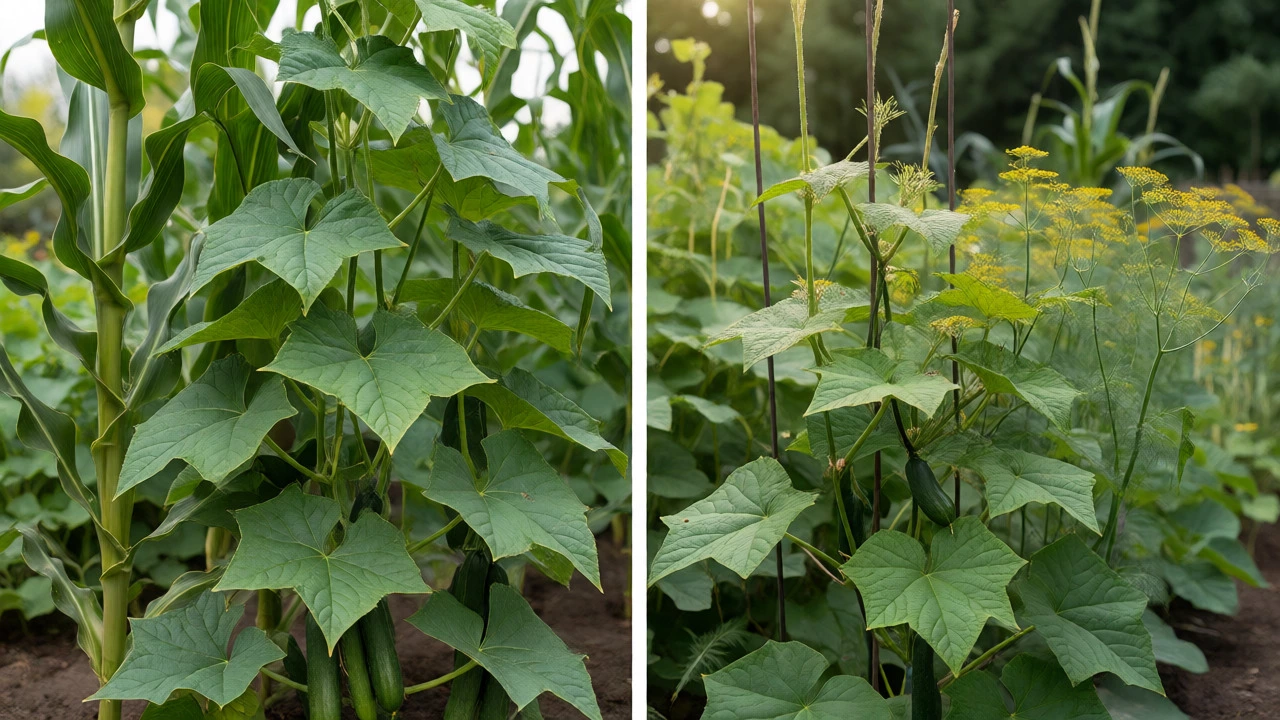
Now that you know the villains, let’s look at the heroes. Legumes like beans and peas are excellent companions for cucumbers. They fix atmospheric nitrogen into the soil, feeding the hungry cucumber vines without competing for it. Plus, their vertical growth habits complement the sprawling nature of cucumbers if trellised properly.
Dill and radishes are also top-tier choices. Dill attracts beneficial insects like ladybugs and hoverflies, which prey on aphids that plague cucumbers. Radishes act as trap crops for flea beetles, drawing them away from your precious cucumber leaves. Corn is another great partner, forming the "Three Sisters" trio along with beans. The corn provides a natural trellis, while the cucumbers shade the soil to retain moisture.
- Beans: Fix nitrogen, support structure.
- Dill: Attracts pollinators and predatory insects.
- Radishes: Trap crop for flea beetles.
- Corn: Natural trellis and windbreak.
- Lettuce: Shade-tolerant, uses unused ground space.
Practical Layout Tips for Small Gardens
Living in Wellington means dealing with unpredictable winds and occasional frosts. Use this to your advantage. Plant tall companions like corn or sunflowers on the south side of your cucumber row (in the Southern Hemisphere) to provide a windbreak without shading them out completely. Ensure at least 30-45 cm (12-18 inches) of spacing between cucumber plants to maintain airflow, regardless of what else is nearby.
Consider using vertical space. Trellising cucumbers frees up ground area for shallow-rooted crops like lettuce or spinach, which won’t compete heavily for deep nutrients. Just remember to rotate your crops yearly. Never plant cucumbers in the same spot two years in a row, especially if you had pest issues. This breaks the life cycle of overwintering cucumber beetles and reduces soil-borne diseases.
Can I plant tomatoes and cucumbers together?
It is generally recommended to keep them apart. Both are heavy feeders and susceptible to similar fungal diseases like blight. Sharing space increases humidity around the foliage, raising the risk of infection. If you must plant them close, ensure significant spacing and good airflow.
Why does sage kill cucumbers?
Sage doesn't necessarily "kill" them instantly, but it inhibits their growth through allelopathy. The plant releases chemicals into the soil that interfere with the cucumber's ability to absorb nutrients and expand its roots, leading to stunted plants and lower yields.
Are marigolds good companions for cucumbers?
Yes, French marigolds are excellent. They deter nematodes and repel various beetles and aphids with their scent. Plant them around the base of your cucumber trellises to protect the roots and lower leaves.
How far apart should incompatible plants be?
For aggressive competitors like potatoes or invasive mints, aim for at least 1 meter (3 feet) of separation, or use physical barriers like pots or edging. For allelopathic plants like fennel, a separate bed is safest.
Does companion planting really increase yield?
While scientific consensus varies on exact percentages, experienced gardeners consistently report healthier plants and fewer pest interventions. By reducing stress from competition and attracting beneficial insects, you create conditions where cucumbers can focus energy on fruit production rather than survival.