Home Organization Action Plan Generator
Select a room and your primary challenge to generate a customized, step-by-step organization strategy based on frictionless habits.
Why does the kitchen look like a bomb went off five minutes after you cleaned it? You aren't lazy. You just don't have a system that matches how you actually live. Most people try to organize their homes by copying Instagram photos of perfectly color-coded pantries. It looks great for an hour. Then life happens. Kids track in mud. Work emails pile up. The chaos returns.
The secret to a perfectly organized home isn't buying more bins. It's creating frictionless habits. When everything has a specific, logical home, you stop thinking about where things go. Your brain stops resisting the cleanup because the action takes less than two seconds. This guide breaks down exactly how to build that system, room by room, without spending a fortune or losing your mind.
The Golden Rule: One Touch, One Place
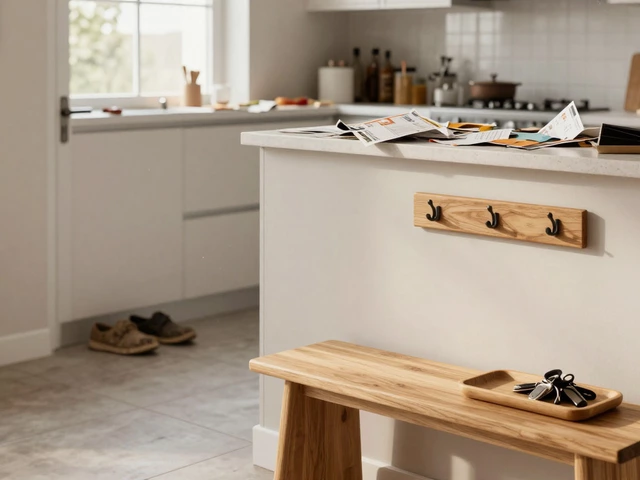
Before you buy a single storage container, you need to adopt one mindset shift. Every item in your house needs a designated "home." If it doesn't have one, it becomes clutter. Think about your keys. Do you toss them on the counter? Or do they hang on a hook by the door? The hook is the home. The counter is a dumping ground.
To make this work, follow the one-touch rule. When you bring something inside, put it away immediately. Don't set it on the "staging table" (you know the one, probably near the entryway). If you touch an item once to put it away, you save yourself from touching it again later to find it. This simple habit reduces visual noise instantly. Start with high-traffic items: shoes, bags, mail, and coats. Give them a permanent spot. Guard that spot fiercely.
Kitchen Command Center: Stop Cooking Chaos
The kitchen is usually the hardest room to keep tidy because it’s the engine of the house. We cook, eat, clean, and often work here. To tame it, you need to zone your workspace based on frequency of use.
Start with your countertops. They are premium real estate. Only keep appliances there that you use daily. If you haven't used the bread maker in three months, box it up and move it to a cabinet. Clear counters make the room feel twice as big and reduce the mental load every time you walk in.
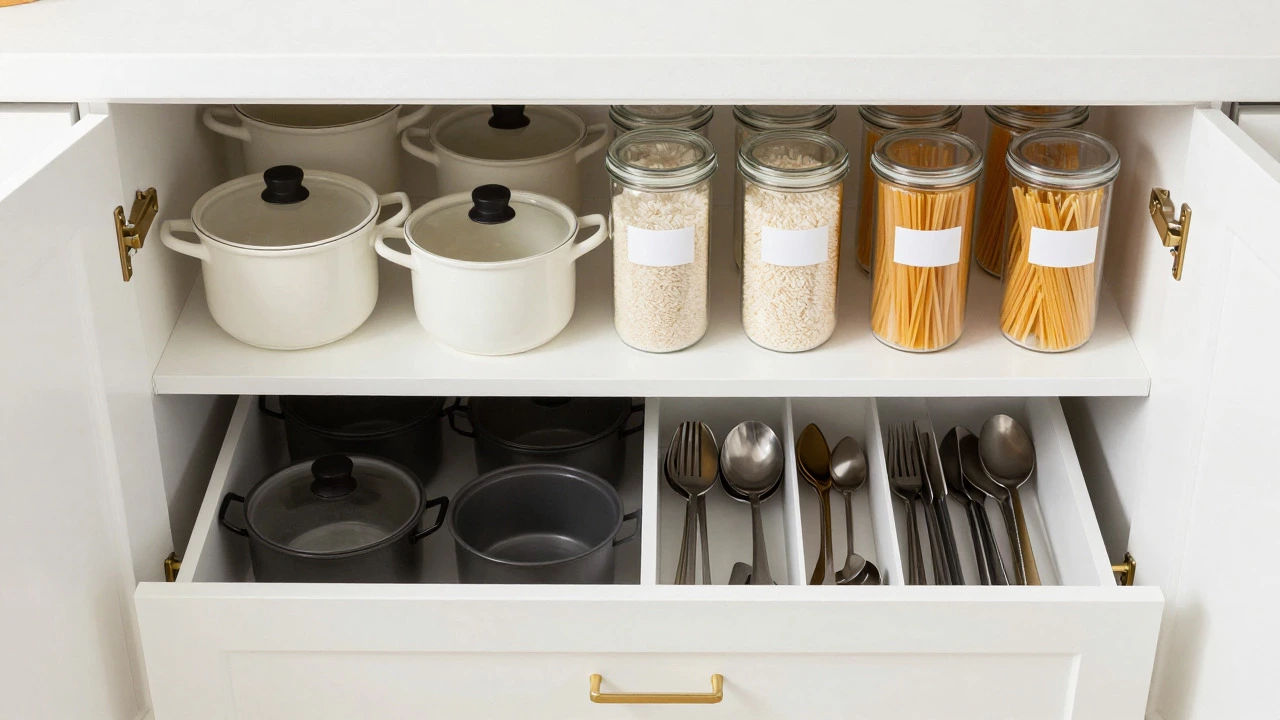
Next, tackle the cabinets. Use the "gravity feed" method. Store items at eye level first. Put heavy pots and bulk rice on lower shelves. Keep light, fragile glasses high up. Inside drawers, use dividers for utensils. No more digging through a jumble of spoons and spatulas. Group similar tasks together: baking supplies in one bin, cooking tools in another. Label them if you have to. It sounds childish, but it helps everyone in the household know where things belong.
| Zone | Items to Store | Storage Solution |
|---|---|---|
| Daily Prep | Knives, cutting board, oil, spices | Magnetic strip, lazy Susan, drawer inserts |
| Cooking | Pots, pans, ladles, tongs | Under-shelf baskets, vertical dividers |
| Baking | Flour, sugar, measuring cups | Airtight containers, pull-out pantry bins |
| Snacks | Chips, crackers, fruit bowls | Clear acrylic jars, low shelves |
The Entryway: Your First Line of Defense
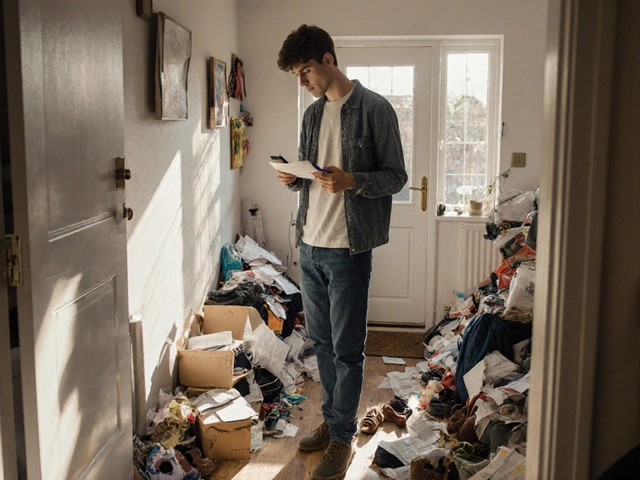
If your entryway is messy, the rest of your house will feel chaotic. This space acts as a filter. Everything that comes in should be caught here before it spreads.
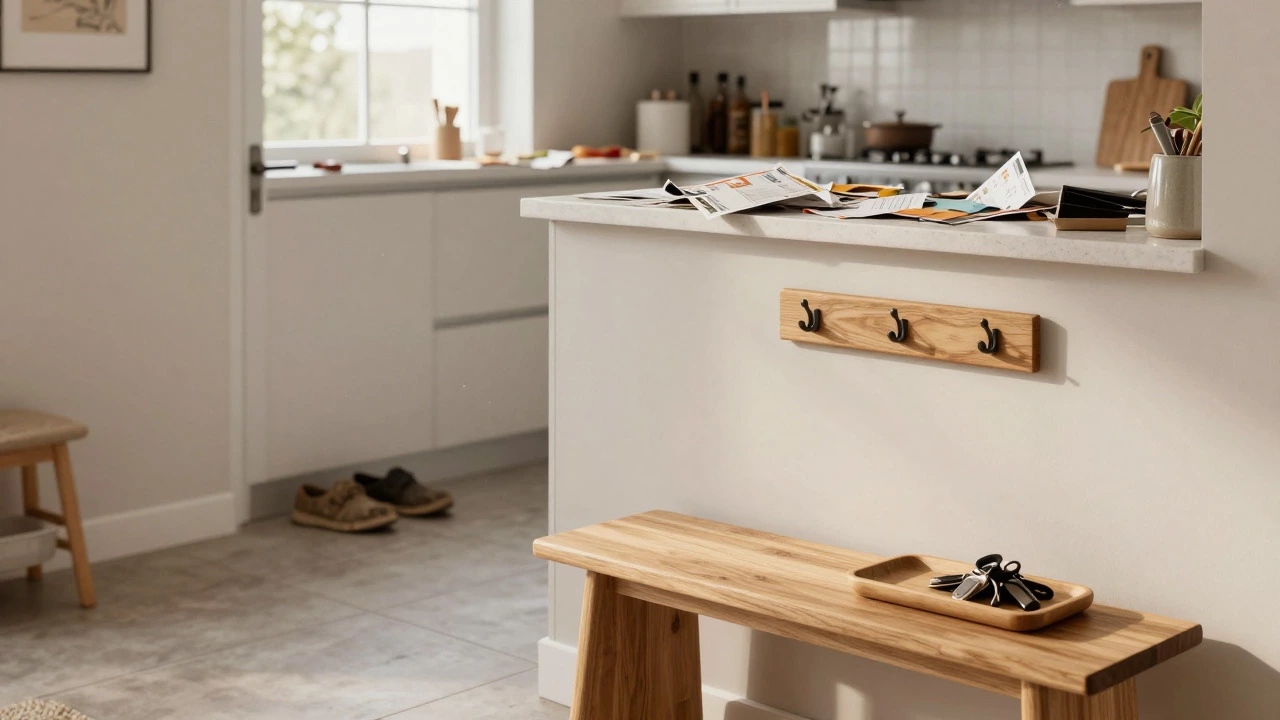
You need a "drop zone." Install a coat rack with enough hooks for every person in the house plus guests. Add a small bench for sitting while putting on shoes. Place a basket under the bench for muddy boots. For smaller items like keys, wallets, and phones, mount a tray or a dedicated dish on a wall shelf. No more searching for your car keys when you're already late.
Don't forget the mail. Paper is the silent killer of organization. Set up a sorting station right by the door. Have four slots: Trash, Bills, Action Needed, and File. Process mail immediately. Throw away junk. Pay bills within 24 hours. If you wait, the pile grows, and anxiety spikes. Keep this area tight. A cluttered entry sets a stressful tone for the whole day.
Bedroom Sanctuary: Sleep Without Stress
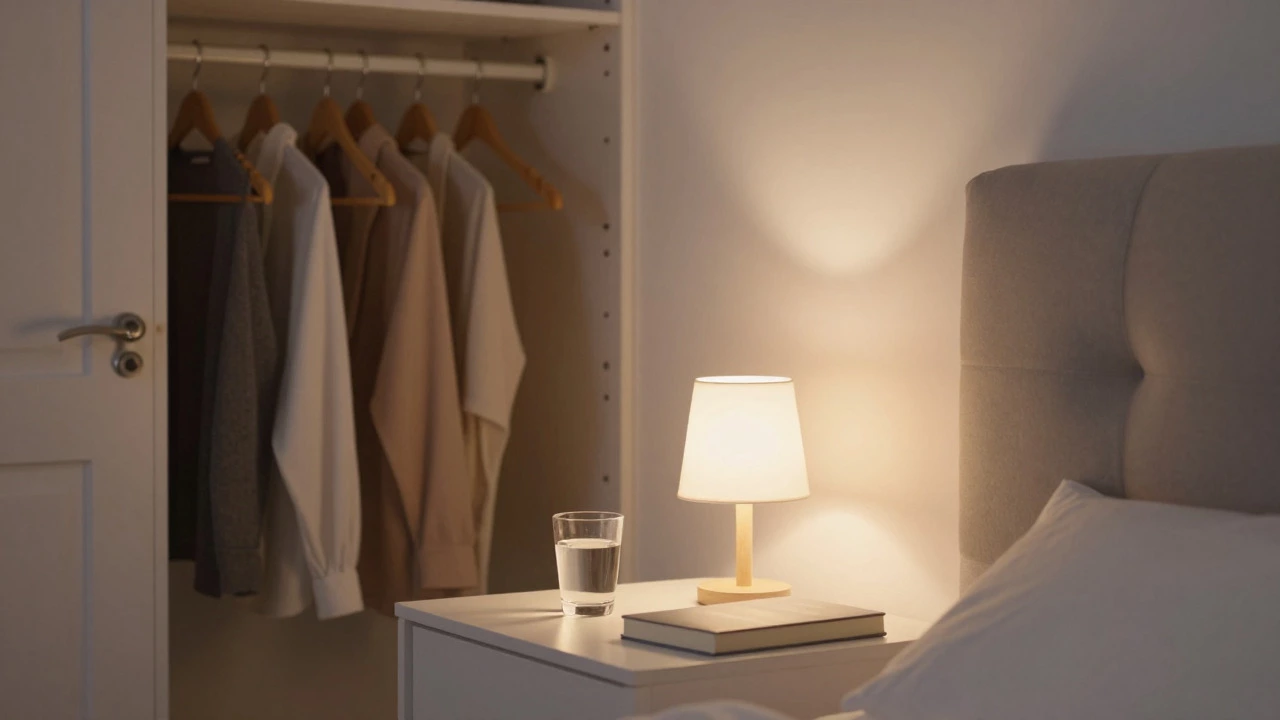
Your bedroom should be a calm retreat. Clutter here directly impacts sleep quality. Studies show that visual disorder increases cortisol levels, making it harder to relax. To fix this, start with the nightstand.
Limit what sits on your nightstand to essentials only: a lamp, a book, maybe a glass of water. Remove old takeout menus, tangled charging cables, and random receipts. Use a cable organizer to keep wires neat and out of sight. Tangled cords create visual static that your brain registers as unfinished business.
Look at your closet. If you can't see the back of your hangers, you have too many clothes. Edit ruthlessly. Ask yourself: "Have I worn this in the last year?" If no, donate it. Hang clothes by category-dresses, shirts, pants. Fold sweaters and jeans on shelves to save space. Use uniform hangers; they make the closet look sleek and save inches of width. A tidy closet makes getting dressed faster and less stressful.
Living Room Flow: Comfort Meets Order
The living room is for gathering, so it needs to be functional but inviting. The biggest culprit here is "surface clutter." Coffee tables and sideboards often become catch-alls for remotes, coasters, and magazines.
Assign a home for every remote control. A small bowl or a dedicated slot in a console table works well. Stack magazines neatly; discard any older than six months. Use trays to group items together. A tray holding candles and books looks intentional. Loose items scattered around look like mess. Trays create visual boundaries that trick the eye into seeing order.
Manage toys if you have kids. Open bins are better than closed boxes for children. They can see what's inside, which encourages them to put things back. Rotate toys monthly. Keep half in storage and swap them out. This keeps play fresh and reduces the volume of stuff visible at any one time. Less stuff means easier cleaning and more floor space for actual living.
Bathroom Hygiene: Quick Wins for Daily Calm
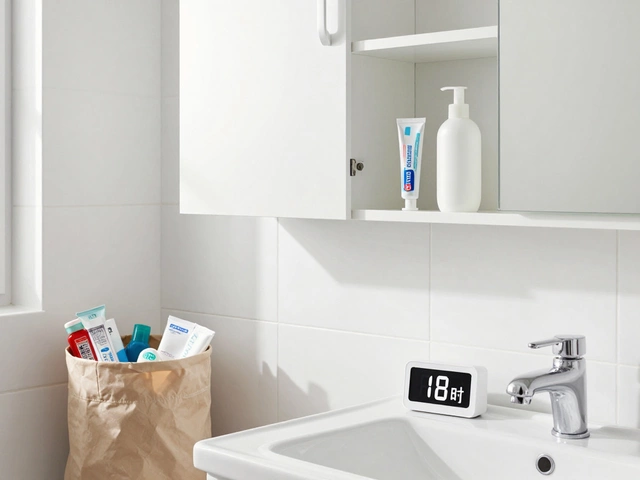
Bathrooms get cluttered fast because we store too much product there. Old makeup, expired medications, and duplicate shampoos accumulate quickly. Do a quarterly purge. Check expiration dates. If it's past its prime, toss it. Don't hoard samples. Use them or lose them.
Use vertical space. Install over-the-toilet storage or tall, narrow shelving units. Keep daily-use items within arm's reach of the sink or shower. Store backups in cabinets. Use clear containers for cotton balls and Q-tips instead of bulky original packaging. It saves space and looks cleaner. Wipe down surfaces weekly. A shiny mirror and clean counter make even a small bathroom feel spacious and serene.
Maintaining the System: The 10-Minute Reset
Organization isn't a one-time event. It's a habit. You don't need to deep clean every day. Instead, implement a "10-minute reset" before bed. Walk through each room. Return stray items to their homes. Straighten cushions. Wipe the kitchen counter. Take out the trash if needed.
This short burst of effort prevents clutter from building up overnight. You wake up to a tidy house, not a disaster zone. It takes less time than scrolling through social media. And the payoff is huge. You start your day with clarity and control. Stick to this routine for two weeks. It will become automatic. Your home will finally reflect the peace you want inside it.
How do I start organizing if I'm overwhelmed?
Start small. Pick one drawer or one shelf. Spend 15 minutes clearing it out. Don't try to do the whole house at once. Small wins build momentum. Once you finish that one spot, move to the next. Celebrate each completed task. Progress, not perfection, is the goal.
Do I need expensive storage containers to organize my home?
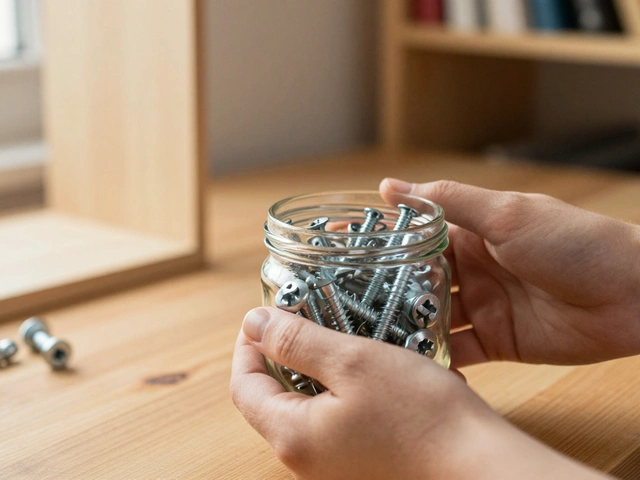
No. Expensive bins don't solve clutter problems. Free or cheap solutions work best. Use cardboard boxes, mason jars, or baskets you already own. The key is consistency, not cost. Invest in quality only for high-use areas like the kitchen or entryway where durability matters.
What should I do with sentimental items I rarely use?
Store them out of sight. Use labeled bins in a closet or attic. Keep only a few meaningful pieces visible in your main living spaces. Sentimental clutter creates guilt and stress. Digitize photos and documents to save physical space. Curate your memories, don't hoard them.
How can I get my family to help with organization?
Make it easy and fun. Assign specific zones to each family member. Use labels and pictures for kids. Hold a 10-minute family tidy-up session before dinner. Praise effort, not just results. When everyone has a role, the workload shares evenly. Consistency beats intensity.
Is minimalism the only way to have an organized home?
Not at all. Minimalism is a style, not a requirement. You can love stuff and still be organized. The difference is intentionality. Own what you love and use. Give everything a home. Regular maintenance keeps things tidy. Organization is about function, not emptiness.