Mindfulness Starter Kit
Step 1: Find Your Anchor
Select where you feel your breath most clearly. This is your "home base." When your mind wanders, return here.
Step 2: Set Your Timer
Start small. Consistency beats duration. We recommend starting with 1-3 minutes.
Step 3: Begin Practice
Ready to begin?
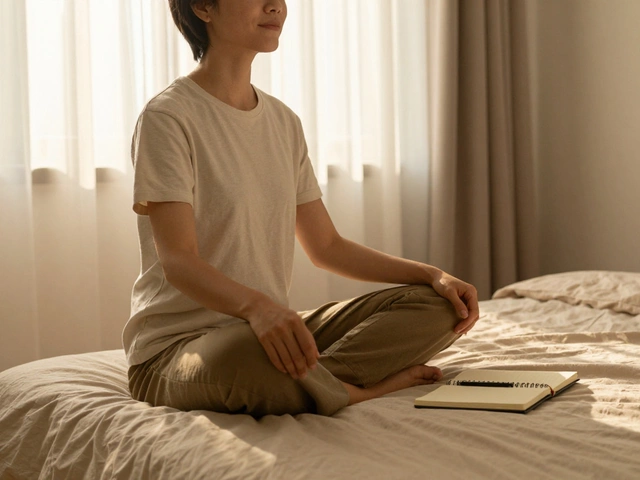
Find a comfortable position. Feet flat on the floor. Hands on knees. Close your eyes or soften your gaze.
Focus on your breath...
Well Done!
You just completed a mindfulness session. Remember:
- Notice when your mind wandered.
- Return gently to your anchor.
- No judgment. Wandering is normal.
Tip: Attach this practice to an existing habit, like after brushing your teeth or pouring coffee.
You’re staring at your phone, scrolling through news you can’t control, while your brain simultaneously plans tomorrow’s meeting and replays an awkward conversation from three years ago. Sound familiar? That scattered feeling isn’t a character flaw; it’s just how our brains are wired to prioritize survival over peace. But here’s the good news: mindfulness is not some mystical state reserved for monks in Himalayan caves. It is simply the practice of paying attention to the present moment on purpose, without judgment. You don’t need a guru, a retreat center, or even a quiet room. You just need to know how to start, and more importantly, how to keep going when your mind inevitably wanders off.
| Concept | Actionable Insight |
|---|---|
| Starting Small | Begin with 1-3 minutes daily. Consistency beats duration every time. |
| The Anchor | Use your breath as a home base. When lost, return to the inhale/exhale. |
| Judgment Trap | Noticing distraction IS mindfulness. Don't judge yourself for thinking. |
| Formal vs. Informal | Mix sitting meditation with mindful daily tasks (washing dishes, walking). |
| Traffic Jam | Expect resistance. The urge to quit is part of the process, not a sign of failure. |
Why Your Brain Resists Silence
Before you sit down and close your eyes, understand what you’re up against. Human brains have a default mode network (DMN) that kicks in when we aren’t focused on a specific task. This network loves to ruminate about the past or worry about the future. It’s evolutionarily useful-it helped us anticipate predators-but today, it mostly just generates anxiety. When you try to be mindful, you’re essentially asking this hyperactive system to pause. It will resist. You might feel bored, restless, or suddenly remember urgent emails. This isn’t you failing; it’s your DMN throwing a tantrum. Recognizing this biological reality makes the process less personal and more mechanical. You’re not "bad" at relaxing; you’re just retraining neural pathways.
Step One: Find Your Anchor
Most people think mindfulness means "clearing your mind." That’s impossible. Think instead of it as finding a place to park your attention. For most beginners, the best anchor is the breath. Why? Because it’s always with you, it changes naturally, and it connects directly to your nervous system. Try this right now: notice where you feel your breath most clearly. Is it the cool air entering your nostrils? The rise and fall of your chest? The expansion of your belly? Pick one spot. That’s your anchor. If your mind wanders-and it will-gently guide it back to that physical sensation. No scolding, no sighs. Just a soft return. This act of noticing you’ve drifted and coming back is the actual rep that builds the muscle. Doing it ten times in a minute is better than doing it once perfectly.
Building a Routine That Actually Sticks
The biggest mistake self-taught practitioners make is trying too hard, too fast. They commit to 30 minutes a day, last three days, feel like failures, and quit. Instead, aim for micro-habits. Start with two minutes. Seriously. Set a timer on your phone. Sit in a chair (you don’t need a cushion), feet flat on the floor, hands on your knees. Close your eyes or soften your gaze. Focus on the breath. When the timer rings, stop. Do this for a week. Once it feels automatic, bump it to five minutes. Attach this new habit to an existing one-a technique called habit stacking. Meditate right after you brush your teeth, or immediately after you pour your morning coffee. By linking the new behavior to an established cue, you reduce the decision fatigue that usually kills new routines.

Informal Practice: Mindfulness Off the Cushion
Sitting still is great, but life happens on the move. If you only meditate for five minutes a day, you’re ignoring the other 23 hours and 55 minutes. Bring mindfulness into mundane tasks. Take washing dishes. Usually, we rush through them, mentally already in bed. Next time, feel the warmth of the water on your hands. Notice the slippery texture of the soap. Listen to the clink of plates. If your mind jumps to work, gently bring it back to the sensation of the sponge. This turns a chore into a reset button. Other easy entry points include brushing your teeth, walking to your car, or waiting in line at the grocery store. These moments are free opportunities to break the autopilot loop. You aren’t trying to achieve enlightenment while scrubbing a pan; you’re just practicing being where your feet are.
Navigating the Common Pitfalls
You will encounter obstacles. Here is how to handle the big three:
- The Boredom Barrier: You’ll think, "This is stupid. Nothing is happening." Boredom is often just suppressed restlessness. Stay with it. Observe the feeling of boredom itself. Does it have a location in your body? Is it tight? Hot? Investigate it rather than fleeing from it.
- The Sleepy Trap: Sitting quietly often leads to dozing off. To combat this, sit upright. Keep your spine straight but not rigid. Try meditating with your eyes slightly open, gazing softly at the floor a few feet ahead. Or choose a time of day when you’re naturally alert, like mid-morning, rather than right before bed if you’re exhausted.
- The Perfectionism Paradox: Some sessions will feel amazing; others will feel chaotic. Neither is "good" or "bad." The goal isn’t a blank mind; it’s awareness of whatever arises. If you spend the whole session annoyed by your own thoughts, you were mindful of your annoyance. That counts.

Tools and Resources to Support Your Journey
While you can teach yourself entirely, guided resources can help bridge the gap when motivation dips. Apps like Headspace or Calm offer structured courses, but they can become crutches if you rely on them forever. Try using them for the first month to learn the basics, then wean yourself off. Books are also powerful allies. Jon Kabat-Zinn’s *Wherever You Go, There You Are* remains a gold standard for its plain-language approach. It strips away the jargon and focuses on practical application. Remember, though, that reading about mindfulness is not mindfulness. Reading gives you the map; you still have to walk the path.
When to Seek Professional Help
Mindfulness is generally safe, but it isn’t a cure-all for clinical conditions. If you have a history of severe trauma, PTSD, or active psychosis, unguided meditation can sometimes stir up intense emotions or dissociation. In these cases, trauma-sensitive mindfulness practices or working with a therapist who incorporates mindfulness techniques is safer. If you find yourself becoming increasingly anxious or depressed during practice, pause and consult a mental health professional. Mindfulness should feel like a grounding tool, not a source of distress.
Do I need to sit cross-legged to meditate?
No. Comfort is key. You can sit in a chair with your feet flat on the floor, lie down (if you won’t fall asleep), or stand. The posture should support alertness without causing pain. If your legs go numb or your back hurts, you’ll focus on the discomfort instead of your breath. Adjust until you find a position you can hold easily.
How long does it take to see benefits?
Some people report feeling calmer after a single session, but structural changes in the brain (neuroplasticity) typically require consistent practice over weeks or months. Research suggests noticeable reductions in stress and improvements in focus often appear after 8 weeks of regular practice. However, the immediate benefit is simply breaking the cycle of reactive stress in the moment.
What if my mind never stops racing?
That’s normal. The goal isn’t to stop thinking; it’s to change your relationship with your thoughts. Imagine your thoughts are cars on a highway. Normally, you run out into traffic trying to catch each one. Mindfulness is learning to sit on the side of the road and watch the cars pass without jumping out. You notice the thought, label it "thinking," and return to your anchor.
Is mindfulness religious?
No. While mindfulness has roots in Buddhist traditions, modern secular mindfulness is completely non-sectarian. You don’t need to believe in anything specific. It’s a mental training exercise, similar to how stretching is physical training. People of all faiths, including Christians, Muslims, Jews, and atheists, practice it successfully.
Can I practice mindfulness while working?
Absolutely. Single-tasking is a form of mindfulness. When writing an email, focus solely on the words appearing on the screen. When listening to a colleague, listen fully without planning your response. Taking short "micro-breaks" between tasks to take three deep breaths helps reset your attention span and prevents cognitive fatigue.